Objectives and Conclusions: U.S.-Israel-Iran War
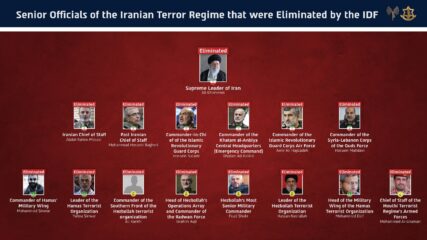
While too much is unknown after a week of fighting to make definitive statements about the war, certain possible outcomes can be explored.
CIE President Ken Stein addresses what is and what is not known about why Hamas attacked October 7, 2023, why Israel was caught off guard, and what happens after the war across the region.
Updated January 5, 2026; originally posted October 2023. By Ken Stein Hamas’ Origins The 1988 Hamas Charter and remarks by its leaders and other publications express hatred of Zionism, Israel and Jews. It is thus unmistakable that Hamas…
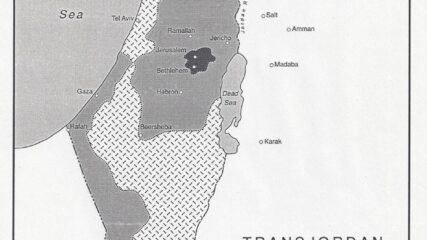
Ken Stein, President, Center for Israel Education, May 19, 2025 Introduction Since 1937, the idea of geopolitically separating Jewish and Arab populations west of the Jordan River has been a recommended solution to mitigate violence between…
By Aidan New and Michael Jacobs (updated April 9) President Donald Trump’s second administration had an impact in the Middle East even before his inauguration Jan. 20, 2025: Special Middle East envoy Steven Witkoff was…
The details of the three-stage Hamas-Israel cease-fire that went into effect January 19, 2025, along with unanswered questions, insightful analyses and the relevant U.N. resolution from June 2024.
Nine pre-conditions that enabled Arab-Israeli negotiations to unfold successfully in the 1970s and 1990s are not present today. Egyptian-Israeli and Jordanian-Israeli agreements occurred because the respective sides wanted them and needed them.
November 25, 2020 By Ken Stein Leadership is about knowing your objectives and adjusting and implementing the tactics to accomplish them. Leadership is also about choices and consequences. It is about making political trade-offs. November…
On August 13, 2020, when the United Arab Emirates agreed to pursue full normal relations with Israel, without any Israeli withdrawal from lands it won in the June 1967 war, the sacred negotiating formula, “Land for Peace” that had dominated Arab-Israeli talks for half a century abruptly ended.
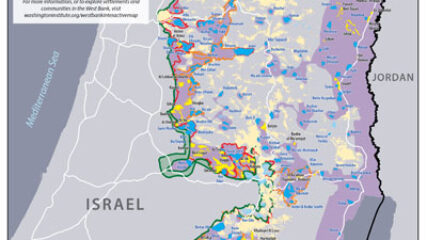
Israeli prime minister Binyamin Netanyahu has repeatedly declared that he will be putting forward his proposal for West Bank annexation as early as July 1. Yet uncertainties about his plans still abound, indicating that this timetable may not be met despite his assertions to the contrary.
With permission, read full article at Washington Institute for Near East Policy. https://www.washingtoninstitute.org/policy-analysis/view/wrestling-with-annexation-the-elusive-search-for-a-policy-rationale As soon as next month, Israel’s new government could approve plans to annex a substantial portion of the West Bank. The trigger…
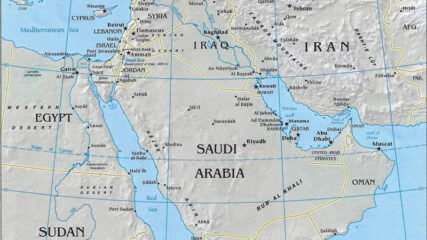
Unlike Iraq’s immediate neighbors, Israel is not directly tied to recent events in that country. Nevertheless, U.S. withdrawal would create additional threats to Israeli security. Both Iran and the Islamic State would have a freer hand to operate inside Iraq, likely spreading across the porous border into Syria and ultimately to Israel’s own frontiers. American credibility would also suffer a new setback.
The idea that has arisen recently of holding elections in the Palestinian Authority appears more serious at this stage than in the past. The main promoter of the idea is Abu Mazen, who advocates separate elections: first for the parliament, and only later for the presidency. Although Hamas has long demanded that the two elections be held simultaneously, a change in Hamas’s stance is evident, following its declaration that it is willing to proceed with the elections, while hinting that it might consent to Abu Mazen’s plan. Yet despite the positive attitude that the PA and Hamas are currently displaying toward elections, it appears that there are still many other barriers to overcome.
Until a political plan is announced the economic one is unlikely to progress. Two key issues are whether Israel will cooperate in the creation of a Palestinian state, and can the Palestinians create a unified, democratic and effective government within such a state. These remain very open questions.