2026 Israeli Election Polling: The Month Ending July 31
Three months from the 26th Knesset election, polling shows the anti-Netanyahu bloc on the cusp of enough votes to form a coalition without the Arab parties.

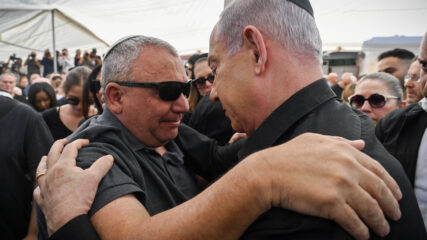
Three months from the 26th Knesset election, polling shows the anti-Netanyahu bloc on the cusp of enough votes to form a coalition without the Arab parties.
CIE President Ken Stein speaks with the Atlanta Jewish Times in advance of the October 2026 election about differences between the U.S. and Israeli electoral systems.
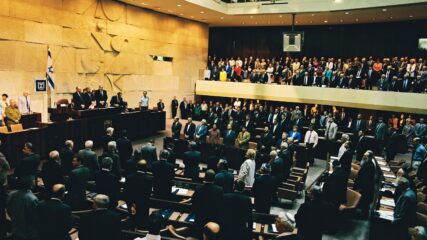
Jewish-majority self-rule existed in Eretz Yisrael during the First and Second Jewish Commonwealths, 1020 to 586 B.C.E. and 538 B.C.E. to 70 C.E., respectively. Then living for centuries as minorities throughout Europe, the Middle East…
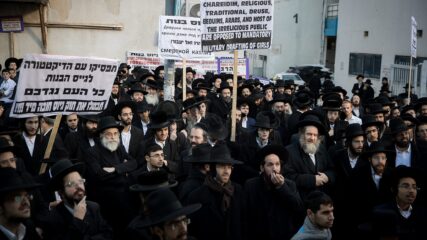
For many years the ultra-Orthodox were perceived as “captive voters” who would always comply with their rabbis’ instructions to cast their ballot for ultra-Orthodox parties. In today’s new reality such directives are no longer enough
Michael Jacobs and Ken Stein Israel on Nov. 1, 2022, is holding its fifth Knesset election since spring 2019 and its 25th since the state’s founding in 1948. Voters are facing a new mix of…

Public opinion both shapes and reflects policy choices. Attitudes provide snap shots of short and long term trends. Assembled here are a variety of current data about policies, reflections, and expectations.
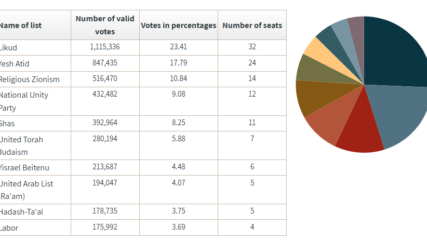
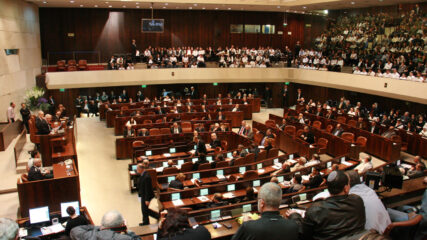
One of the most striking elements to emerge from the preliminary results is that the current Knesset is going to be much more fragmented. If only eight party lists were elected to the Knesset a year ago, thirteen factions succeeded in entering the parliament in this round.
Elections, Parliament, Political Culture, Prime Ministers, Parties and the Voting Public Israel has a parliamentary system of government with some unusual features in the elections and the creation of multiparty ruling coalitions, as explained by…
Israel’s 25 Knesset elections and three direct elections for prime minister have resulted in 14 different people serving as prime minister, in addition to one person, Yigal Allon, who served only on an interim basis….

Former three-term Knesset member is motivated to run in the March 23 elections to create a better Israel for his children and grandchildren, provide a voice for the vital senior population, topple Prime Minister Netanyahu, and restore the Labor Party’s legacy.

Israel’s third round of elections last week seemed inconclusive at first, but the deadlock may now be broken. Prime Minister Binyamin Netanyahu did better this time than in September’s round two, but his gains were insufficient to form a new government. Potential kingmaker Avigdor Liberman jettisoned his previous idea of getting the two top parties to join forces; instead, personal antipathy and policy differences have led him to definitely state that he will not join any government Netanyahu leads.
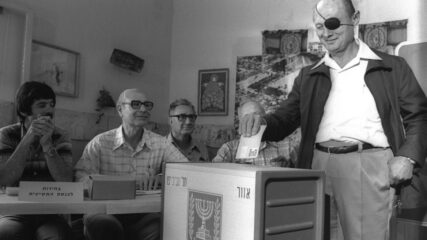
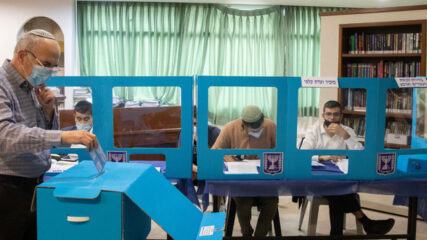
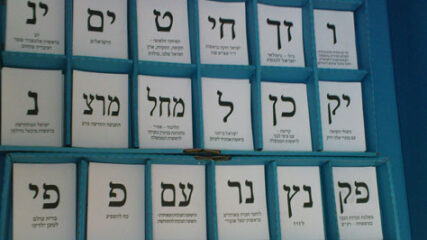
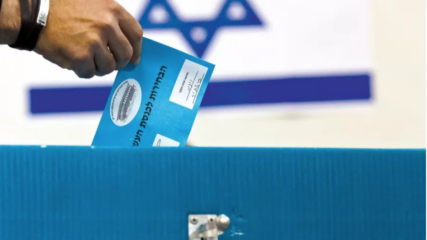
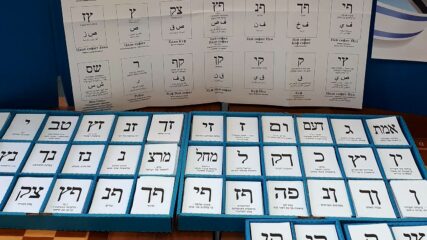
Election season in Israel is traditionally a raucous affair. But unlike the lead-up to Election Day, the voting process is staid, tedious and – despite the sporadic appearance of politicians and celebrities coming to cast their votes – pretty unglamorous. No electronic polling stations. No online voting. Only paper chits, envelopes, a cardboard partition and a box in which to cast one’s ballot. ISRAEL21c presents a photographic retrospective of 7 decades of queuing, cardboard boxes and paper chits that keep Israel’s democracy going.
Has the “Deal of the Century” injected energy into Israel’s third election and perhaps provided an incentive for Arab Israelis to turn out in higher numbers than September? Election rallies for the Arab parties in Israel rarely garner much attention or excitement. But recent policy proposals engineered thousands of miles away may have re-energized a once stagnant and unreliable voting bloc. Arik Rudnitzky uses the village of Bartaa as a possible case study.
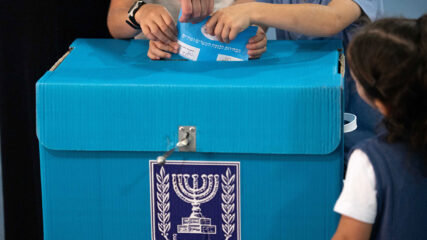
On March 2, Israelis will head back to the polls for a third time in twelve months. This previously unimaginable situation has left many asking: How did we get here? The short answer is that, perhaps in an uncharacteristically surprising fashion for politicians, everyone kept their promises. Yohanan Plesner presents the key issues to look out for in Israel’s unprecedented third election and what – if anything – will determine if a stable government will finally be formed.
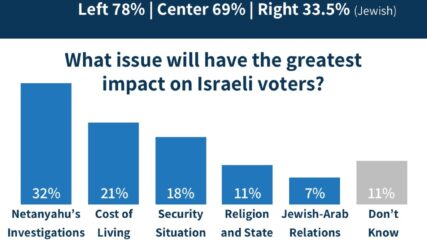
January’s Israeli Voice Index found that 32% of Israelis believe Netanyahu’s investigations will be the issue with the greatest impact on voters in the upcoming Knesset elections, followed by other considerations such as the cost of living and housing, security, religion and state and Jewish-Arab relations.
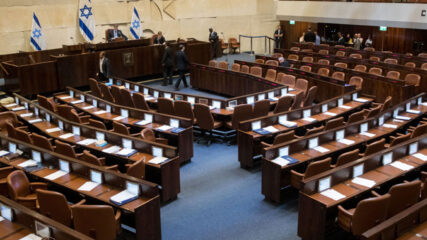
New record low of number of lists; Left-Center shrinks from eight lists in 2013 to three today; women’s’ representation continues to dither – less than 30 women MKs are expected.

Whichever Israeli government ends up coming to power will be faced with a set of urgent security challenges that are coming from a range of arenas, all at the same time. Critical decisions on these challenges and establishing a defense budget will be the order of the day for the PM and his security and diplomatic ministers.

The ultimate result of September’s election in Israel is still unclear. We do not yet know what type of coalition will be formed, when it will come together, or who will head it. We do know, however, that Israeli democracy had dodged a bullet. This is because, no matter who takes the reins of government or even if Israel holds a third round of elections, a radical assault on our judicial system has been halted.
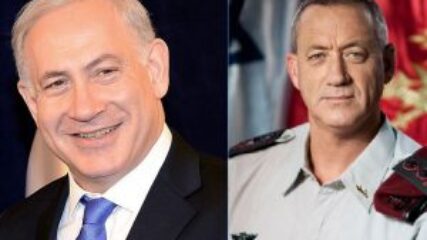
In Israeli history books, the term is conjured every time the nation faces a major juncture that requires individuals and factions to transcend partisan loyalties. Judging from their behavior in the recent elections, Benjamin Netanyahu and Benny Gantz both appear to be fuzzy on the meaning of the word.

David Ben-Gurion, Menachem Begin, Yitzhak Rabin and Ariel Sharon would have faced up to the moment. Even though they did not share the same ideologies, they did share a common view of leadership and the role of the prime minister. First and foremost, they understood what was important. They never shied away from making painful decisions in which they put the state, not their political needs, first.
Two weeks to the elections Jewish Israelis show a strong preference for a unity government while Arab Israelis prefer a center-left wing government led by Gantz. Also over the past five months there has been a steady decline in the public’s optimism about the future of Israel’s democracy and security.

Will Arab politicians take advantage of the second chance that the new elections have presented? Runing in a Joint List and reaching out to their younger voters – 60% of which didn’t vote in the last election, would be the right place to start.
The recent Israeli election campaign was heated and nasty; primarily a referendum on whether Netanyahu should continue to serve as Prime Minister. His personality and legal problems were the focus of opposition attacks, not his policies. In fact, beyond the harsh rhetoric one can discern a broad consensus in Israel behind the outgoing government’s actual diplomatic and defense policies.

The 2019 election results mark the return of Israeli politics to two large lists. Voter turnout declined, as the parliamentary fragmentation. The impressing increase in female representation was halted, and the number of ex-generals will be the highest in decades. An initial analysis of the election results.
