Era II: Zionism to Israel, 1898 to 1948

Era II: Zionism to Israel, 1898 to 1948

From 1898 to 1948, Zionism evolved from an idea to a concrete reality: the actual establishment of the Jewish state, Israel. Slowly, a few immigrating Jews created facts by linking people to the land. For half a century, fortuity and fortitude made the Zionist undertaking a reality. They exhibited pragmatism and gradually constructed a nucleus for a state. Through perseverance Zionists empowered themselves.

<span class="cie-plus-title">“The Intifada and the Uprisings of 1936-1939: A Comparison of the Palestinian Arab Communities”</span><span class="cie-plus-badge">CIE+</span>

“The Intifada and the Uprisings of 1936-1939: A Comparison of the Palestinian Arab Communities”CIE+

Comparing the 1936-39 Arab uprising in various parts of western Palestine and the intifada that began in 1987 in the West Bank, the Gaza Strip and East Jerusalem, the most striking conclusion is the large number of general similarities between these manifestations of Palestinian national consciousness. The two most significant differences, however, are that the 1987 intifada generated a deeper and more prolonged Palestinian national coherence across all classes than did its predecessor and clarified and crystallized Palestinian opinion, which helped create a historic compromise in Palestinian public policy.

<span class="cie-plus-title">Explainer: The Arab-Israel War of 1948 — A Short History</span><span class="cie-plus-badge">CIE+</span>

Explainer: The Arab-Israel War of 1948 — A Short HistoryCIE+

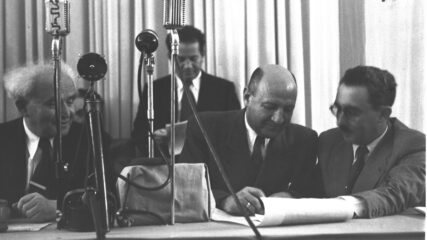
Otherwise known as Israel’s War of Independence, or, “the nakbah” or disaster to the Arab world because a Jewish state was established, the war was fought between the newly established Jewish state of Israel opposed by Palestinian irregulars, and armies from five Arab states. Official beginning of the war is usually given as May 14, 1948, the date Israel declared itself an independent Jewish state, but the war’s first of four phases began in November 1947. Lasting for two years, the war ended with armistice agreements signed in 1949 between Israel and four Arab states.

<span class="cie-plus-title">The Arabs and the Approaching War With Israel, 1945-1948</span><span class="cie-plus-badge">CIE+</span>

The Arabs and the Approaching War With Israel, 1945-1948CIE+

In “The Arabs and the Approaching War with Israel, 1945-1948,” Yaacov Shimoni reviews in detail the period from the early 1940s to May 1948, examining decisions made by Arab leaders toward Palestine and Zionism. He concludes that disunity among Arab states, jealousies, and disorganization plagued Arab preparations for the expected coming war with the Zionists.

<span class="cie-plus-title">Hillel Cohen, “Army of Shadows,” Showing Regular Palestinian Arab Collaboration With Zionists Through 1947</span><span class="cie-plus-badge">CIE+</span>

Hillel Cohen, “Army of Shadows,” Showing Regular Palestinian Arab Collaboration With Zionists Through 1947CIE+

Irrefutable evidence shows Palestinian Arab collaboration with Zionists during the British Mandate greatly assisted Jewish state building. Cohen further asserts a general absence among Palestinians of a sense of national feeling, with loyalties instead tied to families, villages and other localities. Quite certainly without Palestinian Arab collaboration, Zionists would not have succeeded in building a nucleus for the Jewish state. Arabic newspapers in Palestine and British scrutiny show the constancy of the Arab population’s engagement with the Zionists, and this included Arabs resident inside Palestine.

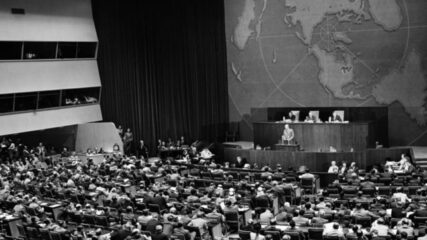
<span class="cie-plus-title">UNGA Resolution 181</span><span class="cie-plus-badge">CIE+</span>

UNGA Resolution 181CIE+

The 1937 plan to partition Palestine was never implemented. It did, however, remain a workable political option for resolving the conflict between Arabs and Zionists. Britain needed to placate Arab state opposition to Zionism, so it refrained from actively revisiting the partition plan.

Issues and Analyses, Ken's Blog|November 29, 1947
<span class="cie-plus-title">Impassioned Zionist Max Nordau — The Case for a Jewish State</span><span class="cie-plus-badge">CIE+</span>

Impassioned Zionist Max Nordau — The Case for a Jewish StateCIE+

Context and perspective are key elements in understanding history. Zionism emerged in the 19th century because there was a unique Jewish identity built around belief, Torah, ritual, and community concern for one another. And second, the presence of wretched anti-Semitism. Nordau gave an impassioned speech about the Jewish condition at the First Zionist Congress in 1897 in the late 19th century making the case for a Jewish national home. Nordau energized the audience and the Zionist movement.