Objectives and Conclusions: U.S.-Israel-Iran WarCIE+
While too much is unknown after a week of fighting to make definitive statements about the war, certain possible outcomes can be explored.
January 2, 2026 A week of unrest in Iran does not guarantee a revolution even if 85-plus million Iranians are angry at the country’s autocratic, theological rulers. Iran is a security-clerical oligarchy where kleptocracy, cronyism…
May 18, 2025 Contradiction has been a theme in Iran’s relationship with the Jewish people, for nowhere else in the Muslim world have Jews both suffered so grievously and flourished so thoroughly. Nor is the…
January 9, 2025 By Dr. Kenneth Stein, Emeritus Professor, Emory University As the 39th president of the United States, James Earl Carter held office from 1977 to 1981. Carter was the longest-surviving former United States president…
December 11, 2024 Professor Meir Litvak, Tel Aviv University, for the Center for Israel Education In this extraordinary review, Professor Meir Litvak unfolds the ideological origins and development of the Iranian regime’s stark hatred of…
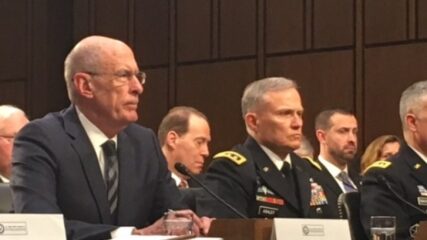
On Jan. 29, 2019, U.S. Director of National Intelligence Dan Coats told the Senate Select Committee on Intelligence: “We do not believe Iran is currently undertaking the key activities we judge necessary to produce a nuclear device.” However, experience helps us realize that the American intelligence community has a very problematic track record in revealing, on time, nuclear weaponization efforts of many countries (e.g., North Korea, India, Pakistan, Syria, and Iraq) including Iran itself, so one has to be very humble about this kind of assessment.
There is much discussion around the world about how to prevent Iran from obtaining nuclear weapons. But few, if any, international bodies deal with the question of how to prepare for the day Iran achieves such capabilities, if that day has not already arrived.
After a year in which Iran opted for “strategic patience,” in the hope that European nations would compensate for the United States sanctions, it now seeks to present a price tag for the US measures against it, and has thus embarked on a response comprising action in three realms: nuclear, military, and oil exports from the Gulf. In the current circumstances, Iran and the United States are demanding conditions that would make a resumption of negotiations difficult, although both sides apparently understand that dialogue may ultimately be the less dangerous option for them.
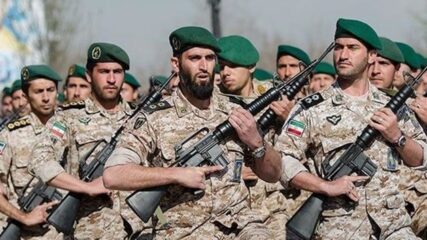
In a bold move, the Trump administration has designated the Iranian Revolutionary Guard Corps (IRGC) as a Foreign Terrorist Organization (FTO). This is historical justice, since the IRGC has sponsored various terrorist militias and organizations, Shiite and Sunni alike, which have committed many attacks against Western, Israeli and Sunni targets.
The US can and should develop a coherent region-wide strategy, involving US allies including Israel, to impede Iran’s ability to continue developing in ways detrimental to the region’s security. However, Iran is proficient in the practice of using proxies and paramilitary methods, as well as in the combination of paramilitary and political struggle. Its response to a US-led strategy to contain and roll back their influence is likely to focus on these areas.
In the interest of securing any deal rather than the right deal – politics over principle – the president and the diplomats he sent to negotiate seem to have forgotten or perhaps never learned why Iran must not get a nuclear weapon.
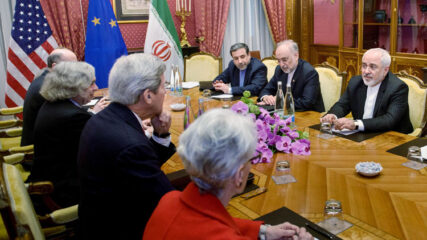
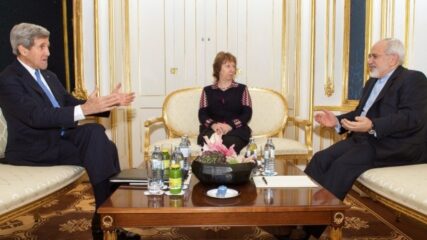
On July 14, 2015, Iran and the five permanent members of the UN Security Council plus Germany (P5+1) concluded a Joint Comprehensive Plan of Action (JCPOA) concerning the future of Iran’s nuclear program.
Congressional rejection of the nuclear deal wouldn’t be pretty, but a messy domestic political battle is a far cry from the president’s warnings of potential war with Iran.
The agreement will not prevent Iran from having a nuclear weapons capability. It will not require the dismantling of Iran’s nuclear enrichment infrastructure. It will however reduce that infrastructure for the next 10 to 15 years.
The lifting of sanctions on Iran will allow Teheran to increase its support for terrorist groups across the region, and bolster Iran’s political and military power.
Yossi Kuperwasser, “The Struggle over the Iranian Nuclear Programme, ” Fathom, Winter/2015