Twenty Years After Madrid: Lessons Learned and the Way Forward for Arab-Israeli Peacemaking

Twenty Years After Madrid: Lessons Learned and the Way Forward for Arab-Israeli Peacemaking

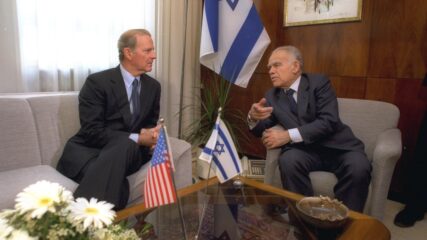
To commemorate the 20th anniversary of the 1991 Madrid Middle East Peace Conference, the U.S. Institute of Peace and the James A. Baker III Institute for Public Policy convened Arab, Israeli, American and European diplomats, policymakers, businesspeople, academics and activists in Washington on November 2, 2011, to discuss the achievements and lessons of the peace conference.

Conference Proceedings|November 2, 2011
Shaath: Ken Stein Interview With Nabil Shaath, PLO Adviser, Arlington, VA

Shaath: Ken Stein Interview With Nabil Shaath, PLO Adviser, Arlington, VA

Nabil Shaath was a close adviser to Arafat particularly in the tumultuous 1998-1993 period when the PLO was buffeted by events and bad choices. Shaath praised Secretary Baker, President Bush and Yitzhak Rabin, and was pleased that Palestinians were participating in the Madrid Conference. He hoped for an end to the conflict with Israel in 1992, based on land for peace but held out for the right of Palestinian return for that to happen. In 2023 he is a foreign policy adviser to Mahmoud Abbas.

Interviews|October 30, 1992
U.S. Memorandum of Agreement to Israel on the Peace Process, 1991

U.S. Memorandum of Agreement to Israel on the Peace Process, 1991

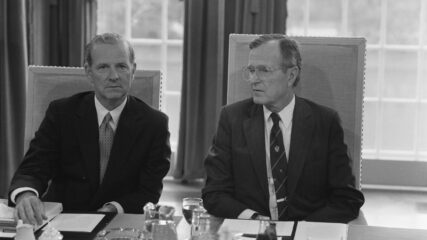
As part of the preparations for the Fall 1991 Madrid Peace Conference, US Secretary of State James Baker drafted a memorandum of agreement between the US and Israel regarding the particulars of resuming the Arab-Israeli peace process. He opens by reiterating that the intention of the negotiations is to achieve a regional peace agreement based on UN Security Council Resolutions 242 and 338.

Documents and Sources|September 16, 1991
“The Intifada and the Uprisings of 1936-1939: A Comparison of the Palestinian Arab Communities”

“The Intifada and the Uprisings of 1936-1939: A Comparison of the Palestinian Arab Communities”

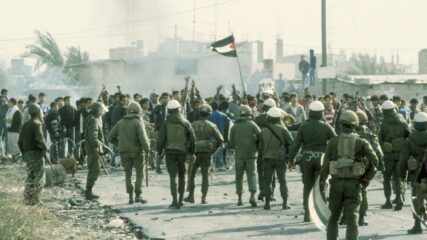
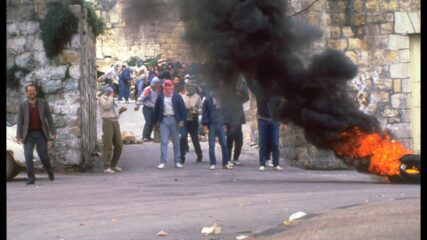
Comparing the 1936-39 Arab uprising in various parts of western Palestine and the intifada that began in 1987 in the West Bank, the Gaza Strip and East Jerusalem, the most striking conclusion is the large number of general similarities between these manifestations of Palestinian national consciousness. The two most significant differences, however, are that the 1987 intifada generated a deeper and more prolonged Palestinian national coherence across all classes than did its predecessor and clarified and crystallized Palestinian opinion, which helped create a historic compromise in Palestinian public policy.

Hamas Charter, Islamic Resistance Movement of Palestine, 1988

Hamas Charter, Islamic Resistance Movement of Palestine, 1988

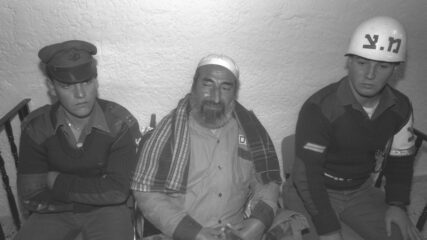
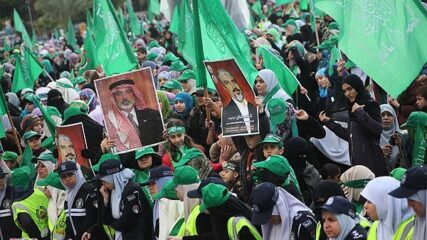
As a militant Islamic Palestinian national organization, Hamas’s adherents believe that Israel is illegitimate and should be destroyed through Jihad. Hamas opposes all recognition and negotiation with Israel, and likewise opposes the PLO/PA who have negotiated and collaborated with Israel from time to time. Hamas and the PA’s competition severely fragment the Palestinian political community.

Israel, Soviet Union Resume Diplomatic Relations

Israel, Soviet Union Resume Diplomatic Relations

Relations between Israel and the USSR began to improve under the leadership of Mikhail Gorbachev. In 1987, the two countries established consular ties which coincided with the Soviet Union’s easing of restrictions on Jewish life and eventually opening the gates of immigration to Israel.

Today in Israeli History|October 18, 1991
First Intifada Breaks Out

First Intifada Breaks Out

December 9, 1987 Riots erupt in the Gaza Strip and the West Bank in what comes to be recognized as the start of the First Intifada, an Arabic word meaning “awakening” or “uprising.” The immediate…

Today in Israeli History|December 9, 1987