Israel Is Accepted as a Member of the United Nations
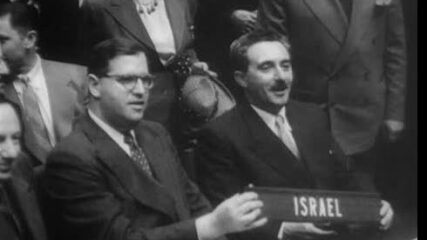
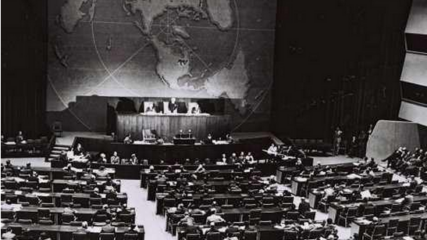
The UN General Assembly votes 37 to 12, with 9 abstentions, to admit Israel as its 59th member.
December 11, 1948 The United Nations General Assembly passes Resolution 194, addressing “the situation in Palestine” amid the ongoing Israeli War of Independence, on a vote of 35-15 with eight abstentions. The resolution never references…
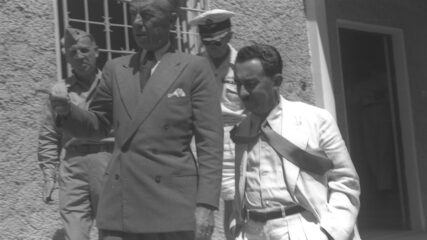
September 17, 1948 Count Folke Bernadotte, a diplomat sent by the United Nations to mediate between Israel and the Arabs during the War of Independence, is assassinated in Jerusalem by members of Lehi (the Stern…
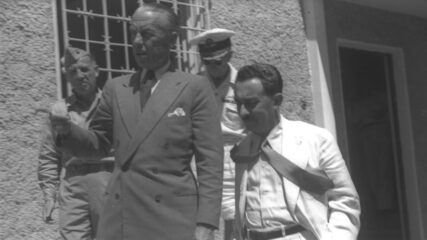
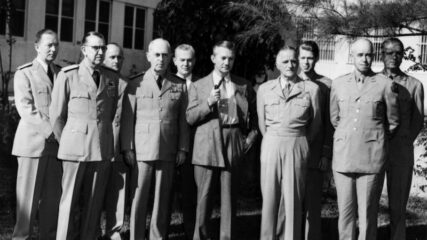
The US rejects a UN request that US Marines be temporarily stationed in Jerusalem to support an Israeli-Arab military truce agreement. The US continues its policy of supporting diplomacy in the region, while maintaining politically-strategic, military distance.
May 20, 1948 Count Folke Bernadotte is appointed by the U.N. Security Council as the mediator for Middle East peace efforts five days into the Israeli War of Independence. Bernadotte was born in Sweden in…
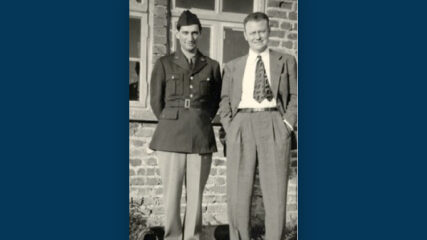
Clark Clifford did not want the US to waiver from the partition resolution passed at the UN in November 1947, which called for the division of Palestine into Arab and Jewish states.
A two-day debate on the future of Britain’s presence in Palestine begins in the British House of Commons. Eventually it is decided to terminate the 1922 League of Nations Mandate for Palestine.
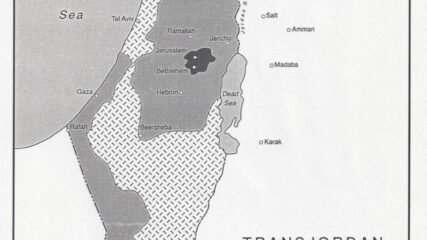
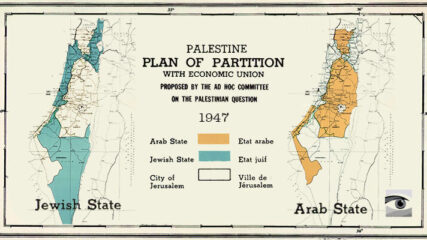
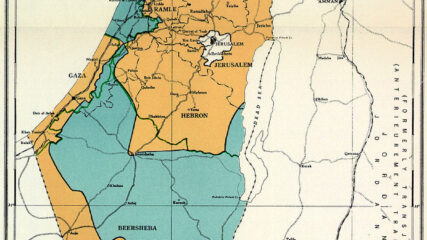
The United Nations General Assembly passes Resolution 181 by a vote of 33-13 with 10 abstentions. The Resolution recommended the creation of separate Arab and Jewish states in Palestine, linked by an economic union.
David Ben-Gurion, the chairman of the Executive of the Jewish Agency since 1935, formally accepts the partition plan proposed by the United Nations Special Committee on Palestine (UNSCOP).
September 29, 1947 The Arab Higher Committee for Palestine formally rejects the U.N. Special Committee on Palestine’s partition plan, which advocates for the division of the land into a separate Jewish and Arab states and…
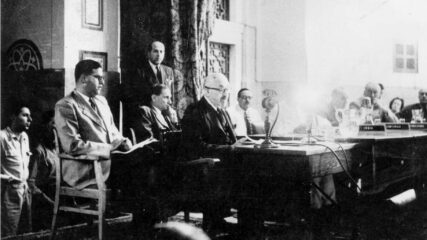
The United Nations had set up UNSCOP in April 1947. Its purpose, like previous commissions that visited Palestine, is to investigate underlying causes for communal unrest and to make political recommendations about curtailing violence.
May 15, 1947 The United Nations establishes its Special Committee on Palestine, known as UNSCOP, to study and propose options for the future of British Mandatory Palestine. The committee’s formation comes in response to a…
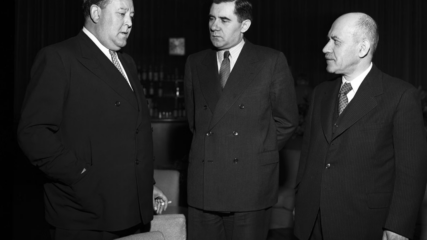
Soviet Foreign Minister Andrei Gromyko proposes a unitary state for Palestine, but vows to support partition if it is deemed the only workable solution.
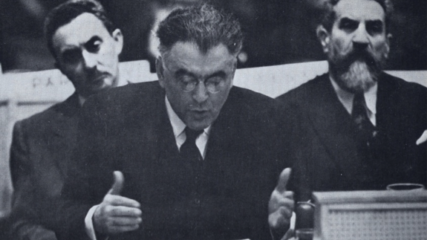
In his address, Abba Hillel Silver called upon UNSCOP to honor the 1917 Balfour Declaration.
April 2, 1947 The British government notifies the United Nations of its intent to bring the question of Palestine’s future before the next U.N. General Assembly. The United Kingdom also requests a special General Assembly…
The British respond to rising violence in Mandatory Palestine by asking the United Nations to figure out what to do.
The Harrison Report, an inquiry into the conditions of displaced persons camps in occupied Germany, reveals that many of the rumors of poor treatment of Jews are indeed true and that “we appear to be treating the Jews as the Nazis treated them, except that we do not exterminate them.”
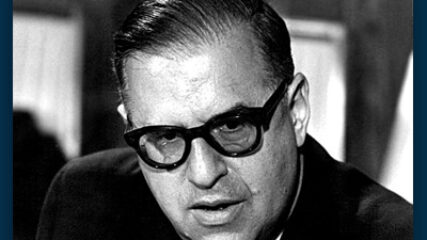
Israeli politician, diplomat, historian, and writer Abba Eban is born in Cape Town, South Africa.
Ralph Bunche is born in Detroit, Michigan. He is appointed to the UN Special Committee on Palestine in 1947, which is charged with devising a partition plan.