Bibliography — BDS and AntisemitismCIE+
Articles and books on the boycott, divestment and sanctions movement and on antisemitism on U.S. campuses, with suggested sources to read on the history and politics of Zionism and modern Israel.
Visiting Israel, U.S. Vice President JD Vance expresses optimism about the rocky Hamas-Israel ceasefire and broader hopes for Middle East peace while refusing to set deadlines for Hamas to disarm or return all hostage bodies.
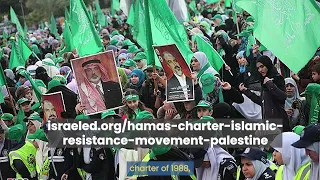
Hamas’ genocide against Israelis unleashed the long-blistering hatred that Hamas possesses for Israel and Jews. Entries include severe Arab criticism of Hamas, its detriment to Palestinian nationalism, statements by its leaders, and the war’s unfolding.
October 13, 2025 The final 20 living Israeli hostages held by Hamas and other Palestinians in Gaza were released October 13, 2025, under the peace plan proposed by President Donald Trump and accepted by Israel…
A memo obtained by multiple news organizations in early October 2025 explains the implementation plan for the U.S.-brokered Gaza ceasefire.
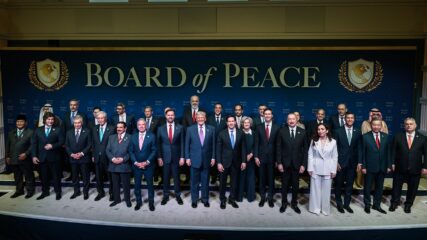
The U.S., Turkey, Qatar and Egypt commit to trying to implement President Trump’s vision for enduring peace in Gaza and the entire Middle East without offering details or obtaining the sign-on of Israeli or Palestinian officials.
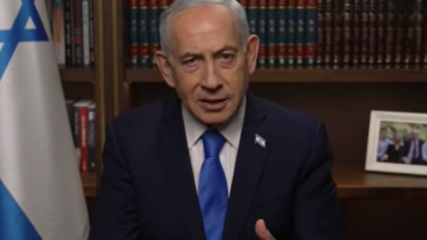
In a Knesset speech, Prime Minister Netanyahu delivers effusive praise for President Trump’s Middle East peacemaking even though the U.S. plan appears to have put the support of key Muslim powers in the region ahead of sign-on from Israeli or Palestinian officials.
Amid praise for the end of the war in Gaza and hopes for long-term peace, humanitarian aid and freed hostages, world leaders barely acknowledge Hamas exists, let alone that it bears any responsibility for the status of the Strip.
President Trump issued a presidential order placing Qatar under the military protection of the United States. He did not submit his policy for U.S. Senate ratification, as would be necessary for the staying power of a treaty. The U.S. had never offered such protection to an Arab country, let alone one that sits across the Persian Gulf from Iran. The action was viewed as a direct response to Israel’s intrusion into Qatar’s sovereignty three weeks earlier in a failed attack on Hamas leaders in Doha. But the order might have been a step toward including Qatar in the Abraham Accords. And Qatar is potentially a key funder in rebuilding the Gaza Strip.
“Israeli Culture and Society: 1880-Present” Eli Sperling, Emory University, Spring/Fall 2019 Upon its inception, Zionism needed more than political and financial solutions to actualize a Jewish home in Palestine. It was necessary for the architects…
“Zionism: Ideology and Practice in the Making of a Jewish State” Scott Abramson, UCLA, Winter 2020 This course tells the biography of Zionism. Uniting social, intellectual, cultural and political history, it exhibits its subject in…
CIA Director George Tenet proposes a cease-fire to stop vicious Palestinian-Israeli violence that carries on for four more years. The plan seeks to restore Palestinian-Israeli security cooperation, end incitement, arrest militants and establish mechanisms for accountability through the U.S.
President Trump and Prime Minister Netanyahu explain their expansive vision for a peaceful Middle East through the implementation of a 20-point U.S. plan to end the Gaza war with the support of many Arab and Muslim countries.
A comprehensive U.S. plan to end the Hamas-Israel war is unveiled eight days before the second anniversary of the October 7, 2023, Hamas attack.
Maya Rezak and Ken Stein, September 30, 2025 Oded Ailam, “Hostages, Rival Clans, and Empty Promises: The Next Middle East Flashpoint,” Jerusalem Center for Public Affairs, September 30, 2025. Neil Bar and Harel Chorev Halewa,…
Divine, Donna Robinson, Politics and Society in Ottoman Palestine: The Arab Struggle for Survival and Power, Lynne Reinner Publishers, Boulder, 1994, pp. 191-215 (with author’s permission, September 2025) This is a rigorous analysis of the struggles of…
Palestinian elites re-engineer antiquity to deny Jewish connection to the ancient Near East. Arguments include denying Solomon’s Jewish Temple, Palestinizing Jesus and appropriating Canaanite ancestry. These and other claims challenge the historical record that Jews were an ancient nation in the Holy Land. With permission of the authors, The Journal of the Middle East and North Africa, May 26, 2025.
In pursuing its central political objective to control and lead the Palestinian Arab quest for statehood, the Palestinian Authority (PA) headed by Mahmoud Abbas is delighted to have multiple countries endorse a two-state solution. Affirming…
For more than a century, Arab and Muslim leaders have expressed hatred for Jews, Zionism and Israel, although some have pointed internally for the failures of the Palestinian Arab national movement.
President Macron’s speech links the end of Hamas-Israeli conflict to the evolution of a of two-state solution. He acknowledges that Israel has the power to end the war and evolve a Palestinian state, asserting that if Israel does neither to the satisfaction of France and her European partners, Israel could pay an undisclosed price. He offers no such penalties to be placed on the PA for its failure to meet its commitments. Once again the Palestinian Arab national movement uses the international community to pressure Israel into concessions. On the same day, Israeli
Prime Minister Netanyahu emphatically rejects the establishment of a Palestinian state west of the Jordan River. The Israeli
parliament in June 2004 rejected any unilateral recognition of a Palestinian state by a 68-9 vote.
Seized by the severity of the Gaza war and nonmovement on a Palestinian-Israeli negotiating process, the U.N. offers a diplomatic road map to end the war and start negotiations. Led by France and Saudi Arabia, it asserts PA primacy as the legitimate Palestinian political representative, addresses possible Palestinian governance reform, seeks to empower a sovereign and economically viable state of Palestine living side by side in security with Israel, and contains other vague PA promises. Israel and the U.S. reject the Declaration. The Israeli government refuses to have outside parties determine the outlines or pace of negotiations with any country because negotiations impact Israeli security today and tomorrow.
PA President Abbas makes requests and gives promises to the French president for the establishment of a Palestinian
state. His commitments were not negotiated with Israel. They are meant to seek support for the end of the Gaza war,
the affirmation of Abbas and the PA as the sole Palestinian political address, and international support for a Palestinian state.
As in the past, the PA and Abbas seek international support to pressure Israel into undesirable political actions.
November 29, 1947 Official Records of the General Assembly, Second Session Supplement No. 11,Volumes l-lV. Deteriorating Relationship Between Britain and Palestine The British intention (Peel Report in 1937) to partition Palestine into Arab and…
September 28, 1995 After signing the Declaration of Principles (DOP) on Interim Self-Government Arrangements, commonly known as the Oslo Accords, on September 13, 1993, Israel and the PLO reached three additional interim agreements before Oslo…