A Panacea in the Pandemic: Distance LearningCIE+
June 10, 2020 By Dr. Ken Stein, Founding CIE President The pandemic has had a blistering impact on our lives. When and where will it end? Unexpected and unnecessary deaths. We have learned that some…


June 10, 2020 By Dr. Ken Stein, Founding CIE President The pandemic has had a blistering impact on our lives. When and where will it end? Unexpected and unnecessary deaths. We have learned that some…

Using original sources, learners will explore the origins of Yom Hashoah, Holocaust Memorial Day, in Israel. The unit includes historical discussion on the importance of commeorating the tragedy of the Holocaust and different proposals that were put forward in the Land of Israel both before and after the creation of the state doing so. A writing prompt is included for use in school settings.

Ken Stein, Emory University, Center for Israel Education, spring 2020 What are turning points or legacy moments in history? That was the focus of my Zoom class at Emory for 80 students in late March…

CIE is pleased to offer this collection of readings, discussion questions, and activities all designed to incorporate Israel into your Passover seder this year.

According to the BDS movement’s Palestinian branch, the impact of the movement “is increasing substantially.” Many pro-Israel sites and organizations agree with that assessment. But how accurate is this prognosis?

Lag B’omer is celebrated Wednesday evening, May 22-23. The Omer is the Hebrew term for the 49-day period between the Jewish holidays of Passover and Shavuot. This period commemorates the Spring harvest, and at the end, the giving of the Torah to the Jewish people.
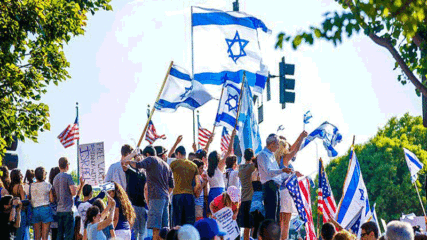
The concurrent success of American Jews and Israeli Jews, even if they are developing with two different understandings of Jewish identity, should not lead to distancing or sibling rivalry. Rabbi Cosgrove relates to the emergence, in both the U.S. and Israel, of two Jewish communities no different than the Sephardic and Ashkenazic. In Israel, the Sephardi-Ashkenazi divide belongs to the past. The greatest success of the Jewish state is Kibbutz Galuiot, the creation of a unifying identity for Jews of every stripe.

Avi Gil’s paper addresses the reality that we are witnessing the end of a rules-based international order emphasizing freedom, open markets, and liberal values, and wisely points out that this will have implications for Israel and the Diaspora. He does a service by explaining what is producing the break down, noting in particular, American weariness with its global responsibilities and conflicts in the Middle East; loss of faith in elites and international institutions after the global economic crisis of 2008; and loss of identity and social status in the face of changing demographics and immigration. He goes on to suggest what is likely to replace the rules-based order: either a multi-power world based on great power competition or global disorder with vacuums being filled by the worst forces.

Head Chef and co-owner of Philadelphia’s Zahav Restaurant, Michael Solomonov has become a celebrated figure in American fine-dining. Solomonov, a James Beard Award winning chef, brings many classic Israeli dishes to Philadelphia. Zahav, opened in 2008, with its nearly 2-month wait for a table on a weekend evening is not the only location in Philadelphia to taste his mastery of Israeli cuisine. He has opened other restaurants, including Dizengoff Hummus. Solomonov’s food barrows from many flavors and dishes that have become integral to Israeli cuisine and culture over the decades.

As Israel enters its eighth decade, the delicate balance between the state’s two dominant characteristics – Jewish and democratic – has arguably never been more contested. Recent steps perceived to have upset this balance have had implications not only inside Israel, but also vis-à-vis Israel’s relationship with Diaspora Jewry. The Israeli governments backtrack on the Western Wall/Kotel compromise has alienated many Reform and Conservative Jews the world over. The recently-passed Nation-State Basic Law raised concerns about a growing illiberal Israel putting particular Jewish values over more universal values like equality and democracy. The memory of 1967, to say nothing of 1948, increasingly becomes more abstract. Both Israeli society and Diaspora Jewry have undergone significant changes in the intervening decades.
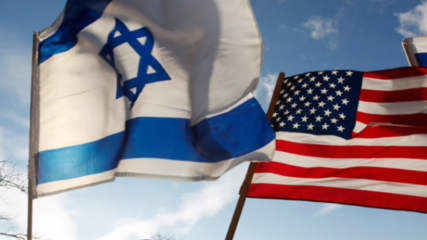
Looking back on a June 10, 2018, article by the Jewish Telegraph Agency, we can see polling data reflect a divide between Israeli and American Jews when it comes to approval of President Trump’s policies.
The Jewish People celebrates, in 2018, 70 years of sovereignty. There are still many challenges confronting the Jewish state today. But at the same time, Israel can note that 70 years of independence had brought her to unfathomable heights of success beyond any dreams held at its founding.

While heralding the flourishing political relations between the United States and Israel, American media channels over the last six months have also reported that recent measures taken by the Israeli government, such as the passage of the National Conversion Law and the freeze on the pluralistic Western Wall plan, have significantly exacerbated the crisis of faith in the State of Israel among extensive segments of the American Jewish population.
The discussion surrounding the Nation-State Law has sparked a heated debate in Israeli society. One side claims that the law is a proper and necessary legislative anchor for the national character of the State of Israel as the state of the Jewish people, against those who seek to deny the Jewish people’s right to a national home in its homeland. The other side argues that this is discriminatory legislation, which undermines the democratic nature of the State of Israel.

Ambassador David Friedman nearly changed U.S. policy with a request to use “Judaea and Samaria.”

Four out of every five Jews in the world live in the United States and Israel; 6.3 million in Israel, 6.7 million in the US. According to Pew Research Center Studies, 7 in 10 American Jews feel attached or very attached to Israel.
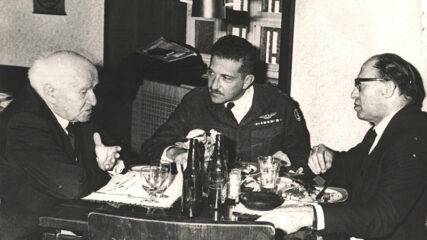
In two books written sixty years apart, When Prophecy Fails, 1957 (Festinger, Riecken and Schachter) and The Influential Mind, 2017 (Sharot, an Israeli neuroscientist), the conclusions were the same.

Rabbis who attended the AIPAC-sponsored National Rabbinic Symposium Association meeting in Washington at the end of August sat in my sessions on Zionism with common interests.
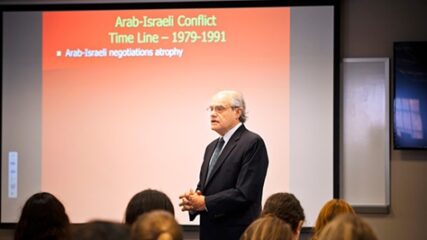
Scrutiny and planning prove essential when selecting college courses.
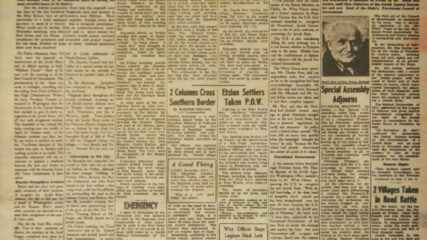
In teaching history, the most difficult task remains creating context:catapulting students back into a different time frame and having them disregard their contemporary historical perspective. The goal is to witness history as it unfolded, not as it concluded.

For the last several years, I have heard and witnessed personal stories about Israel (dis)engagement. Everyone asks how to stem distancing from Israel.

Published by JESNA, Jewish Education Service of North America ISSUE #18 WINTER 2004 Israel Education and the College Campus, “Awake ye from ye slumber, the call that is heard, oh my people.” Agenda: Jewish Education,…

The report, clearly a snap shot, conveys a picture of anti-Semitic activities on US campuses. A strong correlation is found between the occurrence of BDS activity and the occurrence of anti-Semitic expression where incidents were reported.

For Malcolm Hoenlein, the Executive Vice Chairman of the Conference of Presidents of American Jewish Organizations context matters. In his lengthy interview he suggests that Jewish students’ illiteracy is present before they hit American campuses.
