Lessons from American Withdrawal from Afghanistan, Ken Stein

Lessons from American Withdrawal from Afghanistan, Ken SteinCIE+

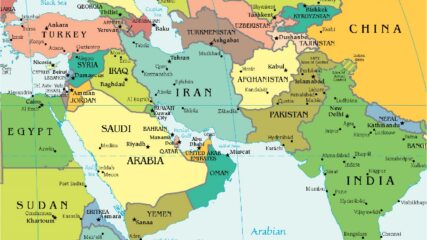
In August 2021, the U.S. withdrew its military from Afghanistan, ending America’s longest war. Correctly, we needed to prevent another 9/11 on our doorsteps. We still have that imperative. Our departure does not diminish America’s need for stable allies, like Israel and Arab states. The US should build an effective alliance system among them. We should have a small, substantive and selective US footprint in the region for support of friends and deterrence of foes, not for nation-building.

As President, Herzog Offers Advancement of Israel-Diaspora Ties

As President, Herzog Offers Advancement of Israel-Diaspora TiesCIE+

Isaac “Bougie” Herzog’s election as Israel’s 11th president on June 2 was such “big” news that it was all but impossible to find on the home page of The Times of Israel a day later. That’s because reporting on a largely ceremonial position was overwhelmed by the end of a two-year wait for the monumental announcement of an eight-party government coalition, including Islamist Arabs and religious Zionist Jews, to unseat the longest-serving prime minister in Israel’s history.

Issues and Analyses|June 4, 2021
Great Powers, the Middle East and the Cold Wars

Great Powers, the Middle East and the Cold WarsCIE+

The clash of great powers to control the Middle East, particularly between the U.S. and the U.S.S.R., neither began after World War II nor ended with the demise of the Soviet Union in 1991. Today, China, the U.S., Russia and Middle Eastern regional powers vie to influence everyday politics and resources.

Issues and Analyses|August 9, 2020
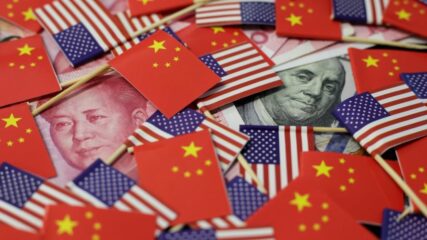
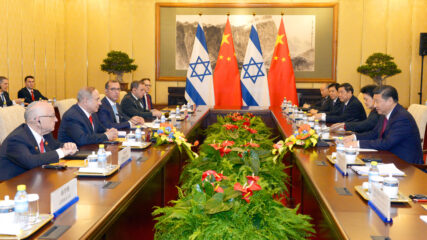
China’s Rise, U.S. Opposition and the Implications for Israel

China’s Rise, U.S. Opposition and the Implications for IsraelCIE+

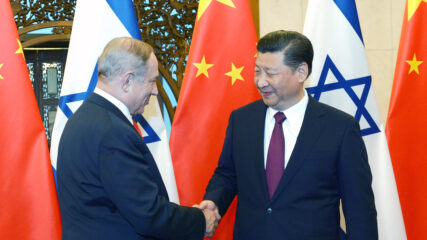
This article offers assessments of China in a clear-eyed and non-polemical fashion. It offers not an apology but an explanation for why China, having suffered a century of humiliation by external powers in the 19th century, is focused on re-establishing its role in the world – a role it believes its global economic weight entitles it to have. The Chinese response to the coronavirus is a vivid reminder of the fear that constrains honest discussion or reporting or intellectual development in that vast country.

Issues and Analyses|March 20, 2020
The Deal of the Century: Where Does it Lead?

The Deal of the Century: Where Does it Lead?CIE+

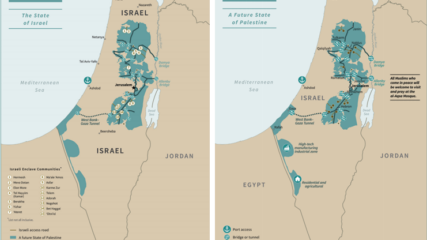
“The Deal of the Century,” formulated by the Trump administration, is presented as a new paradigm for a solution to the Israeli-Palestinian conflict that also shapes the architecture of a new Middle East. In order to keep the State of Israel Jewish, democratic, secure, and moral, it is necessary to adopt the components of the plan that both enhance security and at the same time can jumpstart the process of separation from the Palestinians, thus creating a better strategic reality for Israel.

Issues and Analyses|February 26, 2020
The U.S. Peace Plan: A Return to the Rabin Doctrine of Defensible Borders

The U.S. Peace Plan: A Return to the Rabin Doctrine of Defensible BordersCIE+

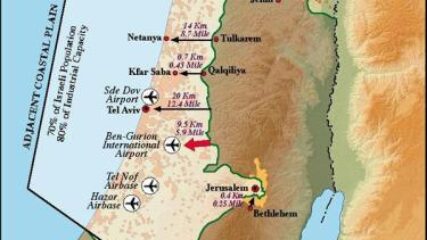
The U.S. peace plan offers a return to the security-first approach of former Prime Minister Yitzhak Rabin and, specifically, the concept of defensible borders. On Jan. 29, 2020, Shimon Sheves, former Director-General of Prime Minister Rabin’s office, told Israel Army Radio, “The Trump plan is essentially the Rabin plan” and a “continuation of Rabin’s legacy.” Journalist Ben Caspit, writing in Maariv, called it “a modern incarnation of Rabin’s plan from 25 years ago.”

Issues and Analyses|February 5, 2020
Lebanon's Political-Economic Crisis: Ramifications for Israel

Lebanon’s Political-Economic Crisis: Ramifications for IsraelCIE+

The waves of protests in Lebanon in recent weeks and the country’s political instability stem primarily from fundamental problems in the local economy, including the absence of reforms and the rampant corruption among the ruling elite and all government institutions. These developments are highly problematic for the country’s decision makers, including Hezbollah. Israel, for its part, is monitoring the developments, which inter alia could lead to a strengthening of Hezbollah.

Issues and Analyses|January 24, 2020
Eight Reasons Why the United States and Iraq Still Need Each Other

Eight Reasons Why the United States and Iraq Still Need Each OtherCIE+

Unlike Iraq’s immediate neighbors, Israel is not directly tied to recent events in that country. Nevertheless, U.S. withdrawal would create additional threats to Israeli security. Both Iran and the Islamic State would have a freer hand to operate inside Iraq, likely spreading across the porous border into Syria and ultimately to Israel’s own frontiers. American credibility would also suffer a new setback.

Issues and Analyses|January 9, 2020
A New Leadership at the European Union: A Chance for Better EU Ties with Israel?

A New Leadership at the European Union: A Chance for Better EU Ties with Israel?CIE+

In late November 2019, the European Parliament ratified the appointments of Charles Michel as President of the European Council and Ursula von der Leyen as President of the European Commission, as well as the appointments of the 27 commissioners under her responsibility over the next five years. The Commission is in effect Europe’s government, responsible for implementing the strategy of the European Union and for ongoing management of various issues assigned to it by its members. After a new government is formed in Israel, it would behoove the Foreign Ministry and the Israeli delegation in Brussels to prepare an agenda for a first meeting between the political leadership of the EU and Israel.

Issues and Analyses|December 19, 2019
The Future of U.S.-Israel Relations Symposium

The Future of U.S.-Israel Relations SymposiumCIE+

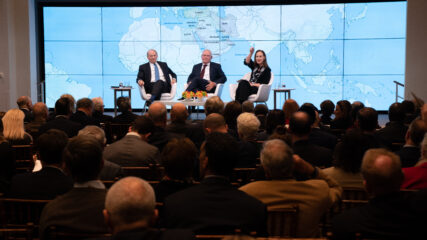
The symposium held on December 2, 2019 analyzed the consequences of U.S. retrenchment for the future of Israel and the Middle East. For more than four decades, the United States has played a large part in the Middle East regional order. However, it is now pulling back from the region in a manner that has generated uncertainty and insecurity for America’s allies and partners. The event convened experts to discuss whether Israel is in a particularly exposed position given its traditional dependence on the United States.

Issues and Analyses|December 9, 2019
Are They Legal or Not? Pompeo’s Announcement on the Israeli Settlements

Are They Legal or Not? Pompeo’s Announcement on the Israeli SettlementsCIE+

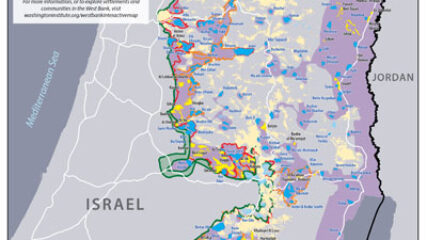
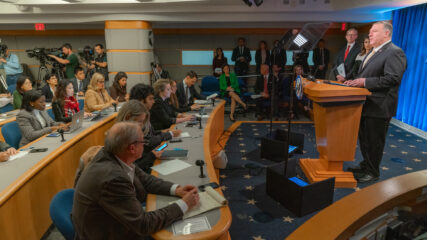
The announcement by US Secretary of State Mike Pompeo that “the establishment of Israeli civilian settlements in the West Bank is not, per se, inconsistent with international law” is in line with Israel’s official position, and its inherent message – that preoccupation with the question of the legality of the settlements narrows Palestinian flexibility and discourages the achievement of a negotiated resolution to the conflict – is correct. However, the announcement’s practical value is minor, and there are even potential risks and costs for Israel.

Issues and Analyses|November 24, 2019
(Podcast) Decision Points: The U.S.-Israel Relationship

(Podcast) Decision Points: The U.S.-Israel RelationshipCIE+

“Decision Points” is a new Washington Institute podcast that provides fresh insights into critical moments in the U.S.-Israel relationship from prominent historians and policymakers. The series is hosted by Ziegler Distinguished Fellow David Makovsky, a renowned expert on U.S.-Israel relations, including territorial solutions to the Israeli-Palestinian conflict.

Issues and Analyses|November 13, 2019
The Day After an Iranian Nuclear Strike

The Day After an Iranian Nuclear StrikeCIE+

There is much discussion around the world about how to prevent Iran from obtaining nuclear weapons. But few, if any, international bodies deal with the question of how to prepare for the day Iran achieves such capabilities, if that day has not already arrived.

Issues and Analyses|September 27, 2019
The American Jewish Community and Israel’s National Security - A Call for Action

The American Jewish Community and Israel’s National Security – A Call for ActionCIE+

The relationship between Israel and the American Jewish community has been central to the ability of both communities to develop and flourish over the past 70 years; it is likewise vital to the national security of Israel and the entire Jewish people. The current generation has witnessed increasing trends of distance and alienation between Israel and American Jewry, a weakened connection and sense of mutual belonging, and the decline of responsibility and involvement between the two communities. These join the challenges concerning the continuity of the American Jewish community and its political and social influence within the United States.

Issues and Analyses|September 17, 2019
Is the BDS Movement on the Rise?

Is the BDS Movement on the Rise?CIE+

According to the BDS movement’s Palestinian branch, the impact of the movement “is increasing substantially.” Many pro-Israel sites and organizations agree with that assessment. But how accurate is this prognosis?

Issues and Analyses|August 5, 2019
A New, Pro-Israel Government in Athens

A New, Pro-Israel Government in AthensCIE+

The right-wing conservative New Democracy party’s accession to office in Greece will not weaken the country’s close ties with Israel and could even strengthen them, despite the presence in the government of a minister with an allegedly antisemitic past.

Issues and Analyses|July 22, 2019
Tectonics, Techno-Economics and National Security: The Strategic Clash Between the United States and China and Implications for Israel

Tectonics, Techno-Economics and National Security: The Strategic Clash Between the United States and China and Implications for IsraelCIE+

A series of “volcanic” eruptions are reported around the world: “trade war,” mutual imposition of tariffs, sanctions on companies, military signaling in the South China Sea, summits between leaders, and temporary “ceasefires.” All are manifestations of the historic clash between the “tectonic plates” of the United States of America and the People’s Republic of China. Like the processes that shaped the earth, the collision will shape the landscape for future generations: politically, economically and militarily. Israel has a marginal and secondary role in this dynamic, but the shockwaves reach its shores and present complex challenges to its policy and national security.

Issues and Analyses|July 15, 2019
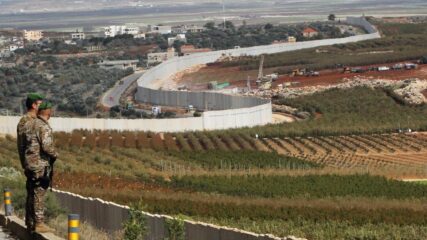
Southern Lebanon: The Land of Three Armies

Southern Lebanon: The Land of Three ArmiesCIE+

July 12, 2019 will mark the thirteenth anniversary of the outbreak of the Second Lebanon War; August 14 will mark the anniversary of its end under Security Council Resolution 1701; and discussions will be held at the United Nations headquarters regarding a renewal of UNIFIL’s mandate for another year. The bottom line: another war between Israel and Lebanon did not erupt, mainly due to both sides’ desire to avoid it and, to some extent, also due to UNIFIL’s help in preventing escalation resulting from tactical incidents.

Issues and Analyses|July 3, 2019
The Greatest Necessity: National Cohesion

The Greatest Necessity: National CohesionCIE+

Israel’s government must nurture a spirit of unity and national purpose by building a policy consensus as broad as possible. This is necessary both in preparation for likely combat operations against Iran and its proxies, and in order to respond wisely to the American peace plan and to intelligently manage conflict with the Palestinians.

Issues and Analyses|June 13, 2019
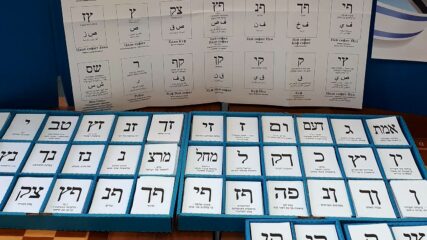
Israel’s Election Result Shows Broad Consensus on Diplomatic and Defense Issues

Israel’s Election Result Shows Broad Consensus on Diplomatic and Defense IssuesCIE+

The recent Israeli election campaign was heated and nasty; primarily a referendum on whether Netanyahu should continue to serve as Prime Minister. His personality and legal problems were the focus of opposition attacks, not his policies. In fact, beyond the harsh rhetoric one can discern a broad consensus in Israel behind the outgoing government’s actual diplomatic and defense policies.

Issues and Analyses|May 28, 2019