Objectives and Conclusions: U.S.-Israel-Iran War
While too much is unknown after a week of fighting to make definitive statements about the war, certain possible outcomes can be explored.
Hamas’ genocide against Israelis unleashed the long-blistering hatred that Hamas possesses for Israel and Jews. Entries include severe Arab criticism of Hamas, its detriment to Palestinian nationalism, statements by its leaders, and the war’s unfolding.
December 11, 2024 Professor Meir Litvak, Tel Aviv University, for the Center for Israel Education In this extraordinary review, Professor Meir Litvak unfolds the ideological origins and development of the Iranian regime’s stark hatred of…
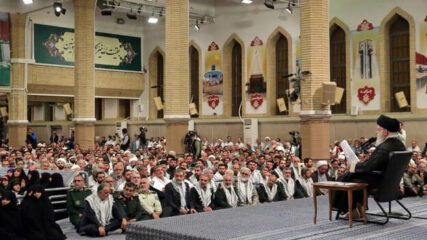
Iranian Supreme Leader Ayatollah Ali Khamenei delivers a synopsis of Iran’s hatred of Israel and the United States, provides deep insight into his unwavering commitment to destroying Israel, and mourns for slain Hezbollah leader Hassan Nasrallah.
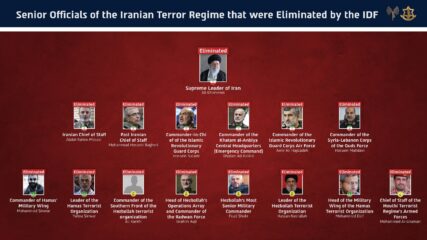
Netanyahu’s speech reflected on the needed elimination of Hezbollah as an enemy of Israel, a powerful militia fighting in Lebanon against Israel for four decades. On the day of Netanyahu’s speech, the Israeli Air Force killed Hassan Nasrallah, the Hezbollah leader in his Beirut offices along with other Hezbollah officials.
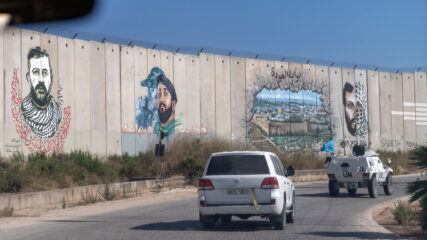
Hezbollah has used its stronghold in southern Lebanon to launch continual attacks on northern Israel since October 8, 2023. Hezbollah says it is motivated by its support for Hamas, a fellow member of Iran’s Axis of Resistance surrounding Israel. While Hezbollah is Shia and Hamas is Sunni, both are devoted to Israel’s destruction, and both receive funding from and coordinate with Iran.
On October 8, 2023, Hezbollah launched a barrage of rockets at northern Israel that escalated tensions in the region and prompted a substantial increase in the IDF presence along the border with Lebanon. It was not the first instance of such hostilities, however, as both sides have a long history of conflict.
Hezbollah and Hamas have significant ideological and religious differences, but they are united in the goal of destroying Israel and in their alliance with Iran. Before Hamas’ attacks on October 7th, the two terrorist organizations had significant coordination, although Hamas did not warn Hezbollah what it planned for that day.
Hezbollah emerged in Lebanon in the 1980s, rooted in the historical marginalization of the country’s Shiite community. Today, Hezbollah is a major player in Lebanese social and political life, wielding significant influence over both the government and the military situation.
Iran exerts an immense amount of influence over its most successful proxy creation, Hezbollah.
Countries from Mexico south have significant Jewish populations and have played important roles in Jewish history, from the high of Guatemala’s Jorge García-Granados casting the first U.N. vote in 1947 for the creation of Israel to the…
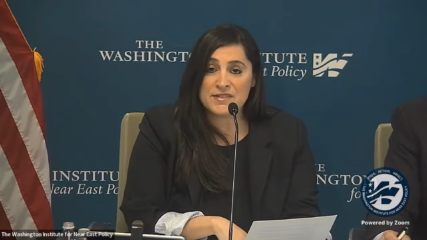
June 28, 2024 The Washington Institute for Near East’s Policy Dana Stroul leads an incisive discussion with four outstanding panelists on “Hezbollah-Israel Escalation” and the high prospects of war on June 28, 2024. The video,…
Unfold six Arab states’ embrace of Israel since 1973 out of national interests and U.S. mediation, sidelining the Palestinian movement, and explore Hamas’ Oct. 7, 2023, attack and its implications for the Israeli-Palestinian conflict and Israeli diplomacy.
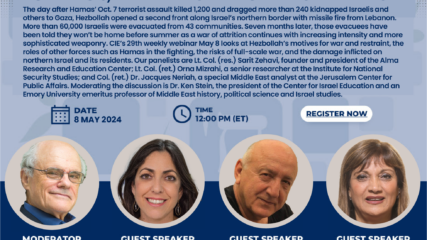
The day after Hamas’ Oct. 7 terrorist assault killed 1,200 and dragged more than 240 kidnapped Israelis and others to Gaza, Hezbollah opened a second front along Israel’s northern border with missile fire from Lebanon….
Nearly six months into the Gaza war, Israel has come to the realization that the pre-October 7 status quo in south Lebanon is no longer tenable. Whether a new status quo is established through negotiation…
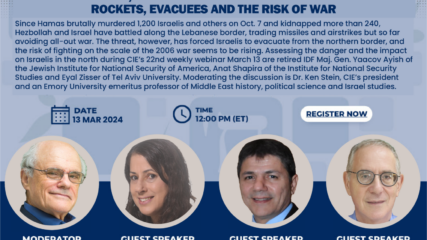
Since Hamas brutally murdered 1,200 Israelis and others on Oct. 7 and kidnapped more than 240, Hezbollah and Israel have battled along the Lebanese border, trading missiles and airstrikes but so far avoiding all-out war. The threat, however, has forced Israelis to evacuate from the northern border, and the risk of fighting on the scale of the 2006 war seems to be rising. Assessing the danger and the impact on Israelis in the north during CIE’s 22nd weekly webinar March 13 are retired IDF Maj. Gen. Yaacov Ayish of the Jewish Institute for National Security of America and Anat Shapira of the Institute for National Security Studies. Moderating the discussion is Dr. Ken Stein, CIE’s president and an Emory University emeritus professor of Middle East history, political science and Israel studies.
February 13, 2024 — Dr. Kenneth Stein and Pastor Dr. Armando Alducin, Israel y el Medio Oriente Entrevista (Israel and the Middle East) with Mauricio Friedman, (75 minutes in English and Spanish) Five points stressed in…
February 2024 Washington Institute for Near East Policy Since the Hamas-led attacks against Israel on October 7, 2023, Hezbollah Secretary-General Hassan Nasrallah has made five public appearances to address the group’s own confrontation with Israel…
With more than 1,200 murdered and some 250 kidnapped by Hamas terrorists on October 7, the war in Gaza has unfolded in full force. Rising discussion abounds about what tomorrow looks like, with no certainty…
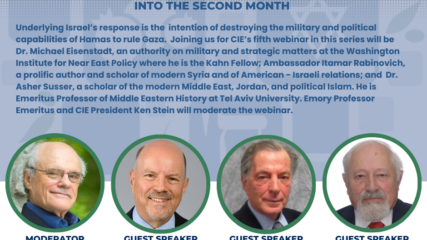
Underlying Israel’s response is the intention of destroying the military and political capabilities of Hamas to rule Gaza. For CIE’s fifth webinar in this series Nov. 8, 2023, Dr. Michael Eisenstadt, an authority on military…
The murderous attacks perpetrated by Hamas terrorists against Israelis reverberated across Israel, the region and the world. As Israel buried tens of hundreds of its dead, the government formed an emergency war cabinet to shape responses as thousands were mobilized for reserve duty. On Israel’s borders and across the region, tensions rose. The U.S. responded with unequivocal presidential, congressional and military support for Israel’s national security and President Biden’s visit to Israel on October 18. Joining CIE to provide insight into Hamas’ ideological motivations, its connections to Iran and the rise of Islamic antisemitism were Tel Aviv University Professor Meir Litvak. Discussing Middle Eastern, North African and international responses was Dr. Sarah Feuer, a lecturer at Reichman University and a research fellow at the Gazit Institute in Tel Aviv. Addressing the implications and context of Biden’s visit was Dr. Amnon Cavari, who teaches at Reichman University and this year is an Israel Institute visiting professor of political science at the University of Michigan. During this 39-minute webinar, they talked about Hamas’ genocidal ideology and its reasons for striking now, the likelihood of weakening regional and international support for Israel as the war continues, and the war’s best possible outcomes for Israel. Moderating was Dr. Ken Stein, the Center for Israel Education’s president and an Emory University professor emeritus of Middle Eastern history and political science.
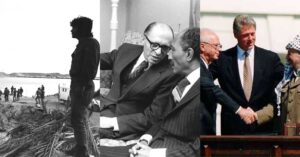
Sharon led IDF commandos in the 1950s, was a field commander in 1967 and drove the Sinai counteroffensive in 1973. As defense minister, he launched the First Lebanon War, which resulted in an 18-year occupation,…
On President Joe Biden’s trip to Israel, he and Prime Minister Yair Lapid affirmed the long-term U.S.-Israel strategic relationship.
July 12, 2019 will mark the thirteenth anniversary of the outbreak of the Second Lebanon War; August 14 will mark the anniversary of its end under Security Council Resolution 1701; and discussions will be held at the United Nations headquarters regarding a renewal of UNIFIL’s mandate for another year. The bottom line: another war between Israel and Lebanon did not erupt, mainly due to both sides’ desire to avoid it and, to some extent, also due to UNIFIL’s help in preventing escalation resulting from tactical incidents.