United Nations Adopts Resolution 242 CIE+ members only
In the wake of the June 1967 Six Day War, the United Nations Security Council adopts Resolution 242, a document which has served as a framework for all major Arab/Israel negotiations since.

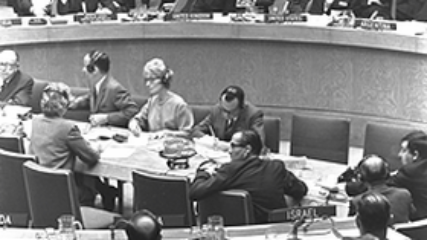
In the wake of the June 1967 Six Day War, the United Nations Security Council adopts Resolution 242, a document which has served as a framework for all major Arab/Israel negotiations since.
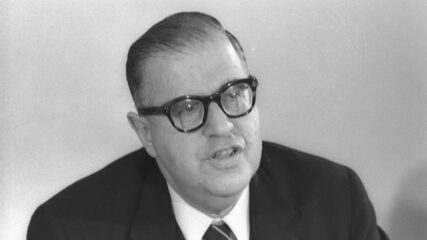
June 6, 1967 After leaving Jerusalem at the start of the Six-Day War the previous day, Israeli Foreign Minister Abba Eban speaks to the U.N. Security Council to explain the pre-emptive Israel Defense Forces attacks…
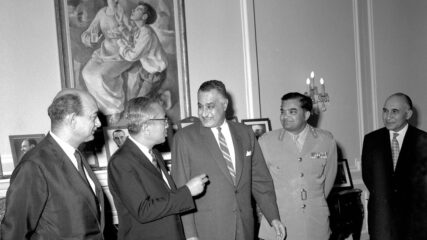
May 16, 1967 Egyptian President Gamal Abdel Nasser requests that the United Nations withdraw its peacekeeping troops from the Sinai, clearing an obstacle to war between Israel and its Arab neighbors. The Six-Day War begins…
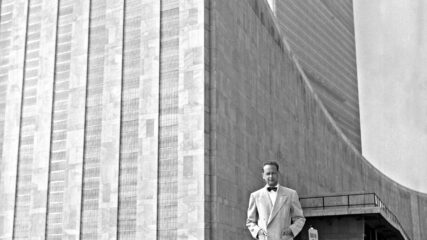
April 8, 1960 U.N. Secretary-General Dag Hammarskjold for the first time publicly criticizes Egypt’s confiscation of Israeli cargo on ships going through the Suez Canal. The Egyptian closure of the Straits of Tiran and the…
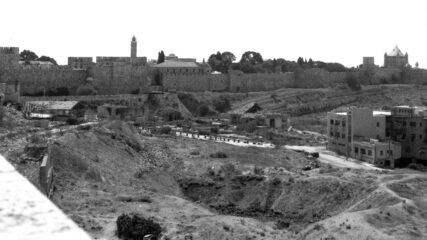
May 26, 1958 Four Israeli police officers and the chairman of the United Nations’ Israel-Jordan Mixed Armistice Commission are fatally shot by Jordanian fire in the demilitarized zone on Mount Scopus in Jerusalem. Both Israel…
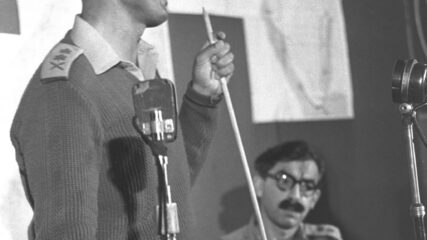
The Knesset debates Prime Minister David Ben-Gurion’s announcement that Israeli troops would withdraw from Sinai following the 1956 Suez War.

Two Israeli paratrooper platoons made up of approximately fifty IDF soldiers storm an Egyptian army camp in Gaza. The raid is a reprisal for continued fedayeen (Palestinian militants) attacks against Israeli civilians.

December 5, 1949 Prime Minister David Ben-Gurion declares in a Knesset speech that “Jewish Jerusalem is an organic, inseparable part of the state of Israel” and that Israel rejects any attempt by the United Nations…
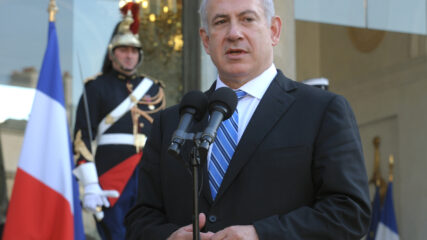
Benjamin Netanyahu, the ninth and current Prime Minister of Israel, is born in Tel Aviv. Although he spends a good portion of his childhood in Philadelphia, Netanyahu returns to Israel in 1967 to fulfill his service in the IDF.

September 16, 1949 Israel becomes a member of UNESCO, the U.N. Educational, Scientific and Cultural Organization. Based in Paris, UNESCO has the purpose of creating peace and security by encouraging international collaboration in education, natural…
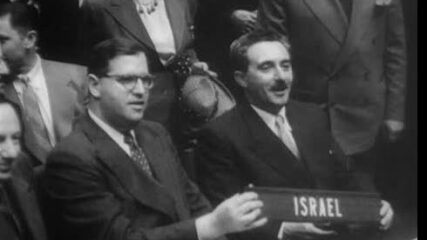
The UN General Assembly votes 37 to 12, with 9 abstentions, to admit Israel as its 59th member.
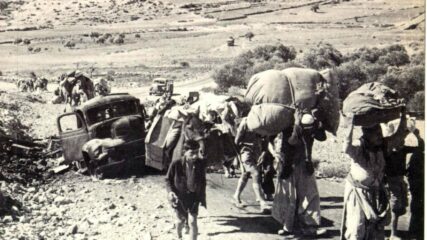
December 11, 1948 The United Nations General Assembly passes Resolution 194, addressing “the situation in Palestine” amid the ongoing Israeli War of Independence, on a vote of 35-15 with eight abstentions. The resolution never references…
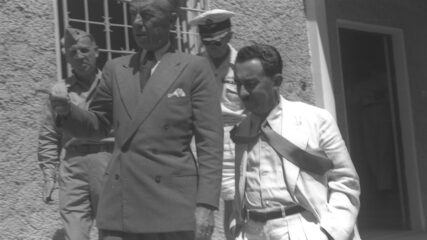
September 17, 1948 Count Folke Bernadotte, a diplomat sent by the United Nations to mediate between Israel and the Arabs during the War of Independence, is assassinated in Jerusalem by members of Lehi (the Stern…
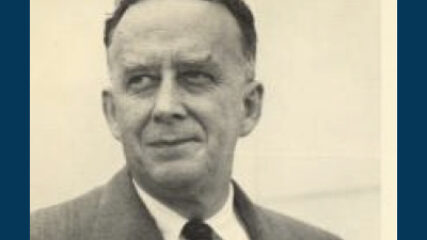
The US rejects a UN request that US Marines be temporarily stationed in Jerusalem to support an Israeli-Arab military truce agreement. The US continues its policy of supporting diplomacy in the region, while maintaining politically-strategic, military distance.
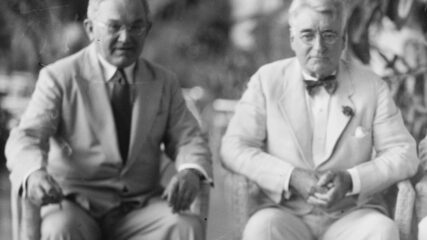
Shortly after Israel declared its independence from the British, on May 14, 1948, the US sent a memorandum to the UN that indicated its acceptance of the new state and the direction of its future policy in the Middle East.
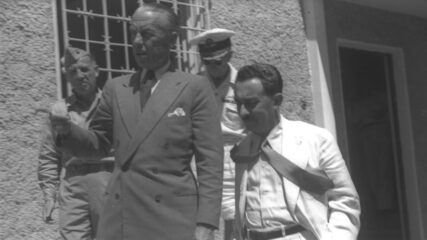
May 20, 1948 Count Folke Bernadotte is appointed by the U.N. Security Council as the mediator for Middle East peace efforts five days into the Israeli War of Independence. Bernadotte was born in Sweden in…
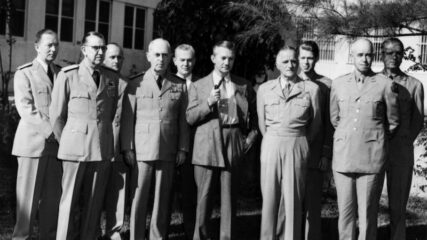
The United States was deeply worried that supporting the establishment of a Jewish state would jeopardize Arab oil supplies and force the US to send troops, risking a confrontation with the USSR.
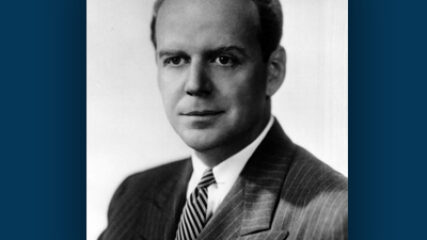
Clark Clifford did not want the US to waiver from the partition resolution passed at the UN in November 1947, which called for the division of Palestine into Arab and Jewish states.
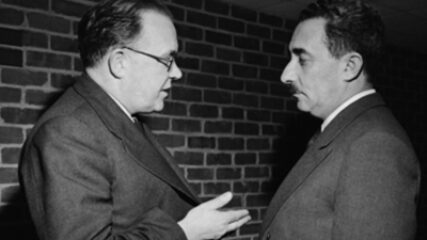
A two-day debate on the future of Britain’s presence in Palestine begins in the British House of Commons. Eventually it is decided to terminate the 1922 League of Nations Mandate for Palestine.
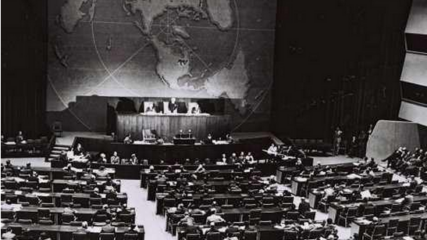
The United Nations General Assembly passes Resolution 181 by a vote of 33-13 with 10 abstentions. The Resolution recommended the creation of separate Arab and Jewish states in Palestine, linked by an economic union.
David Ben-Gurion, the chairman of the Executive of the Jewish Agency since 1935, formally accepts the partition plan proposed by the United Nations Special Committee on Palestine (UNSCOP).
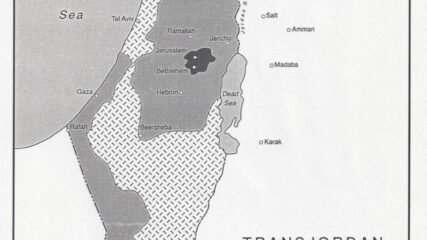
September 29, 1947 The Arab Higher Committee for Palestine formally rejects the U.N. Special Committee on Palestine’s partition plan, which advocates for the division of the land into a separate Jewish and Arab states and…
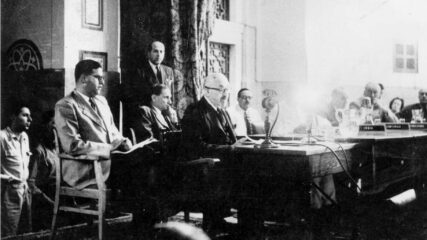
The United Nations had set up UNSCOP in April 1947. Its purpose, like previous commissions that visited Palestine, is to investigate underlying causes for communal unrest and to make political recommendations about curtailing violence.
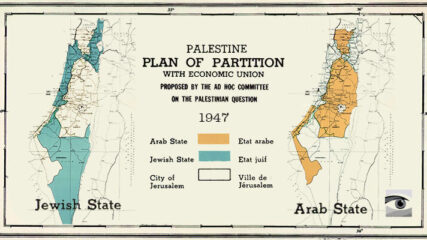
May 15, 1947 The United Nations establishes its Special Committee on Palestine, known as UNSCOP, to study and propose options for the future of British Mandatory Palestine. The committee’s formation comes in response to a…
