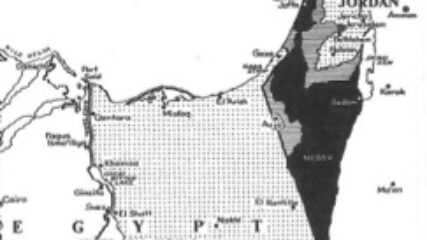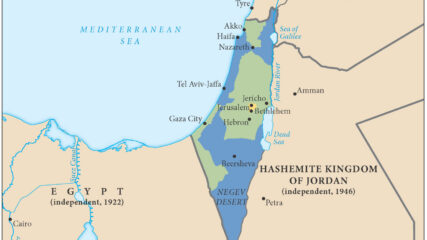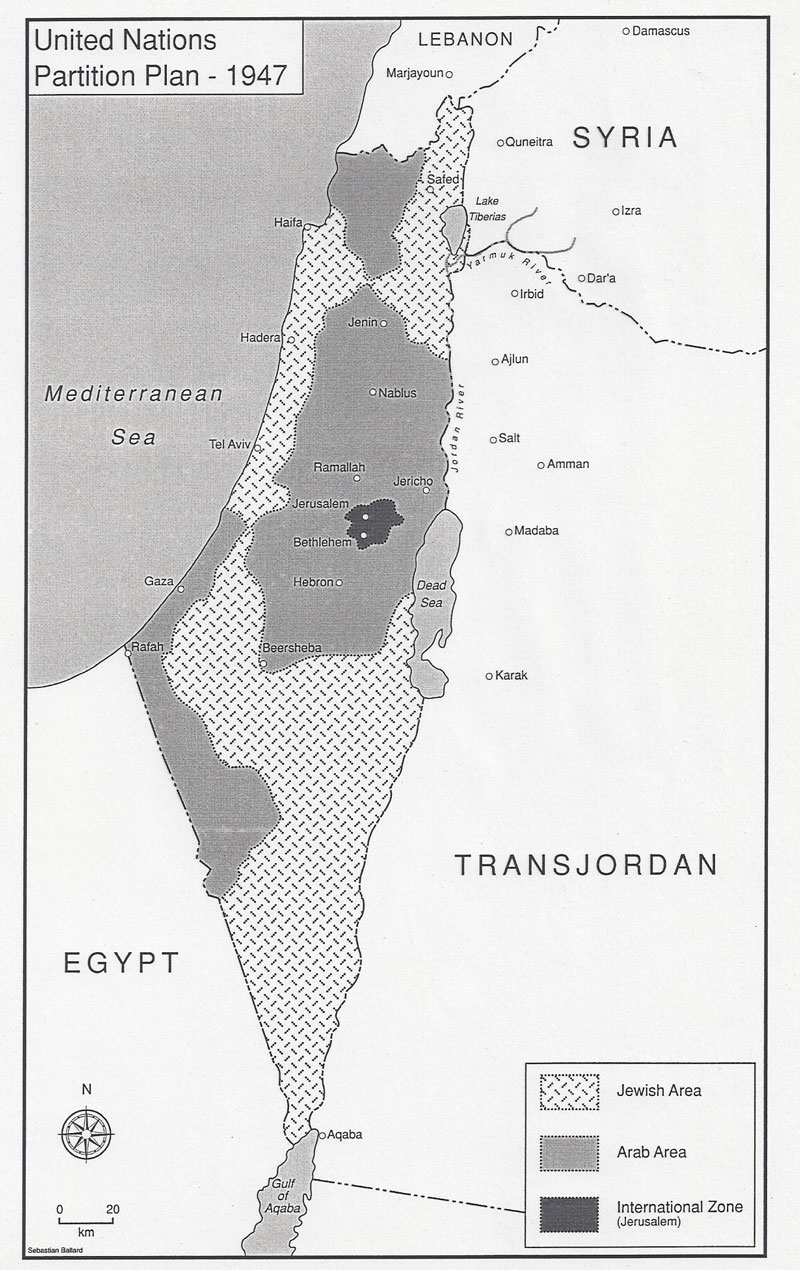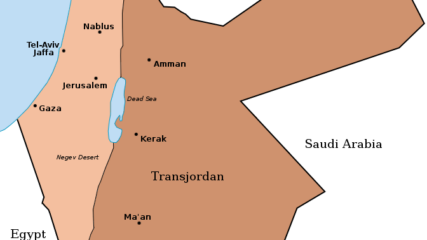
Map of U.N. Partition Plan, 1947CIE+
The United Nations General Assembly approved Resolution 181 on Nov. 29, 1947, to divide the British Mandate of Palestine into an Arab state and a Jewish state along the lines in this map, with an…
The UN recommended establishing Arab and Jewish states in Palestine, with an international regime for Jerusalem. Zionists were jubilant; Arab states and the Palestinians were indignant and rejected two state solution. No Arab state is established, Israel is in 1948
The UN suggested partition of Palestine into Arab and Jewish states with an economic union between them and an internationalization of Jerusalem.
In recognition of the anniversary of the United Nations’ passage of Resolution 181 on November 29, 1947, we present our newest three-part whiteboard videos providing context to this historical moment in Jewish history.
The 1937 plan to partition Palestine was never implemented. It did, however, remain a workable political option for resolving the conflict between Arabs and Zionists. Britain needed to placate Arab state opposition to Zionism, so it refrained from actively revisiting the partition plan.
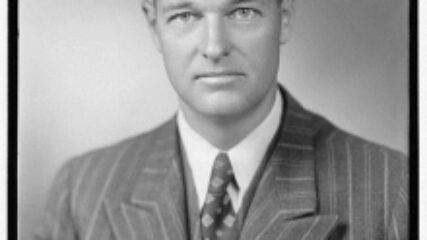
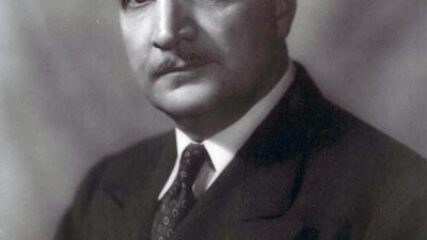
Loy Henderson, Director of the Office of Near Eastern and African Affairs, U.S. State Department, to U.S. Secretary of State George Marshall
Writing two months before the U.S. voted at the United Nations in favor of Palestine’s partition into Arab and Jewish states, Henderson voices profound dislike for Zionism and a Jewish state. He advocates for cultivating positive relations with Muslim and Arab states. He is one of many at the State Department at the time who saw Zionism as contrary to American national interests.
Earlier in 1947, Great Britain turned the future of the Palestine Mandate over to the newly established United Nations. Then in August 1947, the UN suggested that establishing an Arab and Jewish state with a federal union would be the best solution for the communal unrest there.
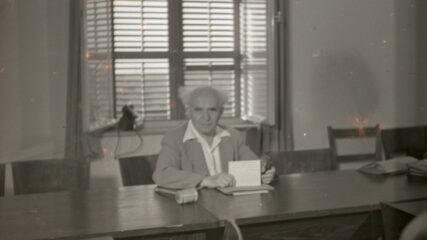
The Status-Quo Agreement is an understanding reached between David Ben-Gurion, then the chairman of the Jewish Agency Executive, and the religious parties in the period before Israel became a state.
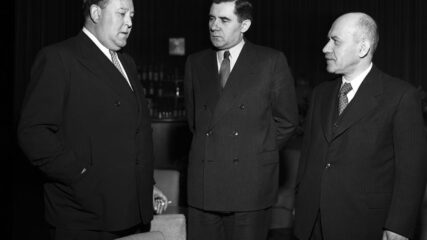
Despite an officially anti-Zionist stance, the Soviet Union, hoping to adopt Israel as a Soviet proxy, takes a pragmatic stance and supports the U.N. partition plan of Palestine into separate Arab and Jewish states.
The report of a joint U.S.-British committee on the situation in Palestine and the fate of European Jewish refugees fails to offer solutions the British government will accept but does deliver vital data and insights on the situation between Arabs and Jews in the Land of Israel.
Speculation again abounds whether a two state solution might be a seriously considered outcome to Palestinian-Israeli differences. A long history of its mention but not its implementation persists. Advocacy by external voices persists, but no one seems ready to make the critical political trade-offs required.
Judge Richard Goldstone, a South African Jew who had previously served as the chief UN prosecutor in both Yugoslavia and Rwanda, presents his UN-sponsored Report, “Fact Finding Mission on the Gaza Conflict.”
January 27, 2006 The first U.N.-recognized International Holocaust Remembrance Day is held on the 61st anniversary of the liberation of Auschwitz. The goal of the commemoration is to educate the nations of the world and…
Conceived by President George W. Bush during the second Intifada, the Roadmap serves as the centerpiece of failed peace negotiations at the beginning of 21st century.
April 18, 1996 Israeli artillery fire strikes a U.N. compound where at least 800 Lebanese civilians are sheltering in the village of Qana in southern Lebanon. At least 13 shells hit the compound, killing 106…
After a distinguished career in the service of Zionism and Israel, Eliahu Eilat passes away in Jerusalem at the age of 86.
In 1950, the Knesset passes a law that states, “Whereas with establishment of the state of Israel, Jerusalem once more becomes the capital.” In 1980, the Knesset elevates the law to a Basic Law, giving the political status of Jerusalem increased legislative weight.
The United Nations passes UN Resolution 3379, which defines Zionism as a form of racism and racial discrimination. It passes with a vote of 72 in favor, 35 against, and 32 abstentions.
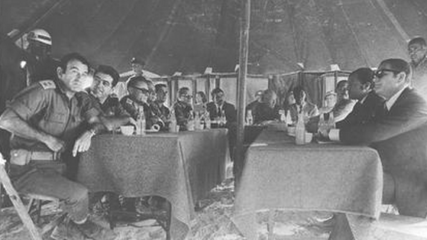
At the end of the October 1973 War, after several miscommunications, the first Egyptian-Israeli Military Talks between Generals commenced. These talks take place at 1am in Israeli-controlled territory, 101 kilometers from Cairo.
In the wake of the June 1967 Six Day War, the United Nations Security Council adopts Resolution 242, a document which has served as a framework for all major Arab/Israel negotiations since.
June 6, 1967 After leaving Jerusalem at the start of the Six-Day War the previous day, Israeli Foreign Minister Abba Eban speaks to the U.N. Security Council to explain the pre-emptive Israel Defense Forces attacks…
May 16, 1967 Egyptian President Gamal Abdel Nasser requests that the United Nations withdraw its peacekeeping troops from the Sinai, clearing an obstacle to war between Israel and its Arab neighbors. The Six-Day War begins…
April 8, 1960 U.N. Secretary-General Dag Hammarskjold for the first time publicly criticizes Egypt’s confiscation of Israeli cargo on ships going through the Suez Canal. The Egyptian closure of the Straits of Tiran and the…
May 26, 1958 Four Israeli police officers and the chairman of the United Nations’ Israel-Jordan Mixed Armistice Commission are fatally shot by Jordanian fire in the demilitarized zone on Mount Scopus in Jerusalem. Both Israel…