Board of Peace Roadmap for Gaza Explained, May 2026
The Board of Peace’s high commissioner for Gaza presents and explains the 15-point plan to fully implement the 20-point ceasefire and reconstruction plan for the Strip.

Videos, webinars, timelines, analyses, bibliographies, maps and more provide the foundation for knowledge and understanding of the war that Hamas began on October 7, 2023, and that Hezbollah, Iran and other Iranian proxies subsequently joined. Our resources also examine the global effects of the war, including rising antisemitism. This page offers the most important posts to guide understanding, followed by an extended, curated list of essentials. For a deeper dive, click on the blue button to view all posts on this topic. For a journey through the primary sources, click on the gray button to see all Documents and Sources in chronological order.

The Board of Peace’s high commissioner for Gaza presents and explains the 15-point plan to fully implement the 20-point ceasefire and reconstruction plan for the Strip.

In its first progress report on the implementation of the Gaza ceasefire and recovery efforts, the Board of Peace cites several successes but comes back to the perpetual problem of heavily armed Hamas.

April 30, 2026 Compiled by Maya Rezak and Ken Stein Videos and Multimedia Hasan Alhasan, Nicole Grajewski and Matthew Tavares, “Wartime Support to Iran: Implications for the Middle East and Beyond,” Washington Institute for Near…

Former Israeli Prime Ministers Naftali Bennett and Yair Lapid, who formed a governing coalition after running separate electoral lists in 2021, put aside their differences in 2026 in their shared quest to unseat Benjamin Netanyahu.

Among Palestinians, Hamas popularity soars, two state solution at lowest ebb, Rise in European Anti-semitism, and Michael Mihlstein’s insightful analysis an essential read.

Updated January 5, 2026; originally posted October 2023. By Ken Stein Hamas’ Origins The 1988 Hamas Charter and remarks by its leaders and other publications express hatred of Zionism, Israel and Jews. It is thus unmistakable that Hamas…
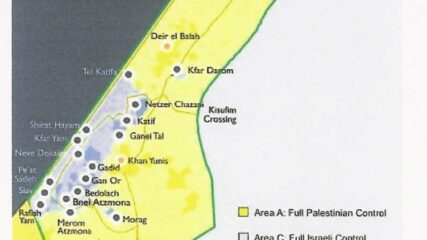
From 1977 to 1979, the settler population in the territories grew from 3,200 to 17,500, plus 80,000 in East Jerusalem. Of the 225,000 Israel settlers in the “territories” in 2005, all 8,500 settlers living in…
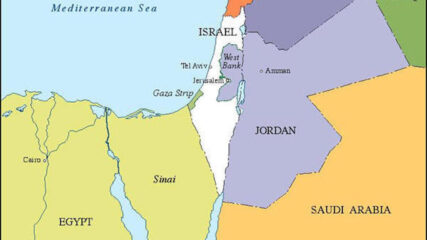
Hamas absolutely opposes Israel’s right to exist, with its leadership repeatedly declaring that all of Palestine belongs to Moslems.
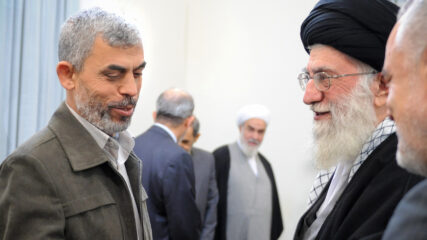
Yahya Sinwar, the Hamas leader in Gaza and mastermind of the October 7 attack, repeatedly expressed his desire to destroy Israel and his gratitude for Iran’s support.

Since its inception in 1988, Hamas has been crystal clear about its total opposition to Zionism and Israel. It opposes any kind of negotiations or agreements that recognize Israel as a reality, and its more extreme spokesmen regularly incite or celebrate the killing of Jews.
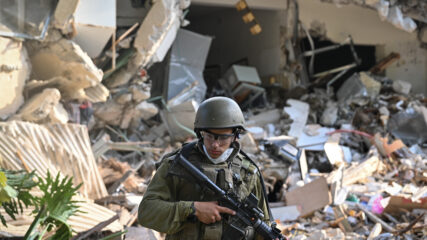
Hamas’ genocide against Israelis unleashed the long-blistering hatred that Hamas possesses for Israel and Jews. Entries include severe Arab criticism of Hamas, its detriment to Palestinian nationalism, statements by its leaders, and the war’s unfolding.
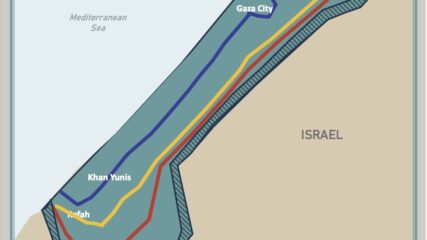
A comprehensive U.S. plan to end the Hamas-Israel war is unveiled eight days before the second anniversary of the October 7, 2023, Hamas attack.

Seized by the severity of the Gaza war and nonmovement on a Palestinian-Israeli negotiating process, the U.N. offers a diplomatic road map to end the war and start negotiations. Led by France and Saudi Arabia, it asserts PA primacy as the legitimate Palestinian political representative, addresses possible Palestinian governance reform, seeks to empower a sovereign and economically viable state of Palestine living side by side in security with Israel, and contains other vague PA promises. Israel and the U.S. reject the Declaration. The Israeli government refuses to have outside parties determine the outlines or pace of negotiations with any country because negotiations impact Israeli security today and tomorrow.
Former US President Jimmy Carter embraced Hamas as a legitimate voice of the Palestinian people. His motivations possibly stretched from intentional to misguided to malevolent. Hamas leaders who were engaged in inter-Palestinian struggles remained pleased with the recognition he gave them. American officials and Israelis were keenly perturbed by the courtship he gave them.
