Cards List
FILTERED BY:
<span class="cie-plus-title">Netanyahu’s Address to the U.N. General Assembly, 2023</span><span class="cie-plus-badge">CIE+</span>

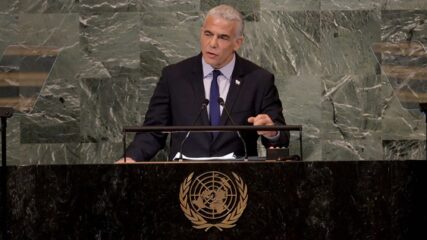
Netanyahu’s Address to the U.N. General Assembly, 2023CIE+

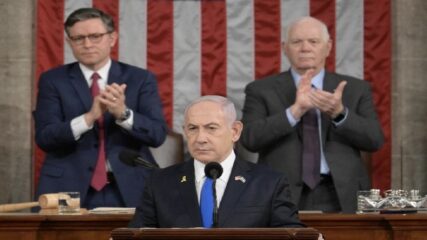
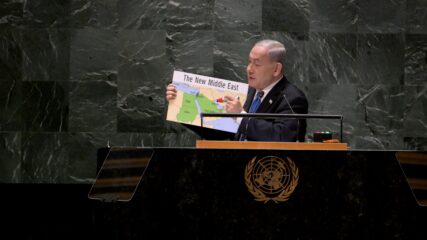
Addressing Israel’s fear of Iran’s access to nuclear weapons, the same point made by his predecessor Yair Lapid stressed in 2022 at the UN, Netanyahu like Lapid praised the Abraham Accords, noting in a quite unrestrained fashion that Israel was on the ‘cusp of a historic peace with Saudi Arabia.” The Prime Minister did mention support for a two-state solution with the Palestinians as Lapid had done previously.

Documents and Sources|September 22, 2023
<span class="cie-plus-title">President Herzog, December 2022: “Bahrain’s Warm Peace With Israel: What’s Next?”</span><span class="cie-plus-badge">CIE+</span>

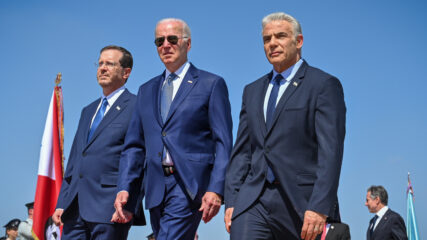
President Herzog, December 2022: “Bahrain’s Warm Peace With Israel: What’s Next?”CIE+

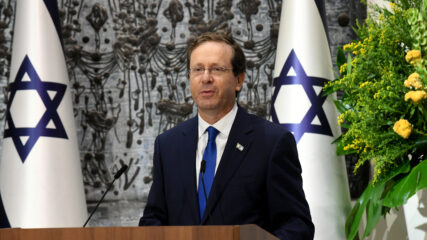
President Isaac Herzog visited Manama, Bahrain, his fourth trip to a Middle Eastern country in 2022 (Abu Dhabi in January, Istanbul in March, Amman in June and Sharm el-Sheikh in November), all aimed at bolstering bilateral relations with Arab states. Talks in Bahrain focused on expanding trade and sharing, among others, Israeli solar and desalination technologies.

Documents and Sources|December 4, 2022
<span class="cie-plus-title">Israel Prime Minister Yair Lapid’s Speech to U.N. General Assembly, 2022</span><span class="cie-plus-badge">CIE+</span>

Israel Prime Minister Yair Lapid’s Speech to U.N. General Assembly, 2022CIE+

The focus of Prime Minister Yair Lapid’s first speech at the UN was a political weather report of Israel’s relations with Arab neighbors. He lauded Arab states for embracing Israel, hoped that Israel could move toward a two-state solution with the Palestinians, and blistered the hate spewing from Hamas and Iran; Israel he said, would not tolerate Iran obtaining a nuclear weapon.

Documents and Sources|September 22, 2022
<span class="cie-plus-title">Palestine and the Arab World: A Relationship in Crisis, August 2020</span><span class="cie-plus-badge">CIE+</span>

Palestine and the Arab World: A Relationship in Crisis, August 2020CIE+

After the August 15, 2020, announcement that the UAE would recognize Israel in return for not annexing any of the West Bank area, the PLO and the PA reacted with anger, calling the UAE action a ‘stab in the back of the Palestinians.’ Subsequently, the Arabic written media and analysts in the Middle East and elsewhere poured out their thoughts about what this action meant to the future of the Palestinian community worldwide and to the Palestinian issue in general. One of the many responses was presented in a webinar by the Brookings Institution on August 27, 2020.

Transcripts|August 27, 2020
<span class="cie-plus-title">Israel-United Arab Emirates Recognition</span><span class="cie-plus-badge">CIE+</span>

Israel-United Arab Emirates RecognitionCIE+

On August 13, 2020, when the United Arab Emirates agreed to pursue full normal relations with Israel, without any Israeli withdrawal from lands it won in the June 1967 war, the sacred negotiating formula, “Land for Peace” that had dominated Arab-Israeli talks for half a century abruptly ended.

<span class="cie-plus-title">2020 Trump Peace Plan for Israel and the Palestinians</span><span class="cie-plus-badge">CIE+</span>

2020 Trump Peace Plan for Israel and the PalestiniansCIE+

The plan builds on previous proposals for a two-state solution to the Arab-Israeli conflict and contains a US-Israeli agreement that sets forth final borders for two states. The plan contains multiple prerequisites for Palestinian behavior before either the US or Israel might agree to Palestinian statehood as well as a proposed $50 economic development package to be allotted over a decade.

Documents and Sources|January 28, 2020
<span class="cie-plus-title">Eight Reasons Why the United States and Iraq Still Need Each Other</span><span class="cie-plus-badge">CIE+</span>

Eight Reasons Why the United States and Iraq Still Need Each OtherCIE+

Unlike Iraq’s immediate neighbors, Israel is not directly tied to recent events in that country. Nevertheless, U.S. withdrawal would create additional threats to Israeli security. Both Iran and the Islamic State would have a freer hand to operate inside Iraq, likely spreading across the porous border into Syria and ultimately to Israel’s own frontiers. American credibility would also suffer a new setback.

Issues and Analyses|January 9, 2020
<span class="cie-plus-title">Proposed Elections in the Palestinian Authority: Why Now, and How Feasible Are They?</span><span class="cie-plus-badge">CIE+</span>

Proposed Elections in the Palestinian Authority: Why Now, and How Feasible Are They?CIE+

The idea that has arisen recently of holding elections in the Palestinian Authority appears more serious at this stage than in the past. The main promoter of the idea is Abu Mazen, who advocates separate elections: first for the parliament, and only later for the presidency. Although Hamas has long demanded that the two elections be held simultaneously, a change in Hamas’s stance is evident, following its declaration that it is willing to proceed with the elections, while hinting that it might consent to Abu Mazen’s plan. Yet despite the positive attitude that the PA and Hamas are currently displaying toward elections, it appears that there are still many other barriers to overcome.

Issues and Analyses|November 15, 2019