What Will the 23rd Knesset Look Like?CIE+
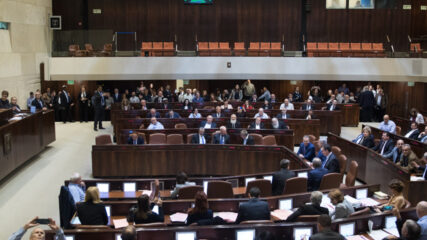
New record low of number of lists; Left-Center shrinks from eight lists in 2013 to three today; women’s’ representation continues to dither – less than 30 women MKs are expected.
Whichever Israeli government ends up coming to power will be faced with a set of urgent security challenges that are coming from a range of arenas, all at the same time. Critical decisions on these challenges and establishing a defense budget will be the order of the day for the PM and his security and diplomatic ministers.
The ultimate result of September’s election in Israel is still unclear. We do not yet know what type of coalition will be formed, when it will come together, or who will head it. We do know, however, that Israeli democracy had dodged a bullet. This is because, no matter who takes the reins of government or even if Israel holds a third round of elections, a radical assault on our judicial system has been halted.
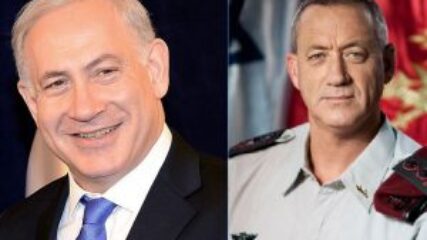
In Israeli history books, the term is conjured every time the nation faces a major juncture that requires individuals and factions to transcend partisan loyalties. Judging from their behavior in the recent elections, Benjamin Netanyahu and Benny Gantz both appear to be fuzzy on the meaning of the word.
David Ben-Gurion, Menachem Begin, Yitzhak Rabin, and Ariel Sharon would have faced up to the moment. Even though they did not share the same ideologies, they did share a common view of leadership and the role of the prime minister. First and foremost, they understood what was important. They never shied away from making painful decisions in which they put the state, not their political needs, first.
Two weeks to the elections Jewish Israelis show a strong preference for a unity government while Arab Israelis prefer a center-left wing government led by Gantz. Also over the past five months there has been a steady decline in the public’s optimism about the future of Israel’s democracy and security.
With the inability of Prime Minister Netanyahu to form a governing coalition in the spring, Israeli voters will head back to the polls just five months after April’s Knesset elections. This whiteboard video explains what’s different this time around emphasizing which political parties have joined together, which ones have new leaders, and which ones have decided not to run.
Will Arab politicians take advantage of the second chance that the new elections have presented? Runing in a Joint List and reaching out to their younger voters – 60% of which didn’t vote in the last election, would be the right place to start.
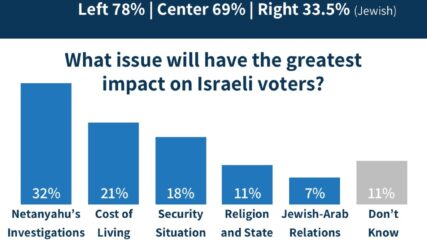
The recent Israeli election campaign was heated and nasty; primarily a referendum on whether Netanyahu should continue to serve as Prime Minister. His personality and legal problems were the focus of opposition attacks, not his policies. In fact, beyond the harsh rhetoric one can discern a broad consensus in Israel behind the outgoing government’s actual diplomatic and defense policies.
The 2019 election results mark the return of Israeli politics to two large lists. Voter turnout declined, as the parliamentary fragmentation. The impressing increase in female representation was halted, and the number of ex-generals will be the highest in decades. An initial analysis of the election results.
After an exhausting and polarizing election campaign, the people have spoken, and we’re now entering the next stage of the political lifecycle: forming a new government – Dr. Kenig explains what’s next.
The Israeli election on April 9 is just the first part of the process to decide who will lead the country. Our newest Israel on Board video explains what happens next and how the country’s government is formed.
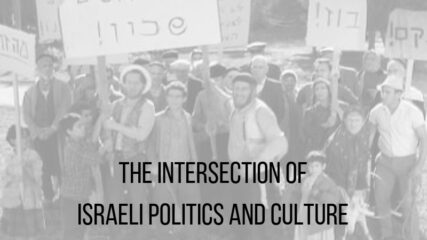
CIE Vice President Rich Walter speaks with Eli Sperling, Academic Research Coordinator of the Emory Institute for the Study of Modern Israel and a Visiting Professor for the Tam Institute of Jewish Studies at Emory University about the influence of politics in Israeli culture.
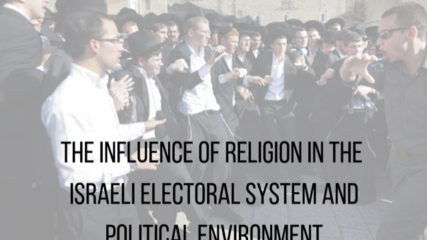
In this four part video series, CIE Vice President Rich Walter speaks with Emory University Professor Rabbi Michael Berger about the influence of religion in Israel’s politics.
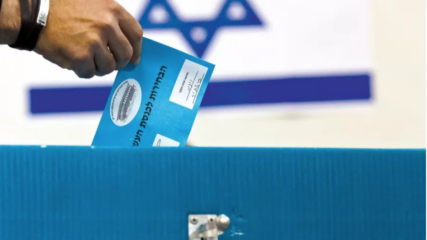
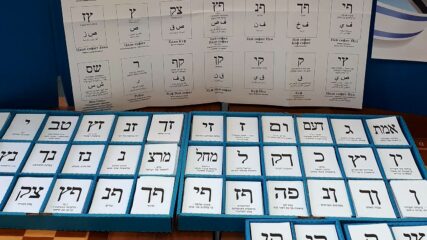
Our latest Israel on Board video explains how the electoral system in Israel works. The video highlights the voting process, explains proportional representation and the electoral threshold, and describes why there are so many different parties.
A former IDF general, Benny Gantz officially launches his campaign to replace Prime Minister Benjamin Netanyahu in the April 2019 election. With pride of ownership, Gantz speaks of his love of Zionism, the Jewish people and the State of Israel and cites his 38-year military career.
According to a National Economic Council report, Israel’s population will increase by 5 million people over the next 23 years.
Kenneth W. Stein, “The Arab-Israeli Peace Process,” Middle East Contemporary Survey, Vol. XX, 1996, Bruce Maddy-Weitzman (ed.), Westview Press, pp. 34-65. Of all the events in 1996, the 29 May Israeli general elections had the…
With less than three dozen Israeli settlements in the territories taken in the June War, the proposal is not for a vast settlement increase, but for economic, infrastructure, and industrial development of the areas.
Early elections are held following the October 2012 dissolution of the Knesset due to an impasse over the state budget.
February 20, 2009 Benjamin Netanyahu, whose Likud finished second in the Feb. 10 election, receives the mandate to form a government from President Shimon Peres and surprisingly offers to bring leading rivals Kadima and Labor…
Israeli Prime Minister Ehud Olmert resigns amid charges of corruption and financial improprieties.
In the only instance in Israel’s history, a direct election is held for Prime Minister without a simultaneous election for the Knesset.
Israel’s 10th prime minister resigns and calls a special election in a failed attempt to win a popular mandate for his peace policies.