Ken Stein: “A Zionist State in 1939”CIE+
“A Zionist State in 1939,” Dr. Kenneth W. Stein, CHAI (Atlanta), Winter 2002 “Had not the Nazi crimes been committed against Jews during World War II, the Jewish State would have never come true.” So…

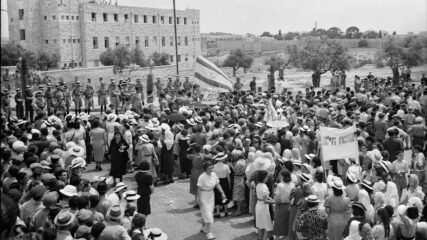
“A Zionist State in 1939,” Dr. Kenneth W. Stein, CHAI (Atlanta), Winter 2002 “Had not the Nazi crimes been committed against Jews during World War II, the Jewish State would have never come true.” So…

Perspective provides valuable insights in evaluating contemporary diplomacy. Though neither the Palestinian-Israeli-U.S. summit of July 2000 nor the Egyptian-Israeli-U.S. summit of September 1978 ended discussions between Israel and its Arab adversaries, there were more differences than similarities between the two intense and highly charged meetings.

Kenneth W. Stein, “The Arab-Israeli Peace Process,” Middle East Contemporary Survey, Vol. XXIII, 2000, Bruce Maddy-Weitzman (ed.), Westview Press, pp. 48-76. For some aspects of Arab-Israeli relations and negotiations, the beginning and end of 1999…
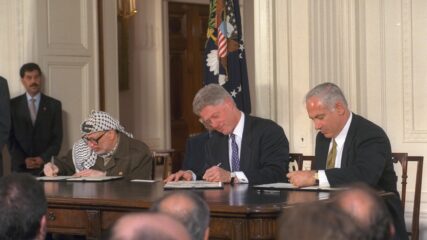
Kenneth W. Stein, “The Arab-Israeli Peace Process,” Middle East Contemporary Survey, Vol. XXII, 1998, Bruce Maddy-Weitzman (ed.), Westview Press, pp. 56-89. For almost all of 1998, the Arab-Israeli peace process was analogous to a driver…
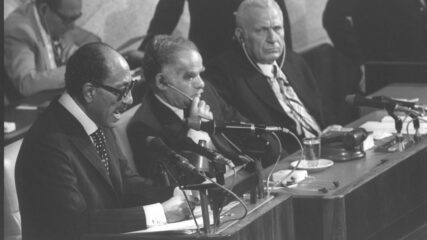
Kenneth W. Stein, “The Arab-Israeli Peace Process,” Middle East Contemporary Survey, Vol. XXI, 1997, Bruce Maddy-Weitzman (ed.), Westview Press, pp. 71-109. On a macro level, in 1997, Israel and much of the Arab world spent…
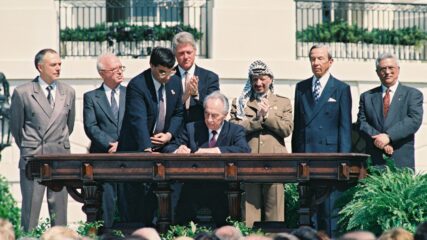
In September 2023, thirty years after the historic signing of the Oslo Accords, there is occasion to review Prime Minister Rabin’s understanding of them. I assembled this collection years ago from Daily Reports- Near East and South Asia, 1993-1995. Two short items about Rabin’s views are also found or linked here. Rabin provided a summary of his views of the Accords in a Knesset speech in October 5, 1995. Some of Rabin’s reasons for signing the Accords are also provided in Yehuda Avner’s The Prime Ministers.
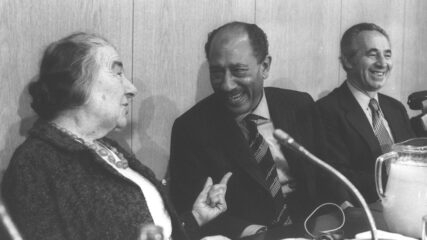
October 1991 Kenneth W. Stein and Samuel W. Lewis, Making Peace Among Arabs and Israelis: Lessons From Fifty Years of Negotiating Experience, United States Institute of Peace, Washington, October 1991, second printing 1992, 69 pages.
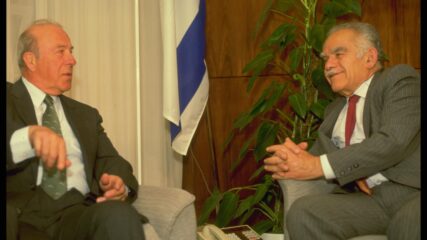
In early 1988, for the second time within eight years, the Reagan Administration reacted to events in the Middle East by proposing that the stalled Arab-Israel negotiating process be reactivated, an effort known as the Shultz Initiative.
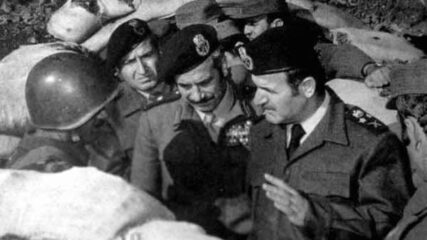
Henry Kissinger and and Hafez al-Assad meet in Damascus in December 1973 (credit: Agence France-Presse stringer, released by Getty in January 1974). By Ken Stein Sandwiched between the end of the 1973 October Middle East…
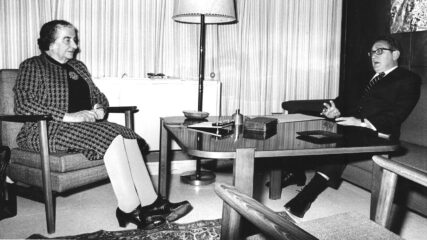
In carrying out research in the 1990s for Heroic Diplomacy: Sadat, Kissinger, Carter, Begin and the Quest for Arab-Israeli Peace, Routledge, 1999, I undertook 84 interviews with individuals who participated in the diplomacy.
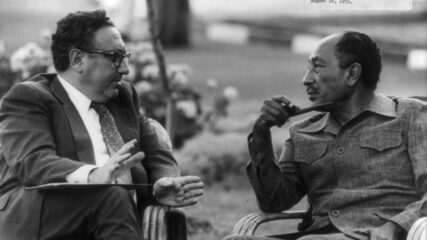
Egyptian President Sadat colluded with Syrian President Assad to attack Israel on October 6, 1973. Sadat’s objective was not to seek Israel’s destruction but to gain a limited success by crossing the canal. He also sought to engage American diplomacy to generate talks with Israel that would see Israeli withdrawal from Egyptian land Israel secured in the June 1967 War. Sadat took a large gamble by attacking Israel yet he unfolded a negotiating process with Israel that lasted through 1979. He achieved his overarching long-term priority of having Egyptian Sinai returned to Egyptian sovereignty.
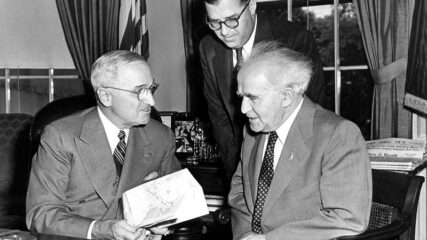
Otherwise known as Israel’s War of Independence, or, “the nakbah” or disaster to the Arab world because a Jewish state was established, the war was fought between the newly established Jewish state of Israel opposed by Palestinian irregulars, and armies from five Arab states. Official beginning of the war is usually given as May 14, 1948, the date Israel declared itself an independent Jewish state, but the war’s first of four phases began in November 1947. Lasting for two years, the war ended with armistice agreements signed in 1949 between Israel and four Arab states.
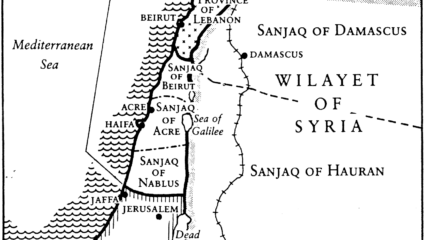
Speculation again abounds whether a two state solution might be a seriously considered outcome to Palestinian-Israeli differences. A long history of its mention but not its implementation persists. Advocacy by external voices persists, but no one seems ready to make the critical political trade-offs required.
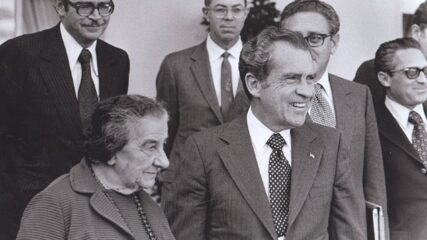
Using published archives, press conferences, speeches and numerous interviews, this compilation of quotations traces how official American views on Zionism and Israel have evolved over a century.
