Cards List
FILTERED BY:
<span class="cie-plus-title">The American Intelligence Threat Assessment on Iran’s Nuclear Program</span><span class="cie-plus-badge">CIE+</span>

The American Intelligence Threat Assessment on Iran’s Nuclear ProgramCIE+

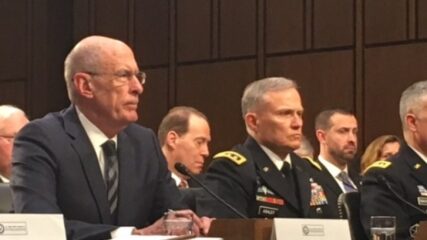
On Jan. 29, 2019, U.S. Director of National Intelligence Dan Coats told the Senate Select Committee on Intelligence: “We do not believe Iran is currently undertaking the key activities we judge necessary to produce a nuclear device.” However, experience helps us realize that the American intelligence community has a very problematic track record in revealing, on time, nuclear weaponization efforts of many countries (e.g., North Korea, India, Pakistan, Syria, and Iraq) including Iran itself, so one has to be very humble about this kind of assessment.

Issues and Analyses|March 11, 2019
<span class="cie-plus-title">The Day After an Iranian Nuclear Strike</span><span class="cie-plus-badge">CIE+</span>

The Day After an Iranian Nuclear StrikeCIE+

There is much discussion around the world about how to prevent Iran from obtaining nuclear weapons. But few, if any, international bodies deal with the question of how to prepare for the day Iran achieves such capabilities, if that day has not already arrived.

Issues and Analyses|September 27, 2019
<span class="cie-plus-title">The Rising Crisis Between the United States and Iran</span><span class="cie-plus-badge">CIE+</span>

The Rising Crisis Between the United States and IranCIE+

After a year in which Iran opted for “strategic patience,” in the hope that European nations would compensate for the United States sanctions, it now seeks to present a price tag for the US measures against it, and has thus embarked on a response comprising action in three realms: nuclear, military, and oil exports from the Gulf. In the current circumstances, Iran and the United States are demanding conditions that would make a resumption of negotiations difficult, although both sides apparently understand that dialogue may ultimately be the less dangerous option for them.

Issues and Analyses|May 14, 2019
<span class="cie-plus-title">On Developing a Coherent US Regional Strategy Towards Iran, and Iran’s Likely Response</span><span class="cie-plus-badge">CIE+</span>

On Developing a Coherent US Regional Strategy Towards Iran, and Iran’s Likely ResponseCIE+

The US can and should develop a coherent region-wide strategy, involving US allies including Israel, to impede Iran’s ability to continue developing in ways detrimental to the region’s security. However, Iran is proficient in the practice of using proxies and paramilitary methods, as well as in the combination of paramilitary and political struggle. Its response to a US-led strategy to contain and roll back their influence is likely to focus on these areas.

Issues and Analyses|September 21, 2018
<span class="cie-plus-title">Joint Comprehensive Plan of Action (JCPOA) — Containing Iran’s Access to Nuclear Weapons, 2015</span><span class="cie-plus-badge">CIE+</span>

Joint Comprehensive Plan of Action (JCPOA) — Containing Iran’s Access to Nuclear Weapons, 2015CIE+

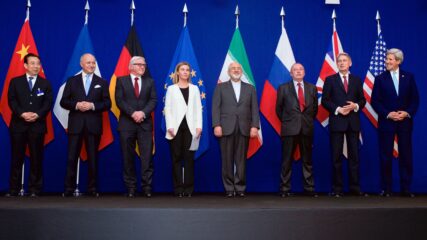
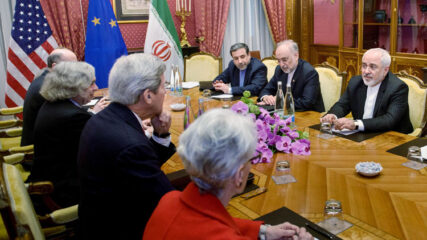
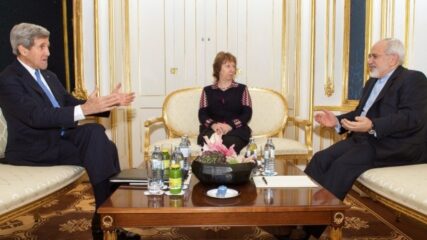
Under the deal between Iran and five world powers, Iran agreed to dismantle much of its nuclear program in exchange for billions of dollars of sanctions relief. Israel called the deal too lenient. On May 8, 2018, President Trump withdrew the U.S. from the JCPOA, calling it one of the “worst and most one-sided” agreements in U.S. history. Israel’s objectives in attacking Iran in June 2025 focused on the same central features Israel argued a decade earlier were not sufficiently addressed in the JCPOA.