Two-State Solution: Why Not Now?CIE+
The notion of a two-state solution remains front and center as the most often discussed and endorsed solution to the Palestinian-Israeli dimension of the conflict in the Middle East. So why has it not happened?


The notion of a two-state solution remains front and center as the most often discussed and endorsed solution to the Palestinian-Israeli dimension of the conflict in the Middle East. So why has it not happened?
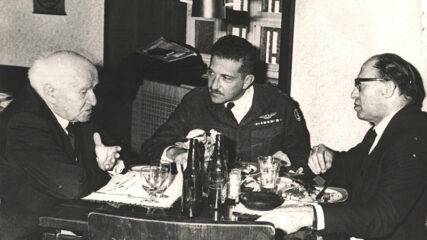
In two books written sixty years apart, When Prophecy Fails, 1957 (Festinger, Riecken and Schachter) and The Influential Mind, 2017 (Sharot, an Israeli neuroscientist), the conclusions were the same.

Coming up, fifty years after the June 1967 War. How many times have I taught the causes and effects, or written about the War? Hundreds of times in forty years.

In the aftermath of UNSC Resolution 2334 condemning Israeli settlement construction, Secretary of State John Kerry publicly blamed Israeli settlement construction in the West Bank for being the major barrier to a two-state solution to resolution of the Israeli-Palestinian conflict.

For almost 100 years, the Declaration has represented, for the Palestinians, the political beginning of Palestine falling out of their influence and into the control of the budding Zionist movement.

Alliances of convenience alongside alliances of conviction: when do the first become the second? Who is telling the story that we read?
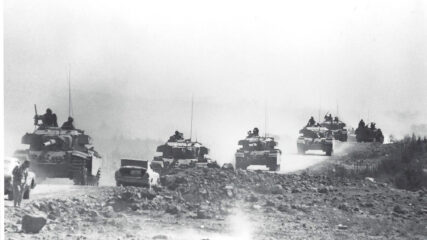
Many recollections remain from the Egyptian-Syrian surprise attack on Israel on Yom Kippur in 1973. The war set in motion a diplomatic process that eventually culminated in the 1979 Egyptian-Israeli Peace Treaty.

Lessons from the overthrow of the Morsi government in Egypt, the restart of Palestinian-Israeli talks, and the civil war in Syria remind us how difficult it is to judge whether American engagement is good or bad in the long run.
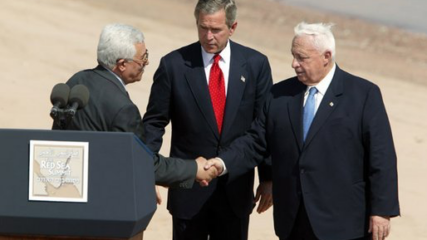
Preliminary negotiations and changing political realities have catalyzed the opening of new talks, but even a two-state agreement would not guarantee an imminent end to the conflict.
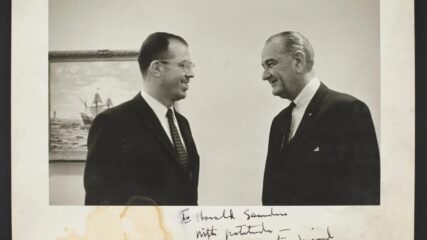
Many in the Arab world and amongst Palestinian leaders believe that, for the sake of evenhandedness and justice, the U.S. government, a longtime supporter of Israel’s security and existence, should have openly endorsed and urged others to vote for the proposition of Palestinian state recognition at the United Nations. Criticism of the U.S. failing to do so has been harsh, but it is also without perspective or historical context. What is forgotten is the persistent, even aggressive, perhaps unprecedented role that Washington has played in pushing for Palestinian rights, self-determination and, most recently, for Palestinian statehood.

Since the June 1967 war, more than two dozen mediators have engaged in Arab‐ Israeli diplomacy seeking to clarify one underlying question: under what conditions and over what period of time would Israel relinquish land attained in the June 1967 War, and what kind of understanding or agreement from an Arab partner would Israel receive in return? The Annapolis Conference in 2007, was again a Transaction but not a Transformation of Outcomes.

“The Quest for Arab-Israeli Peace: Israel’s Disengagement from the Gaza Strip: Precedents, Motivations and Outcomes” Zionism Fulfilled.- Israel’s preemptive physical disengagement from the Gaza Strip in August 2005 was the result of a national consensus;…

Note by the author: As a faculty member at Emory University, I wrote several articles per month for national and local newspapers. This article appeared in October 2002 in the Orlando Sentinel. The idea for a trusteeship to be possibly be considered to manage the Israeli-Palestinian relationship emerged from my decades of study of the Palestine Mandate, understanding the concept of separation of the two communities that was offered by the British on more than one occasion during the 1930s and 1940s, and the American suggestion in early 1948 to create a trusteeship for Palestine’s future. Martin Indyk, a US diplomat published an article about considering a trusteeship as a future political option in a Foreign Policy magazine article in July 2003.
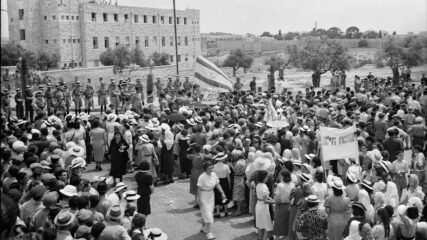
“A Zionist State in 1939,” Dr. Kenneth W. Stein, CHAI (Atlanta), Winter 2002 “Had not the Nazi crimes been committed against Jews during World War II, the Jewish State would have never come true.” So…

Perspective provides valuable insights in evaluating contemporary diplomacy. Though neither the Palestinian-Israeli-U.S. summit of July 2000 nor the Egyptian-Israeli-U.S. summit of September 1978 ended discussions between Israel and its Arab adversaries, there were more differences than similarities between the two intense and highly charged meetings.

Kenneth W. Stein, “The Arab-Israeli Peace Process,” Middle East Contemporary Survey, Vol. XXIII, 2000, Bruce Maddy-Weitzman (ed.), Westview Press, pp. 48-76. For some aspects of Arab-Israeli relations and negotiations, the beginning and end of 1999…

Kenneth W. Stein, “The Arab-Israeli Peace Process,” Middle East Contemporary Survey, Vol. XXII, 1998, Bruce Maddy-Weitzman (ed.), Westview Press, pp. 56-89. For almost all of 1998, the Arab-Israeli peace process was analogous to a driver…
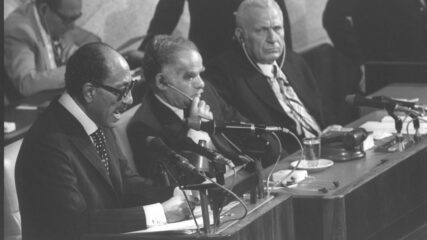
Kenneth W. Stein, “The Arab-Israeli Peace Process,” Middle East Contemporary Survey, Vol. XXI, 1997, Bruce Maddy-Weitzman (ed.), Westview Press, pp. 71-109. On a macro level, in 1997, Israel and much of the Arab world spent…
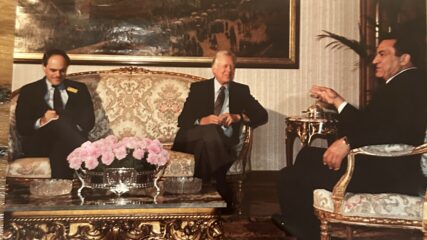
Spring/Summer 1997 Kenneth W. Stein, “Continuity and Change in Egyptian-Israeli Relations, 1973-97,” Israel Affairs, Spring/Summer 1997, Vol. 3, Nos. 3 and 4, pp. 296-320 For 25 years, tension, mistrust, and strain have characterized Egyptian-Israeli relations….

Kenneth W. Stein, “The Arab-Israeli Peace Process,” Middle East Contemporary Survey, Vol. XX, 1996, Bruce Maddy-Weitzman (ed.), Westview Press, pp. 34-65. Of all the events in 1996, the 29 May Israeli general elections had the…
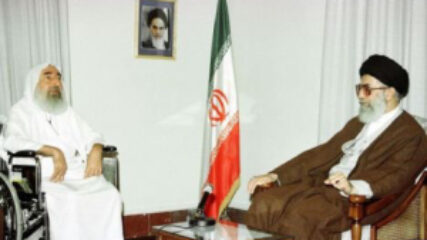
Days before his assassination, Yitzhak Rabin explains that he accepted the Oslo Accords and shook Yasser Arafat’s hand because the PLO represented the last hope for a secular Palestinian nationalism amid the rise of Hamas.
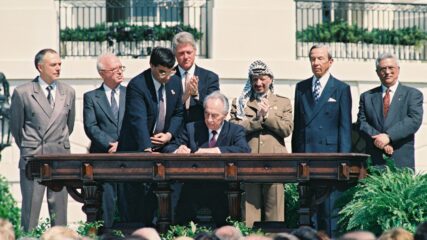
In September 2023, thirty years after the historic signing of the Oslo Accords, there is occasion to review Prime Minister Rabin’s understanding of them. I assembled this collection years ago from Daily Reports- Near East and South Asia, 1993-1995. Two short items about Rabin’s views are also found or linked here. Rabin provided a summary of his views of the Accords in a Knesset speech in October 5, 1995. Some of Rabin’s reasons for signing the Accords are also provided in Yehuda Avner’s The Prime Ministers.
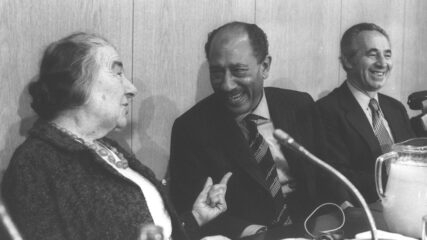
October 1991 Kenneth W. Stein and Samuel W. Lewis, Making Peace Among Arabs and Israelis: Lessons From Fifty Years of Negotiating Experience, United States Institute of Peace, Washington, October 1991, second printing 1992, 69 pages.

Kenneth W. Stein, “One Hundred Years of Social Change: The Creation of the Palestinian Refugee Problem,” in Laurence Silberstein (ed.), New Perspectives on Israeli History: The Early Years of the State, New York University Press,…
