Six Days That Redrew the Map of the Middle East
Speeches, source documents and analyses from the 1967 war, gathered into one playlist you can listen to end to end — from the closing of the Straits of Tiran to the aftermath.

Jews in the Diaspora were and remain a minority. When small numbers immigrated to Palestine to re-establish their national home, they remained a minority. For nearly eight decades as a majority in their own state, Israeli Jews have nonetheless remained a small minority within the Arab and Muslim Middle East. Survival in all three situations has required self-defense, whether through diplomacy or force of arms.
Thousands of years of precarious living forced an evolution in the Jewish fiber, and self-defense was gradually infused with a doctrine of pre-emption. “Do unto others before they do unto you” was catalyzed by Arab riots in Palestine against Jewish settlements, then blasted into Jewish souls by the slaughter of 6 million Jews in Europe from 1939 to 1945.
Five elements formed Israel’s military doctrine:
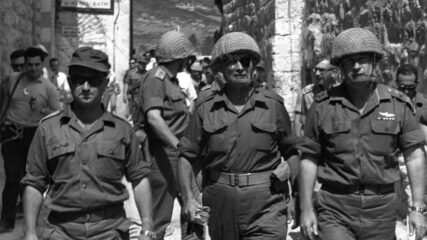 CIE+ Audio Playlist
Speeches, source documents and analyses from the 1967 war, gathered into one playlist you can listen to end to end — from the closing of the Straits of Tiran to the aftermath.
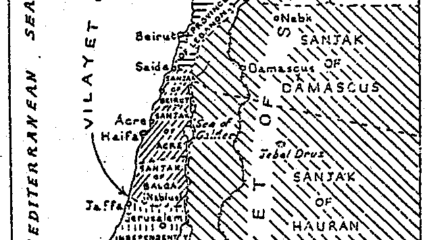
This timeline includes maps, photos, and hyperlinks to documents and sources also found on the website. There are four dozen hyperlinks age appropriate for teens and older; updated November 21, 2025.
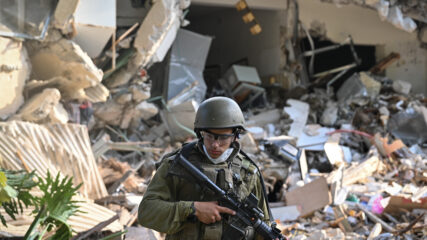
Hamas’ genocide against Israelis unleashed the long-blistering hatred that Hamas possesses for Israel and Jews. Entries include severe Arab criticism of Hamas, its detriment to Palestinian nationalism, statements by its leaders, and the war’s unfolding.
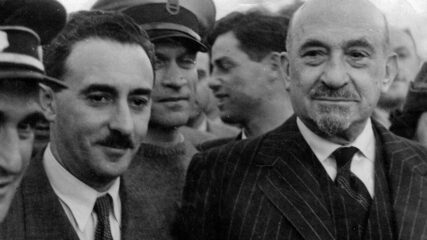
Sharett gives an overview of Israeli foreign policy, key issues, and relationships with UN and Arab states.

With crisp analysis, Haganah Commander Yigal Allon, later a Prime Minister of Israel attributes Israel’s successes to multiple factors including the absence of a centralized Arab command, limited Arab military training, underestimating the potential fighting capabilities of local Arabs, and Israel’s success in integrating its citizens into the war effort.
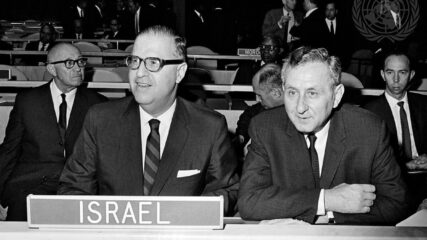
Ambassador Abba Eban tells the U.N. why Israel had to fight the war earlier in June 1967 and calls for new efforts for regional peace.
Unfold six Arab states’ embrace of Israel since 1973 out of national interests and U.S. mediation, sidelining the Palestinian movement, and explore Hamas’ Oct. 7, 2023, attack and its implications for the Israeli-Palestinian conflict and Israeli diplomacy.

2013 Kenneth W. Stein, “Evolving a Diplomatic Legacy From the October War: The US, Egyptian, and Israeli Triangle,” in Asaf Siniver (ed.), The October 1973 War: Politics, Diplomacy, and Legacy, London: Hurst and Co., 2013,…
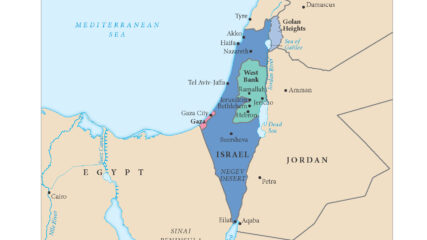
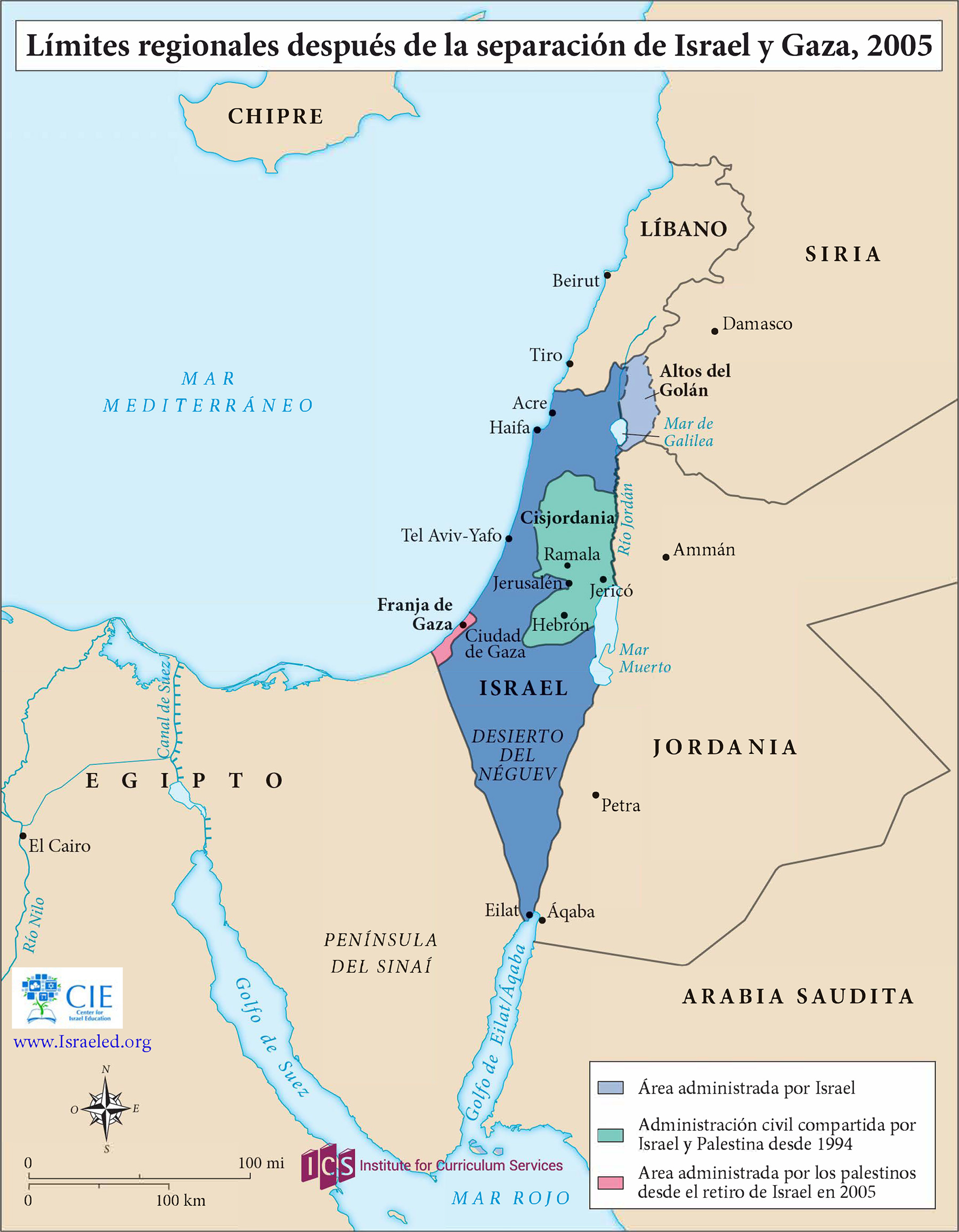
This regional map shows Israel and its neighbors after the Israeli withdrawal from the Sinai Peninsula, completed in 1982, and the disengagement from the Gaza Strip in August 2005.
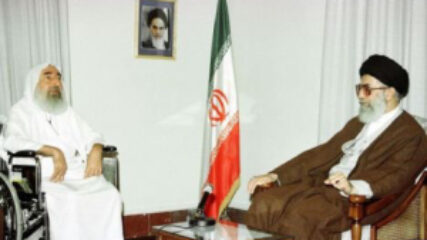
Days before his assassination, Yitzhak Rabin explains that he accepted the Oslo Accords and shook Yasser Arafat’s hand because the PLO represented the last hope for a secular Palestinian nationalism amid the rise of Hamas.
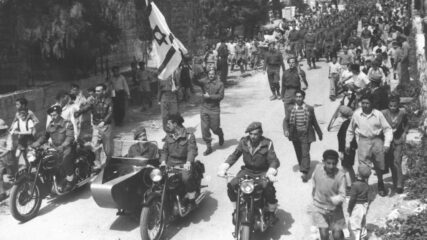
August 1, 2025 CIE has compiled the following list of books and articles, including some available on our website, to guide understanding of Israel’s military operations through the Israel Defense Forces and the pre-state Haganah….
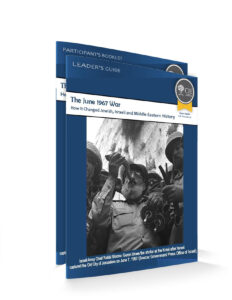
The June 1967 Middle East War transformed Israeli, Jewish, and Middle Eastern History. In the span of six weeks, in May and June 1967, Israel, its neighbors and the international community were engulfed with varying emotions including admonition, arrogance, audacity, astonishment, bravado, boasting, daring, euphoria, fears of annihilation, hesitation, humiliation, indecision, miscalculation, pride, procrastination, relief, resignation, self-doubt, self-importance, and tension.
Capturing these moments as well as the prelude and aftermath of the War dominate the contents of The June 1967 War: How It Changed Jewish, Israeli and Middle Eastern History in both the Leader’s Guide and Participant Booklet.
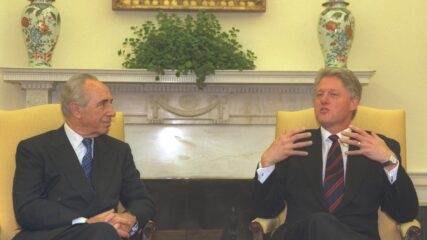
President Clinton and Prime Minister Peres agree to deepen cooperation between their countries through regular consultation in all economic, political, military spheres.