Cards List
FILTERED BY:
Tourism to Israel and National Security

Tourism to Israel and National Security CIE+ members only

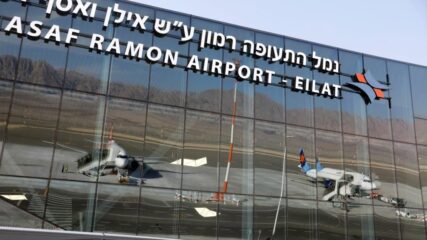
In 2018, a record 4.1 million tourists visited Israel from all over the world. The figure is particularly impressive, given the security incidents in this period, the extensive coverage of security-related events by the foreign press and social media, and the BDS campaign. While global tourism between 2007 and 2018 increased 60 percent, tourism in Israel in the same period rose 100 percent.

Issues and Analyses|March 11, 2019
Exclusive Pre-Elections Survey

Exclusive Pre-Elections Survey CIE+ members only

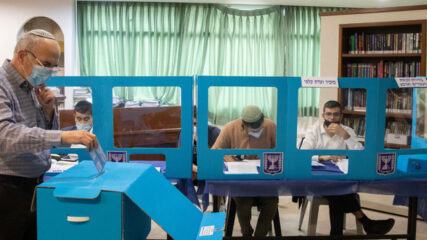
Exclusive Pre-Elections survey by the Guttman Center at the Israel Democracy Institute finds that half of Israelis find it harder than in the past to decide whom to vote for; 25% base their choice on the party’s positions on socioeconomic issues and 18% on who heads the party; 27% do not trust the integrity of the Knesset elections.

Issues and Analyses|March 6, 2019
Iran’s Strategy for Control of Syria

Iran’s Strategy for Control of Syria CIE+ members only

Recent statements by a number of Israeli officials have claimed a degree of success in Israel’s efforts to contain and roll back Iran’s entrenchment in Syria. But while Israel’s tactical successes are certainly notable and impressive, the big picture is that Iran’s influence and strength in Syria continues to deepen and expand. Iran’s efforts are taking place at three levels: below the official Syrian state structures – in the arming and sponsoring of Iran-controlled paramilitary formations on Syria soil, within the Syrian state – in the control of institutions that are officially organs of the regime, and above the state, in the pursuit of formal links between the Iranian and Syrian regimes.

Issues and Analyses|February 18, 2019
The National Library of Israel

The National Library of Israel CIE+ members only

The first version of the Jewish National Library was founded in 1892 in Jerusalem, five years before the First Zionist Congress met; its location evolved to Mount Scopus in Jerusalem during the British Mandate and then after the 1948 war, the library’s books were moved to the Rehavia section of Jerusalem, and then in 1960 to Givat Ram campus of the Hebrew University. As a visiting graduate student from The University of Michigan in the summer of 1971, I walked into the mediocrely lit yet vast reading room of the Library.

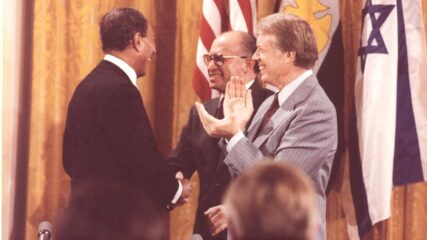
How did the 1978 Camp David discussions unfold?  Essential Recollections by American participants.

How did the 1978 Camp David discussions unfold? Essential Recollections by American participants. CIE+ members only

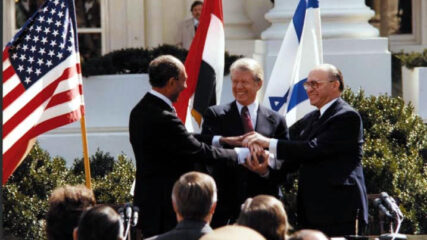
In 13 days in September 1978, Egypt and Israel made a two part agreement: an outline for an Egyptian – Israeli Treaty ending their state of war and an agreement on where and how the Palestinians would engage in self-rule. With great clarity and insight, Hermann Eilts, Sam Lewis, Hal Saunders, and Bill Quandt recall the ups and downs of those negotiations.

Issues and Analyses|September 17, 2021
Lessons from American Withdrawal from Afghanistan, Ken Stein

Lessons from American Withdrawal from Afghanistan, Ken Stein CIE+ members only

In August 2021, the U.S. withdrew its military from Afghanistan, ending America’s longest war. Correctly, we needed to prevent another 9/11 on our doorsteps. We still have that imperative. Our departure does not diminish America’s need for stable allies, like Israel and Arab states. The US should build an effective alliance system among them. We should have a small, substantive and selective US footprint in the region for support of friends and deterrence of foes, not for nation-building.

Reiter and Seligman, Jews and Muslims in Jerusalem, Har ha-Bayit and Al-Haram al-Sharif, 1917-Present

Reiter and Seligman, Jews and Muslims in Jerusalem, Har ha-Bayit and Al-Haram al-Sharif, 1917-Present CIE+ members only

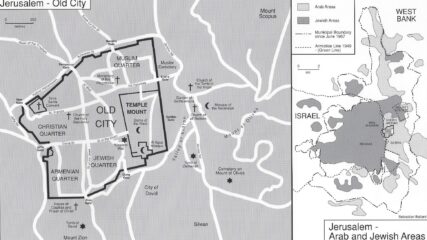
Since the 1920s the Sacred Esplanade of Jerusalem came to symbolise the bone of contention in the conflict over Palestine. The maintenance and even definition of the lines of division between the communities was a clear aim of the British authorities from 1920-1948. The communal/religious conflicts intensified after 1967 with the Israeli capture of East Jerusalem and other Arab-populated territory, which left neither side fully content.

Issues and Analyses|January 2009
As President, Herzog Offers Advancement of Israel-Diaspora Ties

As President, Herzog Offers Advancement of Israel-Diaspora Ties CIE+ members only

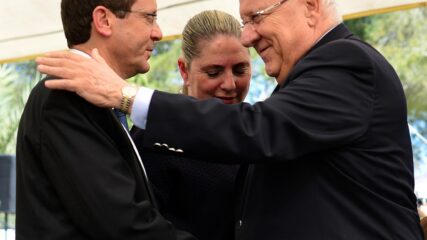
Isaac “Bougie” Herzog’s election as Israel’s 11th president on June 2 was such “big” news that it was all but impossible to find on the home page of The Times of Israel a day later. That’s because reporting on a largely ceremonial position was overwhelmed by the end of a two-year wait for the monumental announcement of an eight-party government coalition, including Islamist Arabs and religious Zionist Jews, to unseat the longest-serving prime minister in Israel’s history.

Issues and Analyses|June 4, 2021
Lessons to Strengthen Israel Education

Lessons to Strengthen Israel Education CIE+ members only

Newsworthy stories unfold in Israel at breathtaking rates. Repeated elections, COVID-19 responses, path-breaking Supreme Court decisions, the Abraham Accords — all are worthy of community discussion and age-appropriate student exploration. Yet few Jewish students and their parents possess sufficient understanding or discussion skills to explain them beyond a passing headline.

Issues and Analyses|April 15, 2021
The Return of Palestinian Politics

The Return of Palestinian Politics CIE+ members only

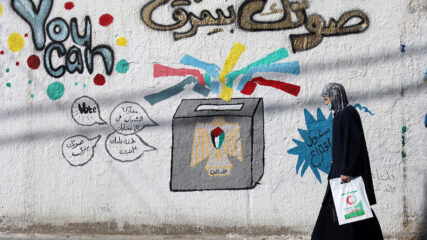
Palestinian legislative elections are scheduled for May 22. Whether or not the vote takes place, finally scheduling elections was nothing short of remarkable. Palestinian politics has been in gridlock, with elections suspended since the terrorist group Hamas won a parliamentary majority in 2006. However, PA President Abbas could still postpone the elections.

Issues and Analyses|April 12, 2021