Results of Israel’s Elections
Israel’s 25 Knesset elections and three direct elections for prime minister have resulted in 14 different people serving as prime minister, in addition to one person, Yigal Allon, who served only on an interim basis….


Israel’s 25 Knesset elections and three direct elections for prime minister have resulted in 14 different people serving as prime minister, in addition to one person, Yigal Allon, who served only on an interim basis….

Former three-term Knesset member is motivated to run in the March 23 elections to create a better Israel for his children and grandchildren, provide a voice for the vital senior population, topple Prime Minister Netanyahu, and restore the Labor Party’s legacy.

Until the 1990s, when Israel’s increased engagement with Asia notably expanded, her relations with China, India and Japan were limited for three broad reasons.

From the Tel Aviv based, INSS, The Institute for National Security Studies, their annual review of Israel’s domestic and foreign policy challenges is available. Released by one of Israel’s most prestigious think tanks, their 2021 Strategic Overview contains more than a dozen thoroughly researched topics. This publication has no peer for excellence and analyses. Its authors are highly respected for their competence in respective fields of specialty, and in the coherence that each of them brings to their essays.
Hosted by the Y&S Nazarian Center for Israel Studies at UCLA All rights reserved to Professor Avineri and the Nazarian Center Transcribed by the Center for Israel Education, Atlanta, Ga. January 15, 2021. Transcript Dov…

Whether you are Jewish or non-Jewish, knowing and familiarizing yourself with the history and future of Israel is about knowing your unique origins.

Do you think any of the Maccabees would have guessed that the one jar of oil would have kept the menorah burning in Mod’in for eight days rather than one? If one had predicted yes or no, there probably would not have been either good or bad consequences in the years after 165 BCE.
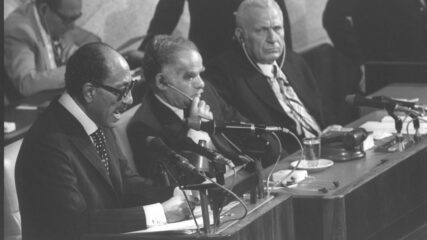
November 25, 2020 By Ken Stein Leadership is about knowing your objectives and adjusting and implementing the tactics to accomplish them. Leadership is also about choices and consequences. It is about making political trade-offs. November…
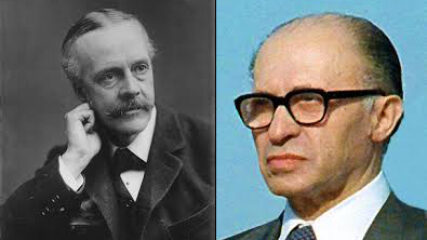
Ken Stein Coincidently during the month of November, occurring over a 60-year period, four important benchmarks were passed in Zionist history and the Jewish quest for statehood and recognition: the 1917 Balfour Declaration, 1947 U.N. partition…

Yitzhak Rabin’s life story, in the words of former Knesset member Nachman Shai, is “the story of the State of Israel.” He fought to create and defend it in 1948 and 1967, represented it in Washington, led it twice as prime minister, liberated Jews from captivity in 1945 and 1976, and embraced an opportunity for a chance at a longtime peace with the Palestinians in 1993. Rabin possessed essential qualities of an admired leader: credible, authentic, honest, visionary, and strategic. In addition, Rabin was taciturn, incisive, and suffered no fools. For a lifetime, he put the Jewish people on his shoulders as defender and diplomat.

Constructive ambiguity is a concept sometimes utilized in international negotiations to overcome remaining, unresolved issues. In such cases, parties agree to adopt a word or an expression that is so ambiguous they can both accept it—typically allowing them to reach an agreement without departing from their original, contradictory positions on certain contentious issues. This article describes instances in Arab-Israeli relations in which fundamental disagreements between the parties have been resolved—in fact, papered over—through constructive ambiguity.

Six weeks before the UAE and Israel announced their mutual recognition in August 2020, Tel Aviv University Professor Eyal Zisser published a comprehensive perspective defining the compatible national interests for Arab state and Israeli mutual cooperation. Then resolving the Palestinian issue was still considered the key blockage to entrenching those ties publically. That obstacle was removed with the signing of the September 15, 2020 Bahrain-Israel-UAE Agreement.
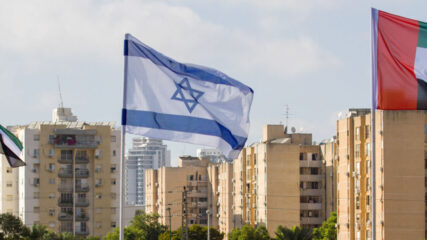
As the new year approaches, two-thirds of those interviewed described the public mood in Israel as pessimistic and a fourth as optimistic. There is skepticism about the country’s collective mood but personally the public is optimistic about the future. Two-third of Israelis think that there is a high or very high chance that there will be new elections in four months. (Published with Courtesy of the Guttman Center for Public Opinion and Policy Research at the Israel Democracy Institute, 2020).
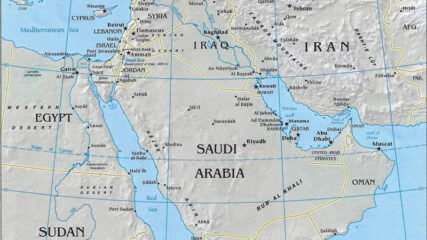
On August 13, 2020, when the United Arab Emirates agreed to pursue full normal relations with Israel, without any Israeli withdrawal from lands it won in the June 1967 war, the sacred negotiating formula, “Land for Peace” that had dominated Arab-Israeli talks for half a century abruptly ended.

The clash of great powers to control the Middle East, particularly between the U.S. and the U.S.S.R., neither began after World War II nor ended with the demise of the Soviet Union in 1991. Today, China, the U.S., Russia and Middle Eastern regional powers vie to influence everyday politics and resources.

Against the background of the Jordanian condemnation of Israel for work carried out by Israel on the southern extension of the Western Wall and the Muslim denial of the Jewish connection to the Western Wall, Nadav Shragai, a researcher at the Jerusalem Center, published this collection of forgotten and lesser-known facts about the Western Wall, which Muslims are trying to deny.

Using original sources and employing perspective are keys to substantive Israel education. Failure to use either, handicaps and prejudices learning about Israel. When documents and texts or a broad overview of the literature in a field are not employed, there is a strong possibility that the educator either has a personal political agenda or, is covering up for their own lack of knowledge of what they are teaching. This premise is true for teaching any country’s history and through the lens of any discipline. I reside in the discipline of history.

Hundreds of millions, if not billions, of people have been put out of work and the result is a massive loss of output and a collapse in the demand for goods and services. There is great uncertainty regarding the development of therapeutics and prevention; health services face massive pressure and many countries have abandoned orthodox economic policies to support households, firms, and financial markets. Conventional economic theory has once again been put to the test and found wanting. The Middle East has been hit by two large overlapping shocks: COVID-19 and the collapse in oil prices.
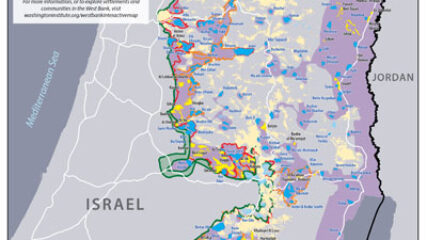
Israeli prime minister Binyamin Netanyahu has repeatedly declared that he will be putting forward his proposal for West Bank annexation as early as July 1. Yet uncertainties about his plans still abound, indicating that this timetable may not be met despite his assertions to the contrary.
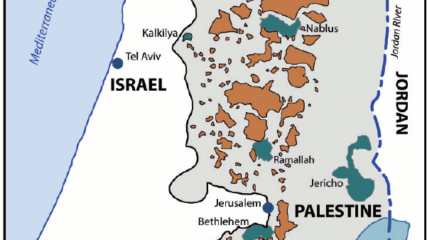
In January, President Donald Trump published his long-awaited plan for resolving the Israeli-Palestinian Conflict: “Peace to Prosperity: A Vision to Improve the Lives of the Palestinian and Israeli People.” The president’s vision calls for Israel to annex roughly 30% of the West Bank – half of Area C – with Areas A, B and the balance of Area C allocated to the future State of Palestine (which is also slated to receive additional land, currently a sovereign part of Israel, of roughly equal size to lands to be annexed by Israel).

With permission, read full article at Washington Institute for Near East Policy. https://www.washingtoninstitute.org/policy-analysis/view/wrestling-with-annexation-the-elusive-search-for-a-policy-rationale As soon as next month, Israel’s new government could approve plans to annex a substantial portion of the West Bank. The trigger…

Kenneth W. Stein, “Zionist Land Acquisition: a core element in establishing Israel,” in Michael J. Cohen, (ed.) The British Mandate in Palestine: A Centenary Volume, 1920-2020, Routledge, 2020, pp. 189-204.

June 10, 2020 By Dr. Ken Stein, Founding CIE President The pandemic has had a blistering impact on our lives. When and where will it end? Unexpected and unnecessary deaths. We have learned that some…

In this new world of social distancing and staying at home, life can slip into a monotonous routine, but there are good ways to liven up your time at home. One is by watching captivating television. But even that can become stale. How many times can you watch Love Is Blind, Tiger King or The Office? Instead, try streaming shows that deal with Israel. The past twenty years have seen an onslaught of exciting, mesmerizing and thrilling productions that offer insights into the nuances of Israel’s history and culture.
