The June 1967 War: Actions with Unfinished Consequences
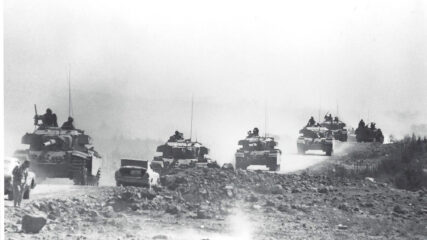
Coming up, fifty years after the June 1967 War. How many times have I taught the causes and effects, or written about the War? Hundreds of times in forty years.
In the aftermath of UNSC Resolution 2334 condemning Israeli settlement construction, Secretary of State John Kerry publicly blamed Israeli settlement construction in the West Bank for being the major barrier to a two-state solution to resolution of the Israeli-Palestinian conflict.
The October 1973 War was 43 years ago this month. What follows is the US Intelligence Estimate when the war started on October 6
For the last decade it seems that not a month has gone by without some politician, news outlet, or analyst telling us that a two-state solution to resolving the Palestinian-Israeli Conflict is dead. Now we learn it is not dead, even if barely on life-support.
For almost 100 years, the Declaration has represented, for the Palestinians, the political beginning of Palestine falling out of their influence and into the control of the budding Zionist movement.
Within the Palestinian Authority, official talk of negotiations, peace, reconciliation, or even the “two-state solution” has become conspicuous by its absence.
For this project, Daniel Polisar of the Shalem College in Israel examined over 330 surveys carried out by the four major Palestinian research institutes, each of which has been conducting regular polls for a decade or more. His conclusions focus on what Palestinians think about Israel and why?
For the past four weeks, Israel and the West Bank have been hit by a wave of stabbing attacks by Palestinian Muslims on Israeli Jews and protests in the West Bank.
Palestinians and Israelis will benefit significantly by reaching an agreement; another conflict between them will cost each community.
Alliances of convenience alongside alliances of conviction: when do the first become the second? Who is telling the story that we read?
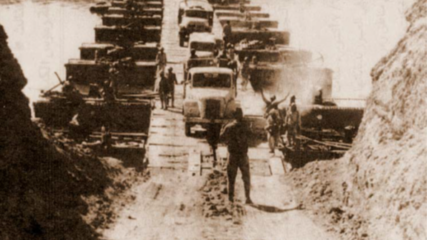
Many recollections remain from the Egyptian-Syrian surprise attack on Israel on Yom Kippur in 1973. The war set in motion a diplomatic process that eventually culminated in the 1979 Egyptian-Israeli Peace Treaty.
Lessons from the overthrow of the Morsi government in Egypt, the restart of Palestinian-Israeli talks, and the civil war in Syria remind us how difficult it is to judge whether American engagement is good or bad in the long run.
Preliminary negotiations and changing political realities have catalyzed the opening of new talks, but even a two-state agreement would not guarantee an imminent end to the conflict.
Many in the Arab world and amongst Palestinian leaders believe that, for the sake of evenhandedness and justice, the U.S. government, a longtime supporter of Israel’s security and existence, should have openly endorsed and urged others to vote for the proposition of Palestinian state recognition at the United Nations. Criticism of the U.S. failing to do so has been harsh, but it is also without perspective or historical context. What is forgotten is the persistent, even aggressive, perhaps unprecedented role that Washington has played in pushing for Palestinian rights, self-determination and, most recently, for Palestinian statehood.
Ambassador Alan Baker (ed.), Israel’s Rights as a Nation-State in International Diplomacy, published in 2011 by the Jerusalem Center for Public Affairs and the World Jewish Congress. The importance of this book arose in light…
Since the June 1967 war, more than two dozen mediators have engaged in Arab‐ Israeli diplomacy seeking to clarify one underlying question: under what conditions and over what period of time would Israel relinquish land attained in the June 1967 War, and what kind of understanding or agreement from an Arab partner would Israel receive in return? The Annapolis Conference in 2007, was again a Transaction but not a Transformation of Outcomes.
“The Quest for Arab-Israeli Peace: Israel’s Disengagement from the Gaza Strip: Precedents, Motivations and Outcomes” Zionism Fulfilled.- Israel’s preemptive physical disengagement from the Gaza Strip in August 2005 was the result of a national consensus;…
During the May 2021 Israeli-Palestinian clashes, Arab citizens of Israel clashed with Jewish Israelis. By comparison in October 2000, similar clashes were longer, more intense with similar underlying causation. Read the context with the findings of the Or Commission that investigated them.
Note by the author: As a faculty member at Emory University, I wrote several articles per month for national and local newspapers. This article appeared in October 2002 in the Orlando Sentinel. The idea for a trusteeship to be possibly be considered to manage the Israeli-Palestinian relationship emerged from my decades of study of the Palestine Mandate, understanding the concept of separation of the two communities that was offered by the British on more than one occasion during the 1930s and 1940s, and the American suggestion in early 1948 to create a trusteeship for Palestine’s future. Martin Indyk, a US diplomat published an article about considering a trusteeship as a future political option in a Foreign Policy magazine article in July 2003.
“A Zionist State in 1939,” Dr. Kenneth W. Stein, CHAI (Atlanta), Winter 2002 “Had not the Nazi crimes been committed against Jews during World War II, the Jewish State would have never come true.” So…
By Kenneth W. Stein “The Link Between War and Diplomacy: The Kilometer 101 Talks After the October 1973 War,” in Richard B. Parker (ed.), The October War: A Retrospective, University Press of Florida, 2001, pp….
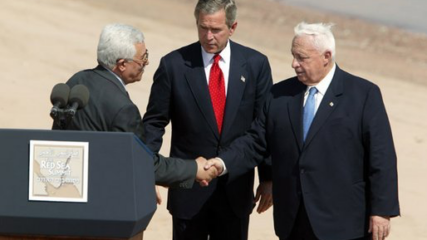
Perspective provides valuable insights in evaluating contemporary diplomacy. Though neither the Palestinian-Israeli-U.S. summit of July 2000 nor the Egyptian-Israeli-U.S. summit of September 1978 ended discussions between Israel and its Arab adversaries, there were more differences than similarities between the two intense and highly charged meetings.
Kenneth W. Stein, “The Arab-Israeli Peace Process,” Middle East Contemporary Survey, Vol. XXIII, 2000, Bruce Maddy-Weitzman (ed.), Westview Press, pp. 48-76. For some aspects of Arab-Israeli relations and negotiations, the beginning and end of 1999…
Kenneth W. Stein, “The Arab-Israeli Peace Process,” Middle East Contemporary Survey, Vol. XXII, 1998, Bruce Maddy-Weitzman (ed.), Westview Press, pp. 56-89. For almost all of 1998, the Arab-Israeli peace process was analogous to a driver…