Oslo Faces Belied Handshake

Oslo Faces Belied HandshakeCIE+

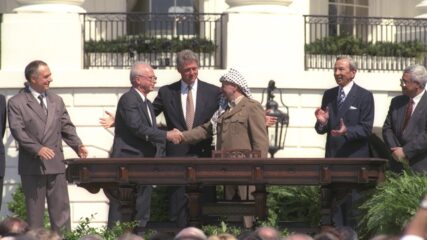
Michael Jacobs September 15, 2023 “Hopes for Peace Hang on Handshake.” That was the headline I wrote for the Sept. 14, 1993, front page of The Washington Times about what happened when Israel and the…

Issues and Analyses|September 15, 2023
Era II: Zionism to Israel, 1898 to 1948

Era II: Zionism to Israel, 1898 to 1948

From 1898 to 1948, Zionism evolved from an idea to a concrete reality: the actual establishment of the Jewish state, Israel. Slowly, a few immigrating Jews created facts by linking people to the land. For half a century, fortuity and fortitude made the Zionist undertaking a reality. They exhibited pragmatism and gradually constructed a nucleus for a state. Through perseverance Zionists empowered themselves.

The Egyptian-Israeli Peace Treaty at 40: Lessons Learned and Impacts Sustained

The Egyptian-Israeli Peace Treaty at 40: Lessons Learned and Impacts SustainedCIE+

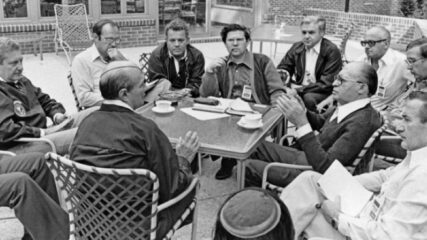
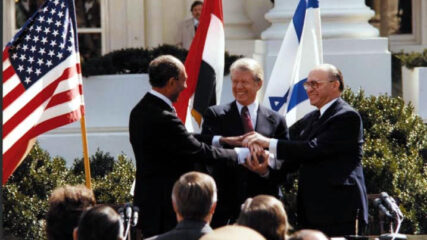
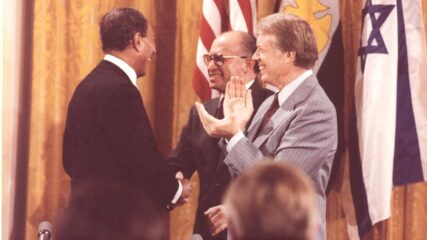
On a stormy evening on Sept. 17, 1978, with President Jimmy Carter as their witness, Egyptian President Anwar Sadat and Israeli Prime Minister Menachem Begin stepped to a table at the White House and signed the Camp David Accords, consisting of two framework agreements: an outline for the Egyptian-Israeli Peace Treaty and a scaffold for planning self-rule for the Palestinians living in the West Bank and Gaza Strip, held by Israel since the June 1967 war. Six months later, on March 26, 1979, the three men gathered again at the White House to sign the peace treaty. But their path to the ceremony 40 years ago was hardly smooth.

Is the PLO Still the “Sole Representative of the Palestinian People”?

Is the PLO Still the “Sole Representative of the Palestinian People”?CIE+

Despite ongoing efforts to improve relations between Fatah and Hamas, there is no serious hope of reconciliation between them in the foreseeable future. Noteworthy against this background are the attempts by Hamas and other opposition organizations to challenge both the PLO’s standing as the sole representative of the Palestinian people, and the senior standing of Fatah within the PLO. The Palestinian public, which saw the PLO as its sole representative, understands that it can no longer ignore the dominance of Hamas, which has competed with Fatah for their hearts and minds since 1987.

Issues and Analyses|March 24, 2019
How did the 1978 Camp David discussions unfold?  Essential Recollections by American participants.

How did the 1978 Camp David discussions unfold? Essential Recollections by American participants.CIE+

In 13 days in September 1978, Egypt and Israel made a two part agreement: an outline for an Egyptian – Israeli Treaty ending their state of war and an agreement on where and how the Palestinians would engage in self-rule. With great clarity and insight, Hermann Eilts, Sam Lewis, Hal Saunders, and Bill Quandt recall the ups and downs of those negotiations.

Issues and Analyses|September 17, 2021
Lessons from American Withdrawal from Afghanistan, Ken Stein

Lessons from American Withdrawal from Afghanistan, Ken SteinCIE+

In August 2021, the U.S. withdrew its military from Afghanistan, ending America’s longest war. Correctly, we needed to prevent another 9/11 on our doorsteps. We still have that imperative. Our departure does not diminish America’s need for stable allies, like Israel and Arab states. The US should build an effective alliance system among them. We should have a small, substantive and selective US footprint in the region for support of friends and deterrence of foes, not for nation-building.

Reiter and Seligman, Jews and Muslims in Jerusalem, Har ha-Bayit and Al-Haram al-Sharif, 1917-Present

Reiter and Seligman, Jews and Muslims in Jerusalem, Har ha-Bayit and Al-Haram al-Sharif, 1917-PresentCIE+

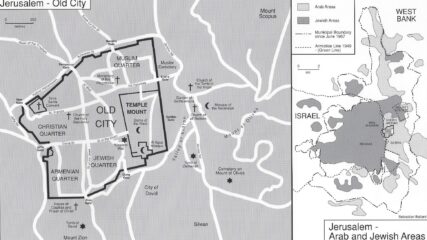
Since the 1920s the Sacred Esplanade of Jerusalem came to symbolise the bone of contention in the conflict over Palestine. The maintenance and even definition of the lines of division between the communities was a clear aim of the British authorities from 1920-1948. The communal/religious conflicts intensified after 1967 with the Israeli capture of East Jerusalem and other Arab-populated territory, which left neither side fully content.

Issues and Analyses|January 2009
Constructive Ambiguity in Middle East Peacemaking

Constructive Ambiguity in Middle East PeacemakingCIE+

Constructive ambiguity is a concept sometimes utilized in international negotiations to overcome remaining, unresolved issues. In such cases, parties agree to adopt a word or an expression that is so ambiguous they can both accept it—typically allowing them to reach an agreement without departing from their original, contradictory positions on certain contentious issues. This article describes instances in Arab-Israeli relations in which fundamental disagreements between the parties have been resolved—in fact, papered over—through constructive ambiguity.

Issues and Analyses|October 15, 2020
Israel and the Arab World: Breaking the Glass Ceiling

Israel and the Arab World: Breaking the Glass CeilingCIE+

Six weeks before the UAE and Israel announced their mutual recognition in August 2020, Tel Aviv University Professor Eyal Zisser published a comprehensive perspective defining the compatible national interests for Arab state and Israeli mutual cooperation. Then resolving the Palestinian issue was still considered the key blockage to entrenching those ties publically. That obstacle was removed with the signing of the September 15, 2020 Bahrain-Israel-UAE Agreement.

Issues and Analyses|September 25, 2020
Israel-United Arab Emirates Recognition

Israel-United Arab Emirates RecognitionCIE+

On August 13, 2020, when the United Arab Emirates agreed to pursue full normal relations with Israel, without any Israeli withdrawal from lands it won in the June 1967 war, the sacred negotiating formula, “Land for Peace” that had dominated Arab-Israeli talks for half a century abruptly ended.

West Bank Areas A, B and C – How Did They Come into Being?

West Bank Areas A, B and C – How Did They Come into Being?CIE+

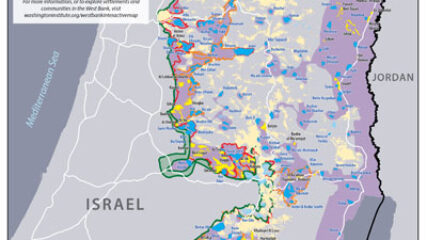
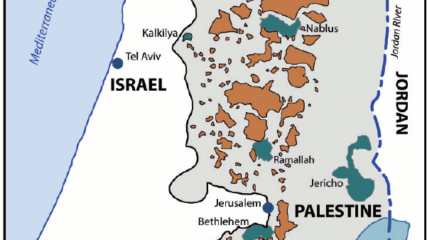
In January, President Donald Trump published his long-awaited plan for resolving the Israeli-Palestinian Conflict: “Peace to Prosperity: A Vision to Improve the Lives of the Palestinian and Israeli People.” The president’s vision calls for Israel to annex roughly 30% of the West Bank – half of Area C – with Areas A, B and the balance of Area C allocated to the future State of Palestine (which is also slated to receive additional land, currently a sovereign part of Israel, of roughly equal size to lands to be annexed by Israel).

Issues and Analyses|June 10, 2020
Palestinian Public Resigned to Israel’s Election Outcome, Looks to Other Arabs Instead for Next Steps

Palestinian Public Resigned to Israel’s Election Outcome, Looks to Other Arabs Instead for Next StepsCIE+

A Palestinian public opinion poll conducted during this latest Israeli election campaign, January 23-February 11, showed a mere 8% of West Bankers, along with 22% of Gazans, reporting that the vote would probably turn out “better for the Palestinians.” Many more expected Israel’s election to make things worse for them: a third of West Bankers, and nearly half (46%) of Gazans. The remainder—half in the West Bank, and a quarter in Gaza—anticipated that it would “probably make very little difference either way.”

Issues and Analyses|March 16, 2020