Cards List
FILTERED BY:
<span class="cie-plus-title">President Barack Obama’s Speech at Cairo University, 2009</span><span class="cie-plus-badge">CIE+</span>

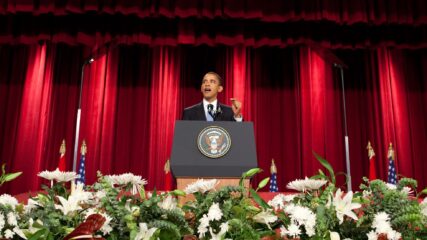
President Barack Obama’s Speech at Cairo University, 2009CIE+

Barack Obama, while seeking to improve America’s image by urging an end to violence and stereotypes, emphasizes the need for a two-state Israeli-Palestinian solution as part of a reset of U.S. relations with the Muslim world. His advocacy of soft power distinguishes his administration from George W. Bush’s use of force. Nine years later, Donald Trump’s secretary of state, also in Cairo, heavily criticizes the Obama soft-power approach.

<span class="cie-plus-title">Map of Lebanon, 2006</span><span class="cie-plus-badge">CIE+</span>

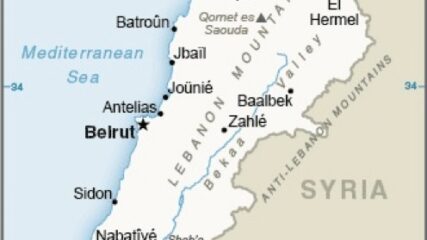
Map of Lebanon, 2006CIE+

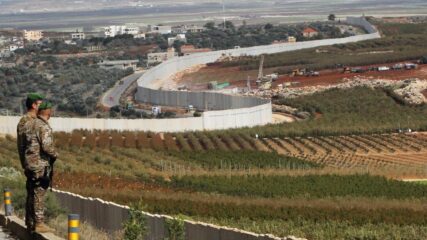
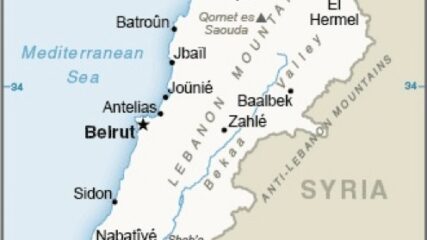
The map includes the Israeli border and the Litani River, which is about 18 miles north of the Israeli-Lebanese border and runs roughly parallel to it. U.N. Security Council Resolution 1701 from 2006 calls for…

<span class="cie-plus-title">Presidents Clinton and Assad Meet in Damascus, 1994</span><span class="cie-plus-badge">CIE+</span>

Presidents Clinton and Assad Meet in Damascus, 1994CIE+

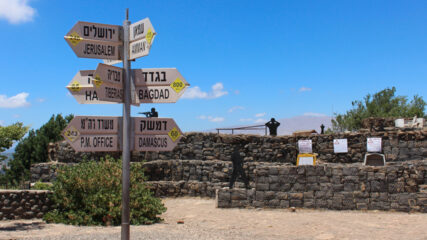
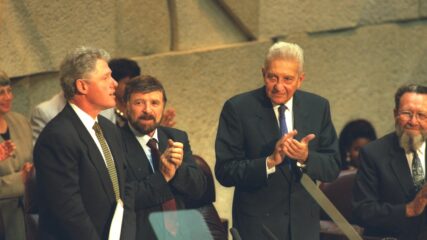
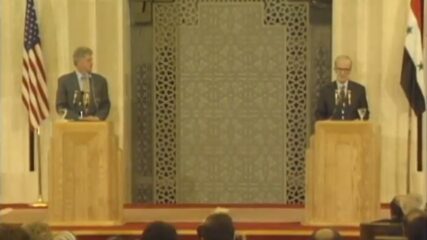
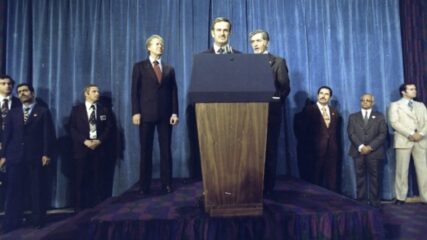
A day after the signing of the Jordan-Israel peace treaty and hours before addressing the Knesset, U.S. President Bill Clinton meets with his Syrian counterpart, Hafez al-Assad, in Damascus and expresses optimism that Syria will be part of a comprehensive Middle East peace. Assad continues to insist on the full return of the Golan Heights.

Documents and Sources|October 27, 1994
<span class="cie-plus-title">Khaddam: Ken Stein Interview With Syrian Vice President Abdel Halim Khaddam</span><span class="cie-plus-badge">CIE+</span>

Khaddam: Ken Stein Interview With Syrian Vice President Abdel Halim KhaddamCIE+

From 1970 to 1984, Khaddam served as Syria’s foreign minister, and later he was Syria’s decision-maker for actions in Lebanon. He recounts Syrian anger toward Egyptian President Sadat’s slow but continual bilateral engagement and recognition of Israel. He recalls how Syrian President Assad, after a four-hour meeting, refused Henry Kissinger’s invitation to attend the 1973 Geneva peace conference, not wanting to sanction the closeness Sadat was establishing with Israel and with Washington. These were the same reasons why Syria refused President Carter’s invitation to attend a similar Middle East peace conference in 1977. Khaddam says, “We were shocked by Sadat’s actions.”

Interviews|July 18, 1993
<span class="cie-plus-title">Prime Minister Begin’s Report on Treaties With Arab States and His Visit to Romania, 1977</span><span class="cie-plus-badge">CIE+</span>

Prime Minister Begin’s Report on Treaties With Arab States and His Visit to Romania, 1977CIE+

Unknown to the Carter administration and one month before it issued the US-Soviet Declaration to convene an international Middle East Peace Conference, Prime Minister Begin tells the cabinet that he learned from the Rumanian president that Sadat wishes to have Israeli and Egyptian representatives meet in secret talks. That bi-lateral Dayan -Tuhami meeting takes place on September 16. Begin refers to advanced drafts of proposed treaties between Israel and each Arab state; he presents details about Rumanian Jewish immigration to Israel.

Documents and Sources|September 4, 1977
<span class="cie-plus-title">Memorandum of Conversation Between President Carter and President Assad, 1977</span><span class="cie-plus-badge">CIE+</span>

Memorandum of Conversation Between President Carter and President Assad, 1977CIE+

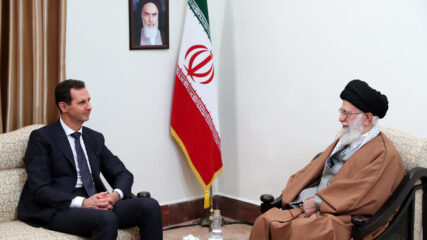
This meeting was the only one between U.S. President Carter and Syrian President Assad during the Carter administration. Carter wanted to learn Assad’s requirements for an agreement with Israel. Assad doubted that the Saudis would join this process. In the end, Assad made it clear that he was not rushing into an agreement with Israel, even if asked by the United States. Carter acknowledged knowing little about the Palestinian refugee issue and said the U.S. was committed to the security of Israel.

<span class="cie-plus-title">Memorandum of Conversation Between Syrian President Hafez al-Assad and U.S. Secretary of State Henry Kissinger,  December 1973</span><span class="cie-plus-badge">CIE+</span>

Memorandum of Conversation Between Syrian President Hafez al-Assad and U.S. Secretary of State Henry Kissinger, December 1973CIE+

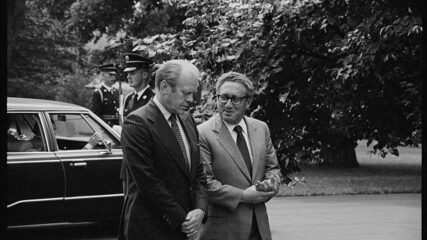
U.S. Secretary of State Kissinger failed to persuade Syrian President Assad to attend the December 1973 Geneva Middle East Peace Conference. Assad saw the proposed conference, which it was, a ruse to cover up a “pre-cooked” Israeli-Egyptian arrangement. Assad wanted no part of implicitly supporting any agreement where Israel’s legitimacy might be enhanced.

Documents and Sources|December 15, 1973
<span class="cie-plus-title">The 1973 October War — A Short History</span><span class="cie-plus-badge">CIE+</span>

The 1973 October War — A Short HistoryCIE+

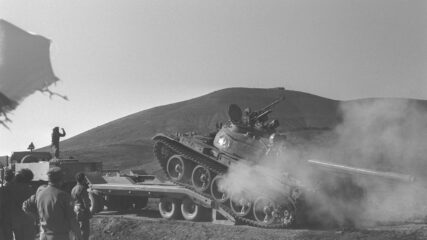
Egyptian President Sadat colluded with Syrian President Assad to attack Israel on October 6, 1973. Sadat’s objective was not to seek Israel’s destruction but to gain a limited success by crossing the canal. He also sought to engage American diplomacy to generate talks with Israel that would see Israeli withdrawal from Egyptian land Israel secured in the June 1967 War. Sadat took a large gamble by attacking Israel yet he unfolded a negotiating process with Israel that lasted through 1979. He achieved his overarching long-term priority of having Egyptian Sinai returned to Egyptian sovereignty.

<span class="cie-plus-title">Prime Minister Eshkol Statement to Knesset at Conclusion of June 1967 War</span><span class="cie-plus-badge">CIE+</span>

Prime Minister Eshkol Statement to Knesset at Conclusion of June 1967 WarCIE+

Two days after the conclusion of the June 1967 War, Eshkol, recounts the series of events that led to war, the war itself and the immediate aftermath. He reaches out to Arab states for peace seeking a path to peace with her belligerent neighbors. A week later, Israel will quietly messages Cairo and Damascus through the US, hat Israel seeks an end to the conflict. No answers are received.

Documents and Sources|June 12, 1967
<span class="cie-plus-title">Sykes-Picot Agreement, 1916</span><span class="cie-plus-badge">CIE+</span>

Sykes-Picot Agreement, 1916CIE+

Britain and France secretly divide the Arab provinces of the reeling Ottoman Empire to meet their own geopolitical interests. They offer no concern for the political aspirations of indigenous populations.

Documents and Sources|May 15-16, 1916
<span class="cie-plus-title">1914-1915 Hussein-McMahon Correspondence</span><span class="cie-plus-badge">CIE+</span>

1914-1915 Hussein-McMahon CorrespondenceCIE+

The Sharif of Mecca and Sir Henry McMahon, a British official in Cairo speaking for the Foreign Office, exchange letters about the current war effort against the Turks and the future political status of specific Arab lands in the Ottoman Empire. McMahon says, as he repeats in 1937, that the area of Palestine is excluded from any area to be provided to an Arab leader after World War I. The British instead allow the area of Palestine to develop as a “national home for the Jewish people.”