Assembled here are key sources that have shaped the modern Middle East, Zionism and Israel. We have included items that give texture, perspective and opinion to historical context. Many of these sources are mentioned in the Era summaries and contain explanatory introductions.
Primary sources, reputable scholarship and archival materials collectively show major communal (Arab-Jewish) socio-economic separation, factors that foreshadowed geo-spatial partition.

Two letters detail how Arab peasants are sometimes swindled out of their lands by Arab land brokers and effendis, noting economic harm to them, and how they learn to avoid landlords and sell directly to Jewish buyers. Intra-Arab communal tension rises.
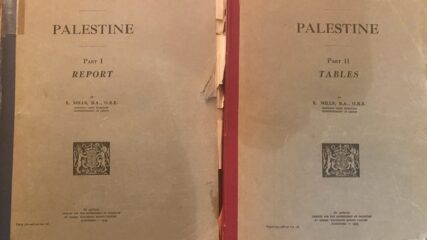
An invaluable glimpse at Palestine’s population: gaping socio-economic distances and vast communal differences between Muslims, Christians and Jews that set the strong preferences for separation of the populations.
This four-page assessment notes multiple Jewish contributions to Palestine’s development: expansion of health care, advancement of agricultural methods, government revenue, industrial growth and Jewish building expansion. It notes that the Jewish economy has attracted Arab immigration to Palestine for jobs and the mushrooming of the Jewish education system from Jewish sources. Without saying so directly, its contents tout Jewish state building.
A description details the economic devastation caused by the 1936-1939 Arab disturbances in Palestine to the majority rural population. This followed the annually poor crop yields of the early 1930s, and the vast rural wreckage caused by WWI.
The deal to mutually phase out tariffs on manufactured goods over a decade is the first free-trade agreement for the United States and the second for Israel, after one reached with a precursor to the European Union.
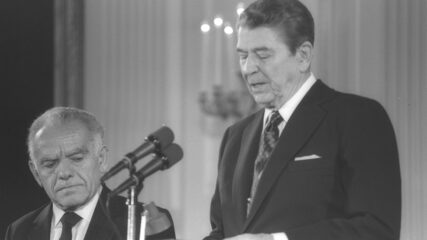
The agreement affirms the close relationship between the U.S. and Israel based on common goals, celebrates the 3-year-old U.S.-Israel Free Trade Agreement, and institutes multiple regular meetings between Israeli and U.S. officials.
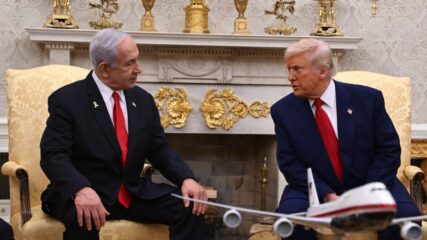
Benjamin Netanyahu makes his second White House visit of Donald Trump’s second term, but the discussion this time expands beyond Gaza and regional peace to include bilateral trade after a Trump announcement of new tariffs on Israeli goods.