Nasser Calls for Israel’s Destruction in Speech to Trade Unionists, May 1967CIE+
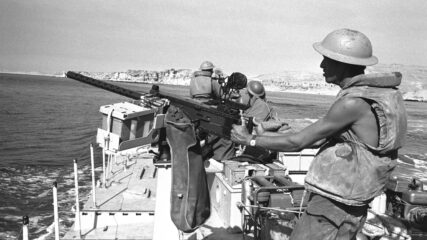
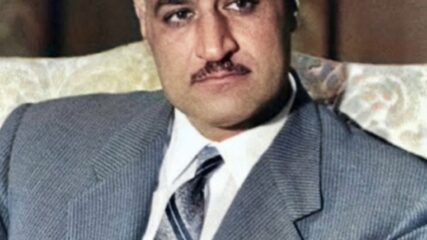
Ten days before the start of the Six-Day War, Egyptian President Gamal Abdel Nasser declares that Egypt, Syria and other Arab states intend to destroy Israel.
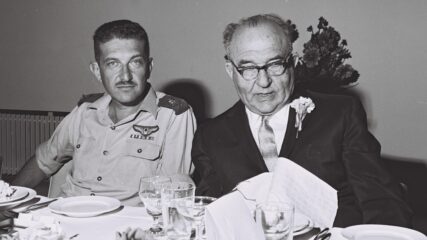
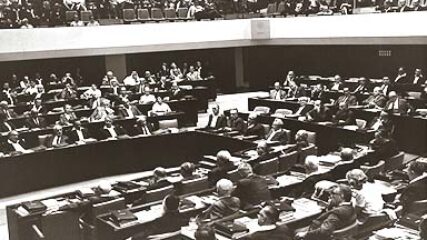
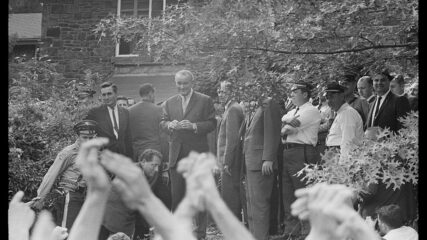
With tensions on its borders, Eshkol tries to reassure Israeli public. Instead he gives a “painfully faltering” speech. Popular and party disgruntlement follow, opening the way for Eshkol to turn over the Defense Ministry two days later to General Moshe Dayan.
Egyptian President Gamal Abdel Nasser asserts that the conflict with Israel is not over access to the Gulf of Aqaba but the very existence of Israel; Egypt’s foes are Britain and the United States, which support Israel.
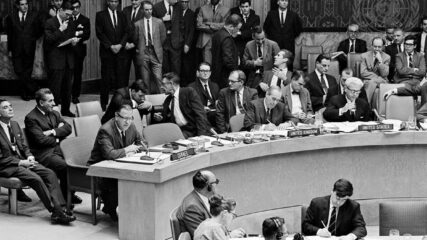
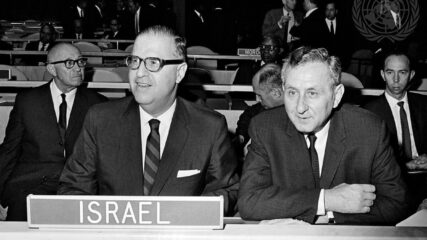
The Israeli ambassador to the United Nations delivers a detailed outline of events that will lead to war two days later.
The Israel State Archives’ “The Six Day War Files” includes Cabinet and Security Cabinet meeting transcripts that were classified for 50 years.
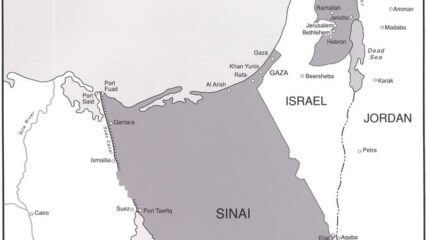
After the Israeli army swept through Sinai in four days, the Egyptian president acknowledges the success of Israel’s pre-emptive strike but blames the U.S. and Britain. Still, he takes responsibility for the Arab defeat and resigns.
Two days after the conclusion of the June 1967 War, Eshkol, recounts the series of events that led to war, the war itself and the immediate aftermath. He reaches out to Arab states for peace seeking a path to peace with her belligerent neighbors. A week later, Israel will quietly messages Cairo and Damascus through the US, hat Israel seeks an end to the conflict. No answers are received.
Following the conclusion of the June 1967 War, the Israeli government sent word to Egypt and Syria seeking peace plan that was intended to jumpstart a peace process with Israel’s belligerent neighbors, Egypt and Syria. The messages were sent through the US, but no response was apparently received.
After the June 1967 war, the Israeli government sent word through the United States to Egypt and Syria seeking to jump-start a peace process. Apparently no response was received.
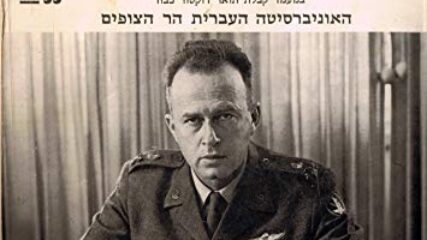
Receiving an honorary doctorate from the Hebrew University after the conclusion of the June 1967 War, Rabin delivers a speech on behalf of Israel’s entire military. He highlights the harsh realities of war yet concentrates on commending the extraordinary efforts of Israel’s armed forces.
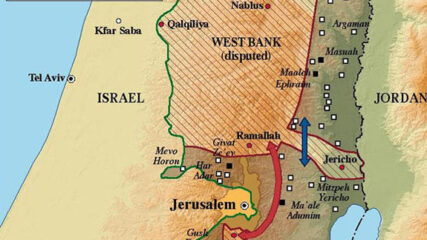
Yigal Allon’s plan for handling the areas captured from Jordan during the just-completed Six-Day War reflects Israel’s previous border vulnerability and seeks a West Bank arrangement that is not a strategic or geographic threat.
Arab states declare “no peace, no negotiation, no recognition” with Israel after their collective defeat in the June 1967 War.
Resolution 242 calls for Israeli withdrawal from unspecified captured territories in return for the right of all states to live in peace. It does not call for a full withdrawal. It is the basis for treaties with Egypt (1979) and Jordan (1994) and for PLO recognition of Israel (1993).
The United States abstains on a Security Council resolution declaring Israel’s Basic Law on Jerusalem to be in violation of international law.
U.S. President Donald Trump recognizes Israeli sovereignty over the Golan Heights more than 37 years after Israel annexed the mountains.