Cards List
FILTERED BY:
<span class="cie-plus-title">The Day After an Iranian Nuclear Strike</span><span class="cie-plus-badge">CIE+</span>

The Day After an Iranian Nuclear StrikeCIE+

There is much discussion around the world about how to prevent Iran from obtaining nuclear weapons. But few, if any, international bodies deal with the question of how to prepare for the day Iran achieves such capabilities, if that day has not already arrived.

Issues and Analyses|September 27, 2019
<span class="cie-plus-title">Towards the Elections: Prime Minister Netanyahu gets Mixed Grades</span><span class="cie-plus-badge">CIE+</span>

Towards the Elections: Prime Minister Netanyahu gets Mixed GradesCIE+

Prime Minister Benjamin Netanyahu is awarded high grades for improving Israel’s international standing (60%), enhancing the country’s military strength (56%), and successfully contending with the Iranian threat (50.5%) but poor grades for failing to increase solidarity between Israel’s different segments of society (51%) and on the question of personal integrity (49%).

Issues and Analyses|August 7, 2019
<span class="cie-plus-title">Do Limited Resources Threaten the IDF’s New Multiyear Plan?</span><span class="cie-plus-badge">CIE+</span>

Do Limited Resources Threaten the IDF’s New Multiyear Plan?CIE+

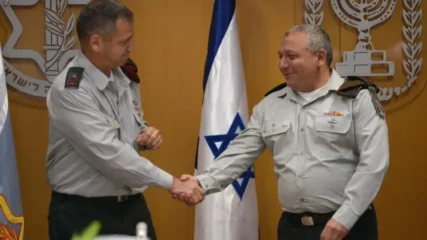
The multiyear Tnufa (“momentum”) plan drawn up by IDF Chief of Staff Aviv Kochavi is meant to provide a response to changes affecting the IDF – those underway and those that are expected in the next five years – and to improve operational effectiveness. However, recently the situation assessment has been flooded with factors related to economic and political conditions that may delay and limit the plan’s launch.

Issues and Analyses|July 17, 2019
<span class="cie-plus-title">Southern Lebanon: The Land of Three Armies</span><span class="cie-plus-badge">CIE+</span>

Southern Lebanon: The Land of Three ArmiesCIE+

July 12, 2019 will mark the thirteenth anniversary of the outbreak of the Second Lebanon War; August 14 will mark the anniversary of its end under Security Council Resolution 1701; and discussions will be held at the United Nations headquarters regarding a renewal of UNIFIL’s mandate for another year. The bottom line: another war between Israel and Lebanon did not erupt, mainly due to both sides’ desire to avoid it and, to some extent, also due to UNIFIL’s help in preventing escalation resulting from tactical incidents.

Issues and Analyses|July 3, 2019
<span class="cie-plus-title">The Role of the Court in Reaching Judicial Decisions that Concern the State of Israel’s National Security</span><span class="cie-plus-badge">CIE+</span>

The Role of the Court in Reaching Judicial Decisions that Concern the State of Israel’s National SecurityCIE+

Since its establishment, the State of Israel has committed itself to the principles of the rule of law and the protection of human rights, both in times of combat and in times of calm. Israel’s battle against threats to its national security must be waged within the framework of the law, and in accordance with the legal norms practiced among the family of democratic nations. One of the supervisory and control mechanisms to ensure that these legal norms are indeed followed is judicial review conducted by the Israeli Supreme Court in relation to matters of national security. The judicial review, which is not intended to replace, and cannot replace, the operational decision making process of IDF commanders, is not only a key element of national security; in many respects it is the source of Israel’s strength and reflects the State’s commitment to the rule of law.

Issues and Analyses|June 17, 2019
<span class="cie-plus-title">52 Years Since the Outbreak of the June 1967 War</span><span class="cie-plus-badge">CIE+</span>

52 Years Since the Outbreak of the June 1967 WarCIE+

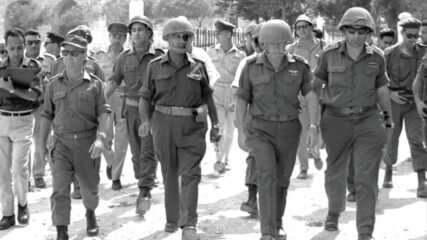
In early June 1967, Following three weeks of building tension with Egypt—particularly Cairo’s dispatch of 200,000 troops into Sinai, the removal UN peace keeping troops from there, the blockade of Israeli shipping access to its port at Eilat, and blistering verbal barrages from Arab leaders threatening Israel’s destruction—Israel preemptively struck Egypt on June 5. In six days Israel defeated three Arab armies and increased its size three-fold, without pre-determined plans to take either the Golan Heights or the West Bank. Its victory included the reunification of Jerusalem, divided in the 1948-1949 Arab-Israeli War.

Issues and Analyses|June 9, 2019
<span class="cie-plus-title">How Jewish Israelis Feel Towards Non-Jews and the Current Conversion Process – Shavuot Survey</span><span class="cie-plus-badge">CIE+</span>

How Jewish Israelis Feel Towards Non-Jews and the Current Conversion Process – Shavuot SurveyCIE+

Conversion is a central theme of the upcoming holiday of Shavuot when the biblical story of Ruth the Moabite – widely considered the first convert to Judaism – is traditionally read. In the spirit of the holiday, we decided to examine what types of relationships Jewish Israelis are ready to have with non-Jews. We also looked into what Jewish Israeli think about the topic of conversions in general and the conversion process in Israel in particular.

Issues and Analyses|June 5, 2019
<span class="cie-plus-title">Finally, from Gaza, a Ray of Light</span><span class="cie-plus-badge">CIE+</span>

Finally, from Gaza, a Ray of LightCIE+

Notwithstanding Hamas’s recent success at partially overwhelming Iron Dome, it has failed to accomplish one of its signal goals: nothing it has done has succeeded in galvanizing the Arab population in Ramallah and Hebron to rise up against either Israel or the Palestinian Authority (PA).

Issues and Analyses|May 31, 2019
<span class="cie-plus-title">Israel’s Election Result Shows Broad Consensus on Diplomatic and Defense Issues</span><span class="cie-plus-badge">CIE+</span>

Israel’s Election Result Shows Broad Consensus on Diplomatic and Defense IssuesCIE+

The recent Israeli election campaign was heated and nasty; primarily a referendum on whether Netanyahu should continue to serve as Prime Minister. His personality and legal problems were the focus of opposition attacks, not his policies. In fact, beyond the harsh rhetoric one can discern a broad consensus in Israel behind the outgoing government’s actual diplomatic and defense policies.

Issues and Analyses|May 28, 2019
<span class="cie-plus-title">The Rising Crisis Between the United States and Iran</span><span class="cie-plus-badge">CIE+</span>

The Rising Crisis Between the United States and IranCIE+

After a year in which Iran opted for “strategic patience,” in the hope that European nations would compensate for the United States sanctions, it now seeks to present a price tag for the US measures against it, and has thus embarked on a response comprising action in three realms: nuclear, military, and oil exports from the Gulf. In the current circumstances, Iran and the United States are demanding conditions that would make a resumption of negotiations difficult, although both sides apparently understand that dialogue may ultimately be the less dangerous option for them.

Issues and Analyses|May 14, 2019
<span class="cie-plus-title">Gaza in Crisis, 2018</span><span class="cie-plus-badge">CIE+</span>

Gaza in Crisis, 2018CIE+

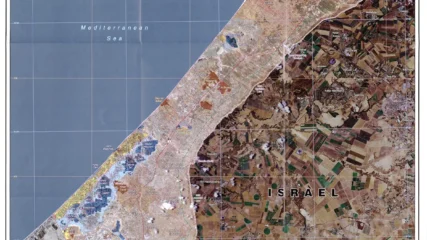
Demographic pressures lie behind much of what is happening in Gaza. In 1948, 250,000 Palestinian refugees fled to Gaza, where the existing population was 80,000. Today, the population of Gaza is about 1.9 million of whom 1.3 million (68%) are refugees. Palestinians are the only people to retain refugee status generation after generation as a result of United Nations support.

<span class="cie-plus-title">Strategic Survey for Israel 2018-2019: A Collection of Articles</span><span class="cie-plus-badge">CIE+</span>

Strategic Survey for Israel 2018-2019: A Collection of ArticlesCIE+

The articles in this volume explore the primary significance of the changes in the Middle East over the past year, and focus on the areas of intensifying friction in the region and their international context. Contrary to previous volumes in the Strategic Survey for Israel series, which raised many diverse issues, even those without immediate ramifications for Israel, this volume covers domestic and external events that have a clear and immediate impact on the country’s national security.

Issues and Analyses|February 6, 2019
<span class="cie-plus-title">Common Values and Interests as a Catalyst for Cooperation: The Visegrád Group’s (4 EU countries) Policy towards Israel</span><span class="cie-plus-badge">CIE+</span>

Common Values and Interests as a Catalyst for Cooperation: The Visegrád Group’s (4 EU countries) Policy towards IsraelCIE+

Since 2017, relations between the Visegrád Group (V4) and Israel have been changing. Hungary, Poland, the Czech Republic, and Slovakia are increasingly developing shared views and values on international politics and show a greater willingness to cooperate economically. This coincides with growing European Union (EU) criticism of the Israeli government’s stance on the Arab-Israeli conflict.

Issues and Analyses|January 7, 2019
<span class="cie-plus-title">Six Days, Fifty Years: The June 1967 War and its Aftermath, 14 Superb Essays</span><span class="cie-plus-badge">CIE+</span>

Six Days, Fifty Years: The June 1967 War and its Aftermath, 14 Superb EssaysCIE+

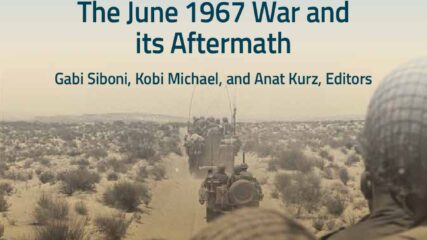
The Six Day War, which broke out on the morning of June 5, 1967, was a formative event that changed the face of the State of Israel and, to a large extent, the entire Middle East. Prior to the war, Israel had been under existential threat and in six days, the Israel Defense Forces succeeded in removing the threat by achieving a decisive military victory and positioning Israel as a significant force in the region.

Issues and Analyses|January 4, 2019
<span class="cie-plus-title">On Developing a Coherent US Regional Strategy Towards Iran, and Iran’s Likely Response</span><span class="cie-plus-badge">CIE+</span>

On Developing a Coherent US Regional Strategy Towards Iran, and Iran’s Likely ResponseCIE+

The US can and should develop a coherent region-wide strategy, involving US allies including Israel, to impede Iran’s ability to continue developing in ways detrimental to the region’s security. However, Iran is proficient in the practice of using proxies and paramilitary methods, as well as in the combination of paramilitary and political struggle. Its response to a US-led strategy to contain and roll back their influence is likely to focus on these areas.

Issues and Analyses|September 21, 2018
<span class="cie-plus-title">Israel’s Credit Rating and National Security</span><span class="cie-plus-badge">CIE+</span>

Israel’s Credit Rating and National SecurityCIE+

S&P recently raised Israel’s credit rating to AA minus. This is a welcome development of much economic value and prestige, the result of a long process of economic improvement. From the perspective of national security, the high grade reflects Israel’s ability to grow in economic terms while simultaneously dealing with unusual security challenges.

Issues and Analyses|August 24, 2018
<span class="cie-plus-title">Paul Rivlin: The Crisis in Gaza</span><span class="cie-plus-badge">CIE+</span>

Paul Rivlin: The Crisis in GazaCIE+

Though written in May 2017, Paul Rivlin, a Moshe Dayan Center researcher analyzes a rich trove of data to analyze the Gaza Strip’s troubling economic character. Five major reasons are enumerated for its dilemmas: absence of investment, extraordinary high unemployment, a very young population, inability of goods and services to go in and out of the strip, and Hamas’s stranglehold on taxation and spending.

Issues and Analyses|April 2, 2018