Cards List
FILTERED BY:
<span class="cie-plus-title">Understanding Hamas</span><span class="cie-plus-badge">CIE+</span>

Understanding HamasCIE+

Read the terrorist organization’s own words about its mission to eliminate Israel and Jews everywhere, as well as analyses explaining how Hamas works.

Issues and Analyses|October 25, 2023
Era II: Zionism to Israel, 1898 to 1948

Era II: Zionism to Israel, 1898 to 1948

From 1898 to 1948, Zionism evolved from an idea to a concrete reality: the actual establishment of the Jewish state, Israel. Slowly, a few immigrating Jews created facts by linking people to the land. For half a century, fortuity and fortitude made the Zionist undertaking a reality. They exhibited pragmatism and gradually constructed a nucleus for a state. Through perseverance Zionists empowered themselves.

<span class="cie-plus-title">Moshe Naor, “Israel’s 1948 War of Independence as a Total War,” 2008</span><span class="cie-plus-badge">CIE+</span>

Moshe Naor, “Israel’s 1948 War of Independence as a Total War,” 2008CIE+

Examination of the mobilization of society for the Israeli War of Independence effort enables one to present a more extended process that began in October 1947 — some two months prior to the outbreak of the war — and ended, from the standpoint of mobilization of personnel, at the beginning of 1949, when demobilization of the first draftees from the wartime army took place, and from an economic standpoint in April 1949, when an Austerity system was declared in the State of Israel.

Issues and Analyses|December 28, 2022
<span class="cie-plus-title">The American Intelligence Threat Assessment on Iran’s Nuclear Program</span><span class="cie-plus-badge">CIE+</span>

The American Intelligence Threat Assessment on Iran’s Nuclear ProgramCIE+

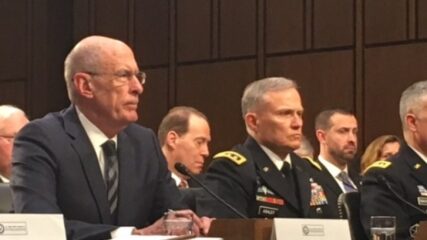
On Jan. 29, 2019, U.S. Director of National Intelligence Dan Coats told the Senate Select Committee on Intelligence: “We do not believe Iran is currently undertaking the key activities we judge necessary to produce a nuclear device.” However, experience helps us realize that the American intelligence community has a very problematic track record in revealing, on time, nuclear weaponization efforts of many countries (e.g., North Korea, India, Pakistan, Syria, and Iraq) including Iran itself, so one has to be very humble about this kind of assessment.

Issues and Analyses|March 11, 2019
<span class="cie-plus-title">Lessons from American Withdrawal from Afghanistan, Ken Stein</span><span class="cie-plus-badge">CIE+</span>

Lessons from American Withdrawal from Afghanistan, Ken SteinCIE+

In August 2021, the U.S. withdrew its military from Afghanistan, ending America’s longest war. Correctly, we needed to prevent another 9/11 on our doorsteps. We still have that imperative. Our departure does not diminish America’s need for stable allies, like Israel and Arab states. The US should build an effective alliance system among them. We should have a small, substantive and selective US footprint in the region for support of friends and deterrence of foes, not for nation-building.

<span class="cie-plus-title">Social and Economic Resilience in a Crisis Situation: Strategic Implications</span><span class="cie-plus-badge">CIE+</span>

Social and Economic Resilience in a Crisis Situation: Strategic ImplicationsCIE+

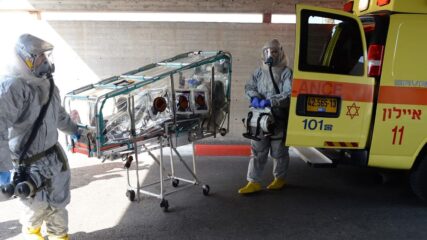
The ability of Israeli society to stay resilient at a time of national emergency – specifically in the face of the COVID-19 pandemic – has direct strategic and security implications, insofar as Israel demonstrates that it is capable of facing adversity. in addition, despite the huge budgetary hit engendered by Corona, it is vital to sustain Israeli investment in advanced military capabilities, and retain an untouchable budget reserve for this purpose.

Issues and Analyses|March 30, 2020
<span class="cie-plus-title">The Corona Crisis and Israel’s National Security</span><span class="cie-plus-badge">CIE+</span>

The Corona Crisis and Israel’s National SecurityCIE+

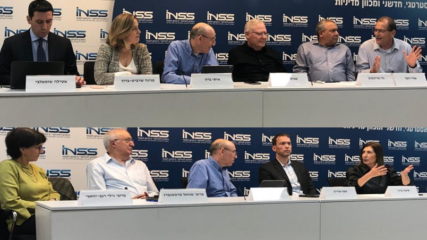
A seminar at the Institute for National Security Studies (INSS) on political and security implications of the corona crisis underscored the prevalent uncertainty regarding the situation, but also highlighted several instructive points. The biggest threat to the global (and Israeli) economy derives from the slowdown or negative growth in the United States, and at the current stage, the American ability to meet the crisis effectively is not clear. As for Israel, the risks of escalation in the northern arena and the Gaza Strip have decreased in the short term, but toughening the restrictions on the border crossings with the Palestinian Authority could lead to its economic collapse.

Issues and Analyses|March 20, 2020
<span class="cie-plus-title">Strategic Survey for Israel 2019-2020</span><span class="cie-plus-badge">CIE+</span>

Strategic Survey for Israel 2019-2020CIE+

At the core of the strategic assessment for 2020 stands the tension between Israel’s evident strength and its success in various fields, and the possibility that this positive state of affairs will prove temporary and fragile. This tension stems from a series of factors that in the coming year could lead to a large-scale conflict and even to war, and involves Israel’s approach to a series of substantive national security challenges. The strategic assessment is comprised of seven chapters along with an introduction and conclusion.

Issues and Analyses|January 24, 2020
<span class="cie-plus-title">Shortening Compulsory IDF Service for Men</span><span class="cie-plus-badge">CIE+</span>

Shortening Compulsory IDF Service for MenCIE+

The discharge of men inducted into the IDF from July 2015 began in March 2018, after 32 months of compulsory service (compared with 36 months until then). A law stipulating a further shortening of compulsory service for men is supposed to apply to those drafted from July 2020, such that they will serve 30 months. However, according to media reports, the past year has heard dissenting voices within the military against adopting this shortened service, in view of the increasing security challenges.

Issues and Analyses|October 31, 2019
<span class="cie-plus-title">How the Syrian War Shifted Attitudes Towards Arab–Israeli Rapprochement</span><span class="cie-plus-badge">CIE+</span>

How the Syrian War Shifted Attitudes Towards Arab–Israeli RapprochementCIE+

Anti-Israel mobilization and rhetoric have always been a prominent feature of official Arab discourse, regardless of political orientation. Islamist, nationalist, and secular parties have all seen vocal hatred of Israel as a cornerstone for rallying support and a vehicle to spread unrelated political messages to achieve related objectives, with unrelated acts being framed as forms of ‘resistance’ against Israel. However, the Syrian civil war has slowly shifted the dynamic of who is considered ‘enemy’ in the Arab world.

Issues and Analyses|October 11, 2019