Cards List
FILTERED BY:
<span class="cie-plus-title">October 27, 1973, “The Link Between War and Diplomacy: The Kilometer 101 Talks After the October 1973 War”</span><span class="cie-plus-badge">CIE+</span>

October 27, 1973, “The Link Between War and Diplomacy: The Kilometer 101 Talks After the October 1973 War”CIE+

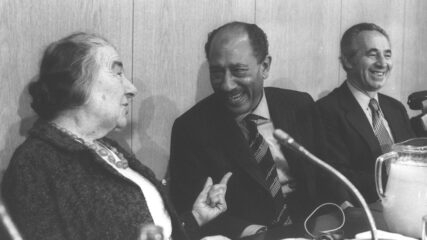
Ken Stein explains in detail how Egyptian and Israeli leaders coached their generals into reaching an understanding on how their troops would be disengaged after the war. On that day, a German-born Egyptian career foreign service officer, Omar Sirry was told to pack his toothbrush and go to meet several Israelis along with other Egyptians at the 101 Kilometer marker for talks.

Explainer: 1973 October War — A Short History

Explainer: 1973 October War — A Short History

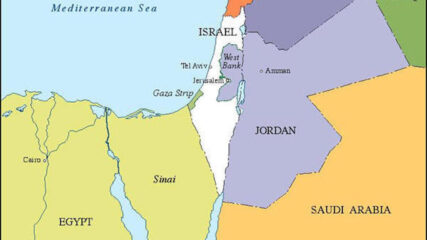
Egyptian President Sadat colluded with Syrian President Assad to attack Israel on October 6, 1973. Sadat’s objective was not to seek Israel’s destruction but to gain a limited success by crossing the canal. He also sought to engage American diplomacy to generate talks with Israel that would see Israeli withdrawal from Egyptian land Israel secured in the June 1967 War. Sadat took a large gamble by attacking Israel yet he unfolded a negotiating process with Israel that lasted through 1979. He achieved his overarching long-term priority of having Egyptian Sinai returned to Egyptian sovereignty.

Explainer: The Arab-Israel War of 1948 — A Short History

Explainer: The Arab-Israel War of 1948 — A Short History

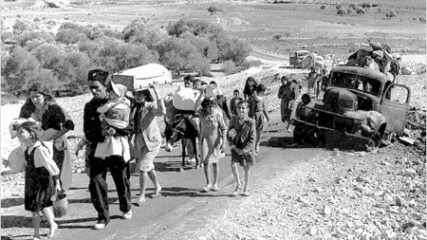
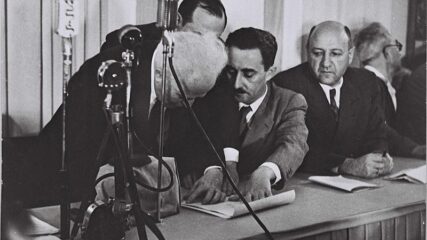
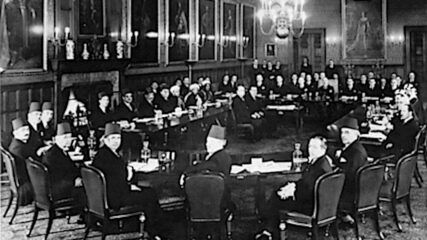
Otherwise known as Israel’s War of Independence, or, “the nakbah” or disaster to the Arab world because a Jewish state was established, the war was fought between the newly established Jewish state of Israel opposed by Palestinian irregulars, and armies from five Arab states. Official beginning of the war is usually given as May 14, 1948, the date Israel declared itself an independent Jewish state, but the war’s first of four phases began in November 1947. Lasting for two years, the war ended with armistice agreements signed in 1949 between Israel and four Arab states.

<span class="cie-plus-title">The Arabs and the Approaching War With Israel, 1945-1948</span><span class="cie-plus-badge">CIE+</span>

The Arabs and the Approaching War With Israel, 1945-1948CIE+

In “The Arabs and the Approaching War with Israel, 1945-1948,” Yaacov Shimoni reviews in detail the period from the early 1940s to May 1948, examining decisions made by Arab leaders toward Palestine and Zionism. He concludes that disunity among Arab states, jealousies, and disorganization plagued Arab preparations for the expected coming war with the Zionists.

<span class="cie-plus-title">Hillel Cohen, “Army of Shadows,” Showing Regular Palestinian Arab Collaboration With Zionists Through 1947</span><span class="cie-plus-badge">CIE+</span>

Hillel Cohen, “Army of Shadows,” Showing Regular Palestinian Arab Collaboration With Zionists Through 1947CIE+

Irrefutable evidence shows Palestinian Arab collaboration with Zionists during the British Mandate greatly assisted Jewish state building. Cohen further asserts a general absence among Palestinians of a sense of national feeling, with loyalties instead tied to families, villages and other localities. Quite certainly without Palestinian Arab collaboration, Zionists would not have succeeded in building a nucleus for the Jewish state. Arabic newspapers in Palestine and British scrutiny show the constancy of the Arab population’s engagement with the Zionists, and this included Arabs resident inside Palestine.