Secretary of State Pompeo’s Speech in Cairo, 2019 CIE+ members only
Secretary of State Mike Pompeo delivers a more muscular vision of the U.S. presence in the Middle East than President Barack Obama offered in the same Cairo venue 10 years earlier.


Secretary of State Mike Pompeo delivers a more muscular vision of the U.S. presence in the Middle East than President Barack Obama offered in the same Cairo venue 10 years earlier.
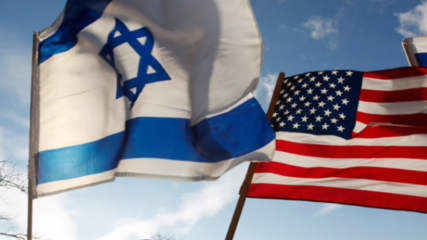
Looking back on a June 10, 2018, article by the Jewish Telegraph Agency, we can see polling data reflect a divide between Israeli and American Jews when it comes to approval of President Trump’s policies.
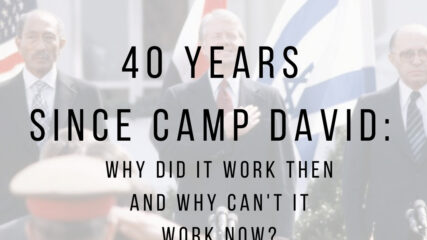
Emory Professor of Contemporary and Middle Eastern History, Political Science, and Israeli Studies and Center for Israel Education President Kenneth W. Stein applies decades of document-based research, interviews and scholarship, including new insights gleaned from the study of detailed minutes in the Israel State Archives, to examine the Camp David Accords 40 years after Egypt’s Anwar Sadat and Israel’s Menachem Begin signed the agreement Sept. 17, 1978, that concluded 13 days of negotiations led by President Jimmy Carter.
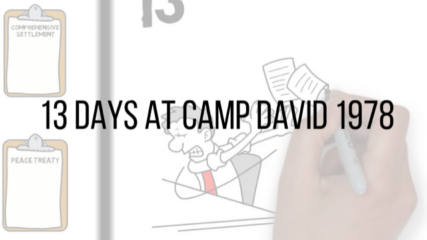
Our second animated white board video covers in detail what took place during the thirteen days of negotiations at Camp David in September 2018. The video begins with Egyptian President Anwar Sadat’s priority on getting back the Sinai Peninsula which Egypt lost to Israel in the June 1967 War and the origins of direct negotiations between Israel and Egypt following Sadat’s visit to Jerusalem in November 1977.

In this animated white board video, we explore Jimmy Carter’s efforts at achieving peace in the Middle East.
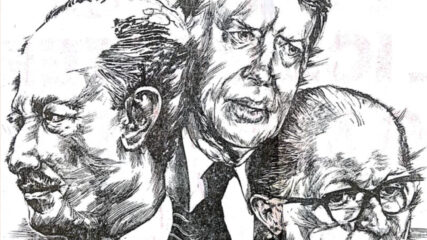
Forty years ago this month, President Jimmy Carter convened the Camp David summit between Israeli and Egyptian leaders to push Arab-Israeli negotiations forward in an unprecedented and intensive manner.

On July 6, 2018, the first tariffs imposed by the United States and China on one another following the American initiative to reduce its trade deficit with China took effect. Prior to that, the US imposed tariffs on steel and aluminum from the European Union, Mexico, and Canada, which responded with their own tariffs.
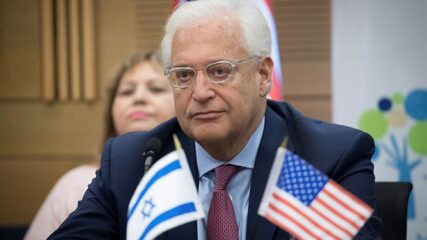
Ambassador David Friedman nearly changed U.S. policy with a request to use “Judaea and Samaria.”
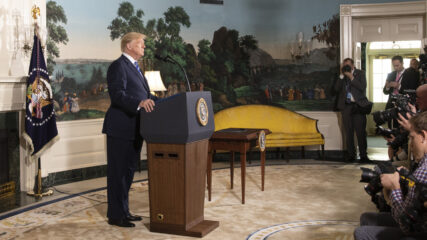
President Trump in 2018 enumerates the behaviors Iran must change to enter a deal replacing the JPOA and thus creates a basis for judging his own negotiations with Tehran.
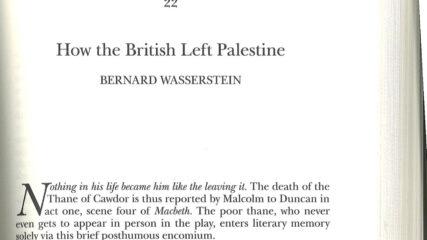
By Bernard Wasserstein Included as a 15-page chapter in the 2019 book Serendipitous Adventures With Britannia: Personalities, Politics and Culture in Britain, edited by Wm. Roger Louis and used with permission, this overview of the…
With reams of evidence secured by Israeli intelligence, the PM calls out Iran for lying about their nuclear activities both before and since signing the 2015 JCPOA nuclear agreement with six countries.
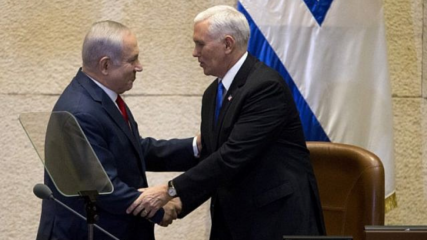
Vice President Pence firmly expresses American commitments to Israel’s security and commitment to the Arab-Israeli peace process. Palestinian Authority President Abbas and other Arab officials loudly criticize the speech and refuse to meet with Pence during his Middle East visit because of earlier US promise to recognize Jerusalem as Israel’s capital.
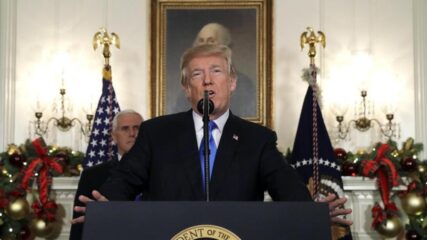
President Trump’s proclamation to “officially recognize Jerusalem as the capital of Israel” breaks precedent. In doing so, he incurs bipartisan support in the US congress, but a flurry of criticism from analysts, diplomats and foreign leaders. In his remarks, Trump rebukes claims that he disqualified the US as a “reliable mediator” in future Palestinian-Israeli negotiations.
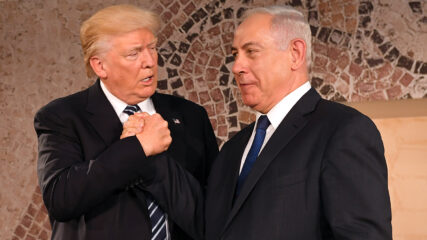
After visiting Saudi Arabia, Trump meets with Netanyahu where both assert joint views on the peace process, Iran, regional cooperation, and the long-standing relationship between Israel and the US; Trumps second meeting with Netanyahu since taking office.
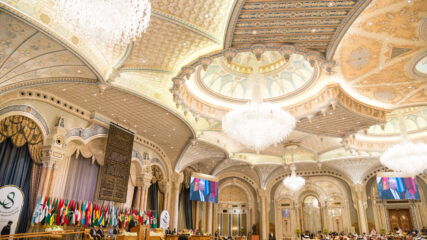
Backpedaling from previously hardline statements on Islam, President Trump refers to Islam as “one of the world’s great faiths” calling for “tolerance and respect for each other.” He implored Muslim leaders to fight against radical Islam, which he portrayed as a “…a battle between good and evil.”
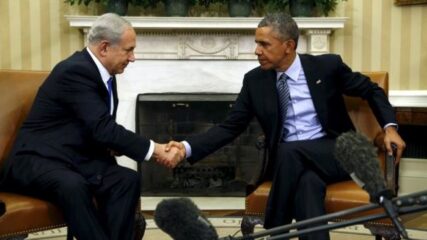
The US promises Israel $38 billion in military aid over a decade, the assistance promised despite Jerusalem and Washington periodically differing over matters relating to Iran and the Palestinians.
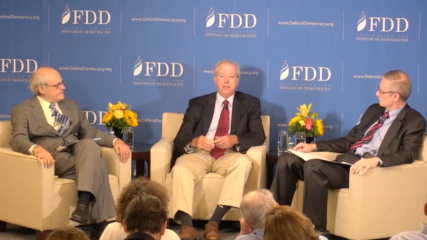
On August 15, 2016, I had the pleasure of participating in a panel discussion with former Ambassador Dennis Ross for the Foundation of Defense of Democracies (FDD) in Washington, DC.
Kerry states five major objectives for US foreign policy in the Middle East: mobilize partners to defeat ISIS, work diplomatically to end the civil war in Syria, keep it from destabilizing friendly nearby countries, monitor Iranian adherence to the nuclear deal, and seek a two-state solution to the Palestinian-Israeli conflict.
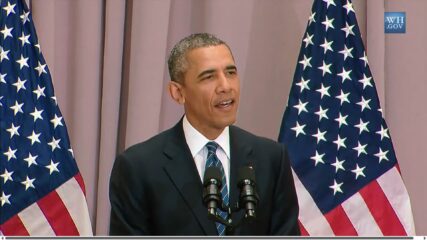
Vigorously promoting this Iran Deal as a viable way to block and limit Iran pathways to a bomb. While recognizing Israel’s intense trepidation to the deal, he forcefully claims that war remains the only alternative to accepting this agreement, or to any changes to the agreement.
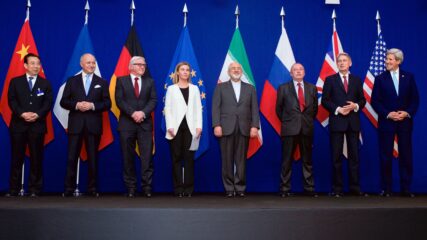
Under the deal between Iran and five world powers, Iran agreed to dismantle much of its nuclear program in exchange for billions of dollars of sanctions relief. Israel called the deal too lenient. On May 8, 2018, President Trump withdrew the U.S. from the JCPOA, calling it one of the “worst and most one-sided” agreements in U.S. history. Israel’s objectives in attacking Iran in June 2025 focused on the same central features Israel argued a decade earlier were not sufficiently addressed in the JCPOA.

Antony Blinken pleads with Congress not to expand sanctions on Iran amid negotiations to contain Tehran’s nuclear program.
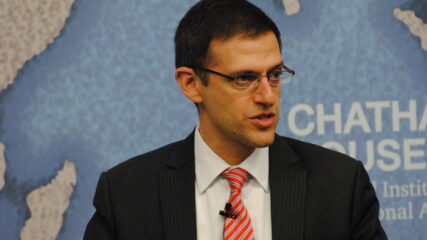
House testimony from a Treasury Department official during the 2015 Iran nuclear negotiations shows that U.S. priorities and nonmilitary approaches toward Iran remain the same in 2026.
“History of Israeli Foreign Policy” Ziv Rubinovitz, Undergraduate, Emory University, Spring 2015 This course analyzes Israel’s foreign relations and examines the tension between Israel’s geographic location in the Middle East and its Western orientation. The…
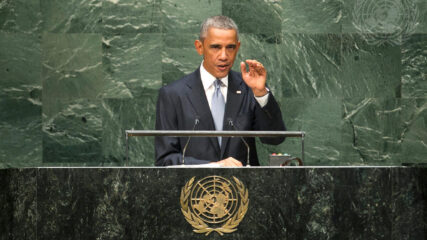
The U.S. president announces a coalition of countries to fight the Islamic State in Syria and Iraq. His plan calls for limited U.S. military action with supplies provided to others fighting on the ground.
