<span class="cie-plus-title">U.N. Security Council Resolution 465 on Jerusalem, Settlements and Territories, 1980</span><span class="cie-plus-badge">CIE+</span>

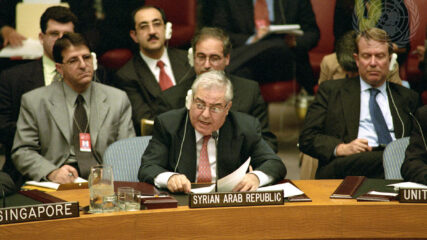
U.N. Security Council Resolution 465 on Jerusalem, Settlements and Territories, 1980CIE+

Showing its public opposition to Israeli actions in the lands taken in the June 1967 war, an area that the Carter Administration
wanted reserved for Palestinian self-rule, it ‘strongly deplores’ Israel’s settlement policies. Passage of the resolution three weeks
prior to the New York and Connecticut presidential primaries, cause many Jewish voters to vote in favor of Ted Kennedy
and not for Carter, helping to splinter the Democratic Party.

Documents and Sources|March 1, 1980
<span class="cie-plus-title">Mitchell Report, 2001</span><span class="cie-plus-badge">CIE+</span>

Mitchell Report, 2001CIE+

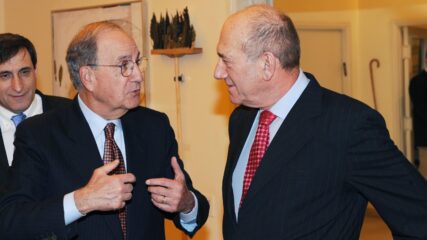
In the midst of severe Palestinian-Israeli clashes, a committee led by former U.S. Sen. George Mitchell concludes, as had many previous investigations, that the two communities fear and want to live separately from each other. From the report flows the EU-U.N.-U.S. commitment to a two-state solution suggested in the 2003 Roadmap for Peace.

<span class="cie-plus-title">Joint Comprehensive Plan of Action (JCPOA) — Containing Iran’s Access to Nuclear Weapons, 2015</span><span class="cie-plus-badge">CIE+</span>

Joint Comprehensive Plan of Action (JCPOA) — Containing Iran’s Access to Nuclear Weapons, 2015CIE+

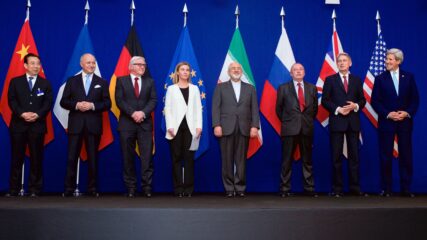
Under the deal between Iran and five world powers, Iran agreed to dismantle much of its nuclear program in exchange for billions of dollars of sanctions relief. Israel called the deal too lenient. On May 8, 2018, President Trump withdrew the U.S. from the JCPOA, calling it one of the “worst and most one-sided” agreements in U.S. history. Israel’s objectives in attacking Iran in June 2025 focused on the same central features Israel argued a decade earlier were not sufficiently addressed in the JCPOA.

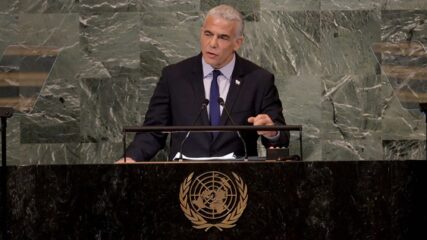
<span class="cie-plus-title">Israel Prime Minister Yair Lapid’s Speech to U.N. General Assembly, 2022</span><span class="cie-plus-badge">CIE+</span>

Israel Prime Minister Yair Lapid’s Speech to U.N. General Assembly, 2022CIE+

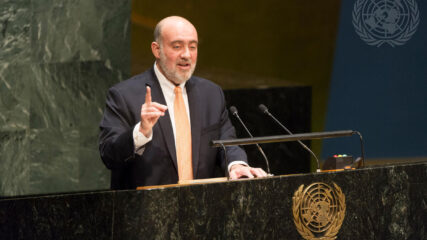
The focus of Prime Minister Yair Lapid’s first speech at the UN was a political weather report of Israel’s relations with Arab neighbors. He lauded Arab states for embracing Israel, hoped that Israel could move toward a two-state solution with the Palestinians, and blistered the hate spewing from Hamas and Iran; Israel he said, would not tolerate Iran obtaining a nuclear weapon.

Documents and Sources|September 22, 2022
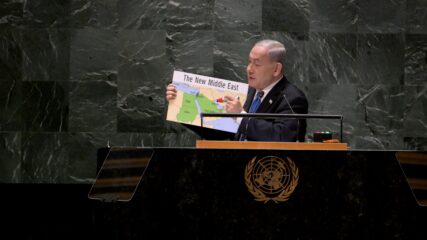
<span class="cie-plus-title">Netanyahu’s Address to the U.N. General Assembly, 2023</span><span class="cie-plus-badge">CIE+</span>

Netanyahu’s Address to the U.N. General Assembly, 2023CIE+

Addressing Israel’s fear of Iran’s access to nuclear weapons, the same point made by his predecessor Yair Lapid stressed in 2022 at the UN, Netanyahu like Lapid praised the Abraham Accords, noting in a quite unrestrained fashion that Israel was on the ‘cusp of a historic peace with Saudi Arabia.” The Prime Minister did mention support for a two-state solution with the Palestinians as Lapid had done previously.

Documents and Sources|September 22, 2023