Six Days That Redrew the Map of the Middle East
Speeches, source documents and analyses from the 1967 war, gathered into one playlist you can listen to end to end — from the closing of the Straits of Tiran to the aftermath.

Israel curriculum primarily focuses on Israel and not on Jewish studies or Jewish history. Of course, the context of modern Israel history or Israel studies evolves from the Jewish past. Here we are focusing on Zionism and Israel for formal and informal education settings. The following component elements are provided:
• Key curated essentials
• On-demand Israel courses
• Age-appropriate items
• Teaching outlines and lesson plans
• Suggested terms, ideas and concepts
• Research bibliographies
• College syllabi
• Weekly Torah portion
 CIE+ Audio Playlist
Speeches, source documents and analyses from the 1967 war, gathered into one playlist you can listen to end to end — from the closing of the Straits of Tiran to the aftermath.
Where you choose to begin or tell or remember it shapes the history and politics you do or do not want to convey. What you include and what you leave out reveals your knowledge,
biases, and political intentions.

On January 1, 2022, I completed 43 years of teaching at Emory University. It was a great run and great fun. Along the way, I accumulated more pieces of paper than was necessary, among them…
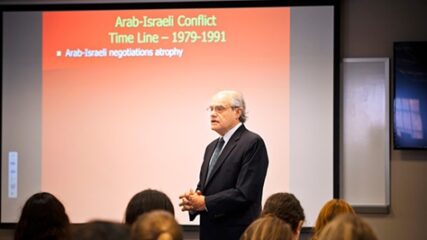
Scrutiny and planning prove essential when selecting college courses.
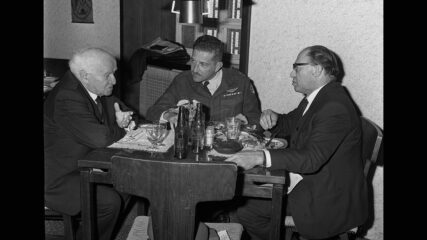
Using original sources and employing perspective are keys to substantive Israel education. Failure to use either, handicaps and prejudices learning about Israel. When documents and texts or a broad overview of the literature in a field are not employed, there is a strong possibility that the educator either has a personal political agenda or, is covering up for their own lack of knowledge of what they are teaching. This premise is true for teaching any country’s history and through the lens of any discipline. I reside in the discipline of history.
CIE+ Audio Playlist
Speeches, source documents and analyses from the 1967 war, gathered into one playlist you can listen to end to end — from the closing of the Straits of Tiran to the aftermath.
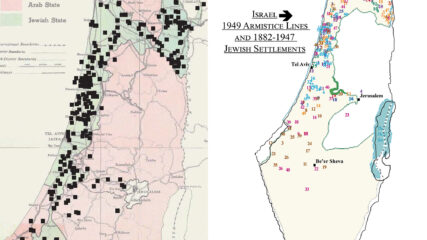
With 20 maps and prose, trace the progression of Jewish physical and demographic growth toward state building from 1882 to 1948 (25,000 to 600,000), with two-thirds in place by 1940.
CIE+ Audio Playlist
Speeches, source documents and analyses from the 1967 war, gathered into one playlist you can listen to end to end — from the closing of the Straits of Tiran to the aftermath.

Apply the lessons of centuries of lies, propaganda, and conspiracy theories directed against the Jewish people to understand how such hate has morphed into double standards, delegitimization, and demonization of Israel and the liberation movement of Zionism.
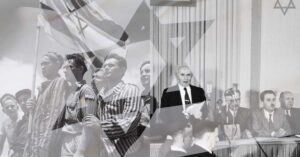
Delve into the roots of Jewish peoplehood and the pivotal moments in Jewish history that led to the rebirth of Israel in 1948. Explore how precarious Diaspora life and outbursts of violent antisemitism catalyzed Jewish self-determination. Examine how Jewish leaders employed compromise, perseverance and adaptation in interactions with the Ottomans, British, and Arabs to overcome challenges, and so much more.
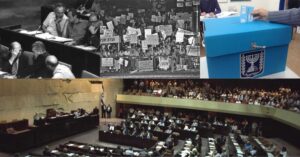
Explore the connections between the self-reliance, resilience, and democratic local self-governance Jews developed and nurtured in the Diaspora and the institutions and systems that define the complex parliamentary democracy of the State of Israel and the role of nongovernmental organizations.
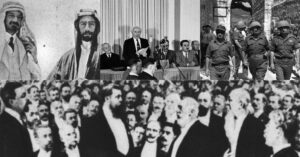
Explore the pivotal events, influential leaders, and crucial decisions from the Ottoman era to the Yom Kippur War that transformed the Land of Israel into the hard-earned home of the first Jewish state in 2,000 years but also the site of continual intercommunal violence.
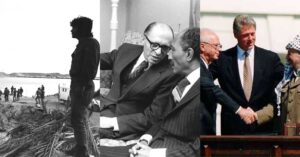
Unfold six Arab states’ embrace of Israel since 1973 out of national interests and U.S. mediation, sidelining the Palestinian movement, and explore Hamas’ Oct. 7, 2023, attack and its implications for the Israeli-Palestinian conflict and Israeli diplomacy.

Dance along as waves of Jewish immigration mix with indigenous traditions to create a unique culture reflecting a world of Jewish and non-Jewish influences across Israel’s diverse society.
CIE+ Audio Playlist
Speeches, source documents and analyses from the 1967 war, gathered into one playlist you can listen to end to end — from the closing of the Straits of Tiran to the aftermath.
E-book
Join special guest curriculum contributor Dr. Yaron Ayalon and the CIE Curriculum team as they take you and your students on a riveting adventure through the lives of the Sephardi and Mizrahi Jews of Southern Europe and the Middle East. Explore the differences between Sephardi and Ashkenazi cultures, and discover the great wealth of knowledge and spirituality of the Sephardi Jews. Utilizing maps, photographs, primary documents, an extensive timeline and even a recipe for a traditional Sephardi dish, this book is the perfect introduction to Sephardi Jewry for the individual learner or in a classroom setting.
E-book
Travel back in time to August 29, 1897, when the First Zionist Congress was held in Basel, Switzerland. Experience the meeting from the inside, participating as the delegates from seventeen different nations! This guide includes an activity guide, a full list of all 200+ participants, biographies of 25 of the delegates and extensive background readings, including full translations of some of the speeches given at the congress.
E-book
This guide focuses on the development of Israel’s defense institutions and the evolution of the Supreme Court. The guide includes unique primary source texts, biographical sketches, and interactive activities and case studies.
E-book
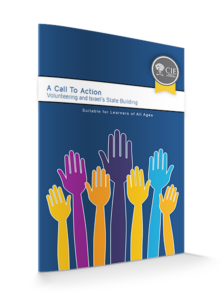
Volunteerism and social action are core values in the Jewish culture and helped shape the development of the State of Israel. This learner’s guide contains background information from unique primary source texts, photographs from Israel’s history, biographical sketches of Israelis who put values into practice.
E-book
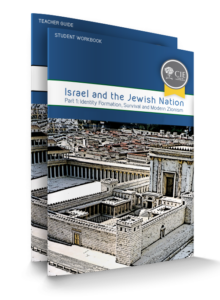
Covering the foundations of Judaism and the history of the Jewish people, the unit starts with the ‘covenants’ and ends in 1897. It traces the Jewish connection to the land of Israel, in the land and in exile. It explains how and why Jews retained their traditions in the face of enormous challenges. It concludes with the birth of Zionism as one answer to Jewish insecurity.
E-book
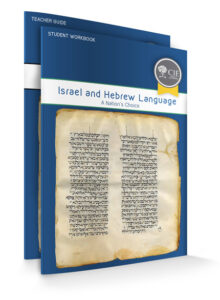
Explaining Hebrew language beyond religious practice and making it a spoken language of the street gave rise to a rich literary renaissance. In this curriculum, Hebrew literature excerpts demonstrate how the Hebrew language became a core element in Jewish state identity.

E-book
The Zionist Congress is the supreme institution and legislature of the World Zionist Organization (WZO). The First Zionist Congress was convened by Theodor Herzl in Basel, Switzerland, in 1897. This educational supplement presents the various iterations of the World Zionist Organization’s platform as it has evolved over time, with suggested discussion topics and activities, through the lens of its legislature, the World Zionist Congress. The Congress now meets once every five years in Israel to formulate policy and oversee the WZO’s institutions, notably the Jewish National Fund and the Jewish Agency for Israel.
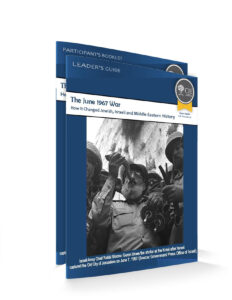
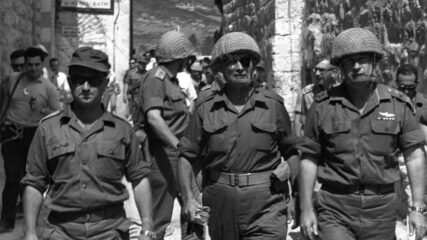
The June 1967 Middle East War transformed Israeli, Jewish, and Middle Eastern History. In the span of six weeks, in May and June 1967, Israel, its neighbors and the international community were engulfed with varying emotions including admonition, arrogance, audacity, astonishment, bravado, boasting, daring, euphoria, fears of annihilation, hesitation, humiliation, indecision, miscalculation, pride, procrastination, relief, resignation, self-doubt, self-importance, and tension.
Capturing these moments as well as the prelude and aftermath of the War dominate the contents of The June 1967 War: How It Changed Jewish, Israeli and Middle Eastern History in both the Leader’s Guide and Participant Booklet.
E-book
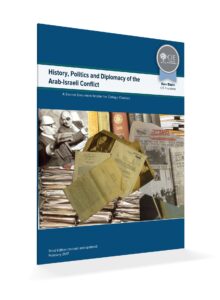
This compilation, in its third edition, includes 521 items/2,148 pages covering the period from 1893 to February 2017. It includes accords, agreements, declarations, diary entries, memoranda of understandings, original archival materials, proposed initiatives and plans, press conferences, political statements, quotations from political principles, speeches, secret understandings, summit conference protocols, treaties, U.N. resolutions, and more. Many of the entries are translated from Arabic, German or Hebrew and appear in English for the first time.
This book can be purchased in Kindle format.
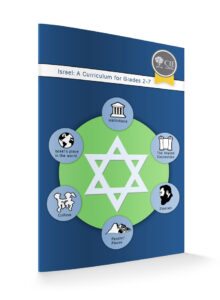
Curriculum (one-year license)
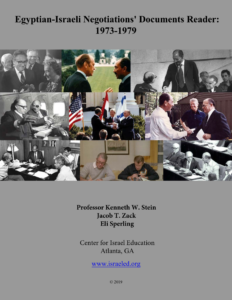
This documentary source collection is unique because it first and foremost includes materials not provided by the Foreign Relations documents of the United States, particularly items translated to English from Israeli/Hebrew sources. American-centric written materials on the Camp David negotiations crush Israel with unforgiving intransigence. The materials here—when compared to American memoirs—give a broader picture of what unfolded before, during, and after the Camp David negotiations in September 1978. Of particular value in this collection are the regular Israeli delegation meetings where tactics were revised to meet American pressures, but Israel’s strategic outlooks on no Palestinian state, no self-determination, no foreign sovereignty over the West Bank (Judea and Samaria) and no permanent halt to settlements remained constant. There are no known full American made transcripts of any meetings held during the Camp David accords. From the American participants, there are partial diaries of selected meetings, sometimes self-serving memoirs, and personal notes that have been used to shape the writing and interpretations of the Camp David negotiations. Accordingly, a pro-Carter administration outlook about the accords has evolved, with the exception of memoirs published by Israelis who were Camp David participants, and one excellent book, Year of the Dove, 1979
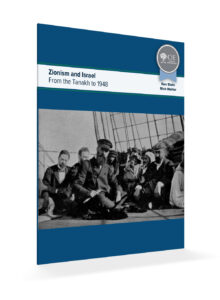
Zionism and Israel: From the Tanakh to 1948 explores the foundations of the centrality of the Land of Israel to the Jewish people and how the relationship between the people and the land evolved over time. Activities and background information are provided to help learners explore the growth of the Jewish Diaspora, the evolving relationship between the people and the Land and the origins of the Zionist movement. Following the First Zionist Congress in 1897, Zionism and Israel: From the Tanakh to 1948 shifts to explore how the Basle Declaration and subsequent documents guided the movement’s actions towards its vision for a Jewish State. The material concludes with an exercise on Israel’s Declaration of Independence.

An Interdisciplinary Unit on Israel and Water
These posters are an ideal way to bring teachers of general studies and Judaic studies together, while making explicit connections for students. Posters can be used for parent and community education, while adding aesthetic and visual value to your institution.
