Great Britain — Palestine: Termination of the Mandate

Great Britain — Palestine: Termination of the Mandate

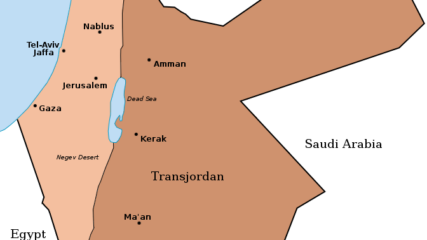
This 10-page report, written by the British Colonial and Foreign Office, along with the 1937 Peel (Royal) Commission Report, is one of the two best summaries of the British presence in Palestine.  Both are substantial in terms of content, detail and analyses; both were written from Britain’s perspective. Read these along with 1931 Census for Palestine to have a fuller grasp of the politics and the populations that shaped Britain’s Palestine’s administration from 1918-1948

1951 U.N. Report, “The Situation of Jews in Moslem Countries”

1951 U.N. Report, “The Situation of Jews in Moslem Countries”

This report submitted to the United Nations at the end of 1951 notes that “some one million Jews have become the victims of accelerated antiSemitism” since 1948 in the Muslim countries of the Arab League and North Africa, “communities which have existed for thousands of years.” The report analyzes the situation for Jews overall and explains restrictions and oppressive measures country by country.

Documents and Sources|December 1951
Prime Minister Begin’s Report on Treaties With Arab States and His Visit to Romania, 1977

Prime Minister Begin’s Report on Treaties With Arab States and His Visit to Romania, 1977

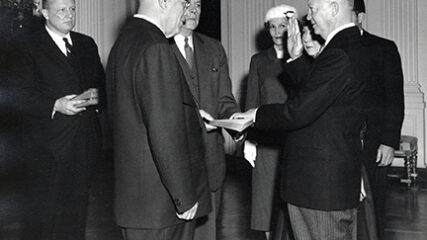
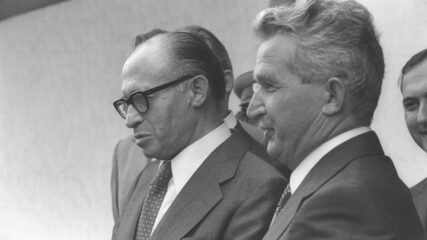
Unknown to the Carter administration and one month before it issued the US-Soviet Declaration to convene an international Middle East Peace Conference, Prime Minister Begin tells the cabinet that he learned from the Rumanian president that Sadat wishes to have Israeli and Egyptian representatives meet in secret talks. That bi-lateral Dayan -Tuhami meeting takes place on September 16. Begin refers to advanced drafts of proposed treaties between Israel and each Arab state; he presents details about Rumanian Jewish immigration to Israel.

Documents and Sources|September 4, 1977
U.S. Memorandum of Agreement to Israel on the Peace Process, 1991

U.S. Memorandum of Agreement to Israel on the Peace Process, 1991

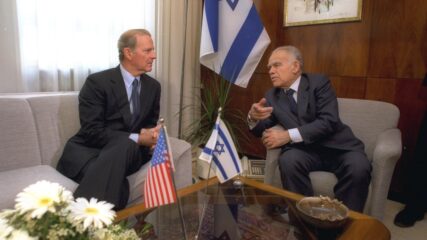
As part of the preparations for the Fall 1991 Madrid Peace Conference, US Secretary of State James Baker drafted a memorandum of agreement between the US and Israel regarding the particulars of resuming the Arab-Israeli peace process. He opens by reiterating that the intention of the negotiations is to achieve a regional peace agreement based on UN Security Council Resolutions 242 and 338.

Documents and Sources|September 16, 1991
Mitchell Report, 2001

Mitchell Report, 2001

In the midst of severe Palestinian-Israeli clashes, the Report concluded as had many previous investigations that the two communities feared, disdained, and wanted to live separately from one another. From the report flowed the EU, UN, US, commitment to a two-state solution suggested in the 2003 Road Map for Peace.

Joint Comprehensive Plan of Action (JCPOA) — Containing Iran’s Access to Nuclear Weapons, 2015

Joint Comprehensive Plan of Action (JCPOA) — Containing Iran’s Access to Nuclear Weapons, 2015

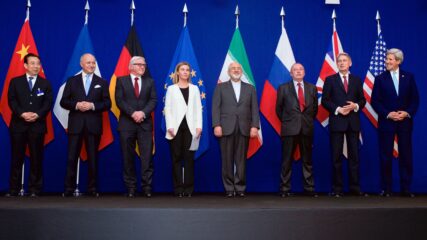
Under the deal between Iran and five world powers, Iran agreed to dismantle much of its nuclear program in exchange for billions of dollars of sanctions relief. Israel called the deal too lenient. On May 8, 2018, President Trump withdrew the U.S. from the JCPOA, calling it one of the “worst and most one-sided” agreements in U.S. history. Israel’s objectives in attacking Iran in June 2025 focused on the same central features Israel argued a decade earlier were not sufficiently addressed in the JCPOA.

Letter From PA President Mahmoud Abbas to French President Emmanuel Macron, June 2025

Letter From PA President Mahmoud Abbas to French President Emmanuel Macron, June 2025

PA President Abbas makes requests and gives promises to the French president for the establishment of a Palestinian
state. His commitments were not negotiated with Israel. They are meant to seek support for the end of the Gaza war,
the affirmation of Abbas and the PA as the sole Palestinian political address, and international support for a Palestinian state.
As in the past, the PA and Abbas seek international support to pressure Israel into undesirable political actions.

Documents and Sources|June 12, 2025
U.N. New York Declaration on the Two-State Solution, July 2025

U.N. New York Declaration on the Two-State Solution, July 2025

Seized by the severity of the Gaza war and nonmovement on a Palestinian-Israeli negotiating process, the U.N. offers a diplomatic road map to end the war and start negotiations. Led by France and Saudi Arabia, it asserts PA primacy as the legitimate Palestinian political representative, addresses possible Palestinian governance reform, seeks to empower a sovereign and economically viable state of Palestine living side by side in security with Israel, and contains other vague PA promises. Israel and the U.S. reject the Declaration. The Israeli government refuses to have outside parties determine the outlines or pace of negotiations with any country because negotiations impact Israeli security today and tomorrow.

Documents and Sources|July 29, 2025
French President Macron’s U.N. Address on a Two-State Solution, September 2025

French President Macron’s U.N. Address on a Two-State Solution, September 2025

President Macron’s speech links the end of Hamas-Israeli conflict to the evolution of a of two-state solution. He acknowledges that Israel has the power to end the war and evolve a Palestinian state, asserting that if Israel does neither to the satisfaction of France and her European partners, Israel could pay an undisclosed price. He offers no such penalties to be placed on the PA for its failure to meet its commitments. Once again the Palestinian Arab national movement uses the international community to pressure Israel into concessions. On the same day, Israeli
Prime Minister Netanyahu emphatically rejects the establishment of a Palestinian state west of the Jordan River. The Israeli
parliament in June 2004 rejected any unilateral recognition of a Palestinian state by a 68-9 vote.

Documents and Sources|September 22, 2025