FILTERED BY:

A major objective of Zionism and Israel remains the “normalization” of the Jewish people in a secure territory of their own. As a worldwide minority through the ages, Jews have lobbied and negotiated with stronger and more numerous powers for existence and recognition. Since the onset of modern political Zionism in the middle of the 18th century, Jewish representatives have engaged foreign powers to allow, catalyze, support and sustain Zionism and then Israel’s existence. For all of its nearly eight decades, Israel has engaged countries and leaders, Diaspora Jewry, and non-Jews to provide diplomatic, economic, financial and philosophical support for the state. It took Israel three decades to achieve diplomatic recognition from Egypt in 1979, with five other Arab states and the PLO having recognized it since. It should not be surprising that among our 60 topics, more than 1,000 posts relate to Foreign Relations, Wars and Defense, Maps, Arabs of Palestine/Israel, and Arab-Israeli Negotiations.

The Key Curated Essentials for Israeli Foreign Relations

<span class="cie-plus-title">Bibliography — Israel’s Foreign Relations</span><span class="cie-plus-badge">CIE+</span>

Bibliography — Israel’s Foreign RelationsCIE+

April 2025 CIE has compiled the following list of books and articles, including some available on our website, to guide understanding of Israel’s foreign policy. Bibliographies addressing specific aspects of Israel’s foreign relations can be…

Bibliographies|April 30, 2025
<span class="cie-plus-title">Explainer: The United Nations and Israel</span><span class="cie-plus-badge">CIE+</span>

Explainer: The United Nations and IsraelCIE+

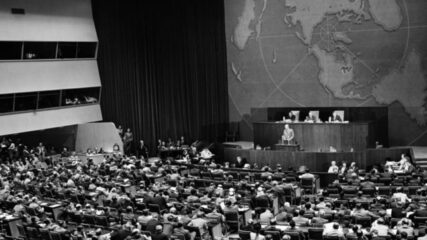
The U.N. partition resolution in 1947 cleared the way for Israel to declare independence six months later, but since then the United Nations has largely been antagonistic and condemnatory toward Israel and a tool for the Palestinians and Israel’s enemies.

Explainer Articles|April 29, 2025
<span class="cie-plus-title">Explainer: Europe and Israel</span><span class="cie-plus-badge">CIE+</span>

Explainer: Europe and IsraelCIE+

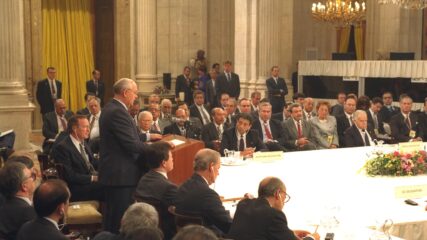
Historical Background Unlike any other region of the world, Europe has had the most intimate, impactful and longest-lasting relationship with contemporary Israel and its origins. As the birthplace of Judaism and Christianity and with the…

Explainer Articles|January 31, 2025
<span class="cie-plus-title">Great Powers, the Middle East and the Cold Wars</span><span class="cie-plus-badge">CIE+</span>

Great Powers, the Middle East and the Cold WarsCIE+

The clash of great powers to control the Middle East, particularly between the U.S. and the U.S.S.R., neither began after World War II nor ended with the demise of the Soviet Union in 1991. Today, China, the U.S., Russia and Middle Eastern regional powers vie to influence everyday politics and resources.

Issues and Analyses|August 9, 2020
<span class="cie-plus-title">US-Israeli Relationship</span><span class="cie-plus-badge">CIE+</span>

US-Israeli RelationshipCIE+

The US-Israeli relationship is complicated, dynamic, multidimensional, and enduring. From initial American governmental opposition to the present, Washington has become Israel’s most trusted ally. Rooted in common bonds, entrenched military sharing, and valued strategic interests, the association has also greatly influenced the shaping and sustenance of American Jewish identity.

Issues and Analyses|July 1, 2025
<span class="cie-plus-title">Explainer: Arabs of Palestine/Israel</span><span class="cie-plus-badge">CIE+</span>

Explainer: Arabs of Palestine/IsraelCIE+

Some ancestors of modern Palestinians and Israeli Arabs, like those of Israeli Jews, lived in the Land of Israel millennia ago, but most came to the area when Muhammad’s successors took Jerusalem and settled there…

Explainer Articles|January 20, 2025

The Key Curated Essentials for Egypt and Israel

Israeli-Egyptian General Armistice Agreement Excerpts, 1949CIE+

February 24, 1949
One of four agreements Israel signed in 1949 with Arab neighbors, it does not end the state of war between Israel and Egypt. They do not sign a treaty until 1979.

President Nasser Addresses Egyptian National Assembly, May 1967CIE+

May 29, 1967
Egyptian President Gamal Abdel Nasser asserts that the conflict with Israel is not over access to the Gulf of Aqaba but the very existence of Israel; Egypt’s foes are Britain and the United States, which support Israel.

Continuity and Change in Egyptian-Israeli Relations, 1973-1997CIE+

Spring/Summer 1997
Spring/Summer 1997 Kenneth W. Stein, “Continuity and Change in Egyptian-Israeli Relations, 1973-97,” Israel Affairs, Spring/Summer 1997, Vol. 3, Nos. 3 and 4, pp. 296-320 For 25 years, tension, mistrust, and strain have characterized Egyptian-Israeli relations....

October 27, 1973, “The Link Between War and Diplomacy: The Kilometer 101 Talks After the October 1973 War”CIE+

October 27, 1973
Ken Stein explains in detail how Egyptian and Israeli leaders coached their generals into reaching an understanding on how their troops would be disengaged after the war. On that day, a German-born Egyptian career foreign service officer, Omar Sirry was told to pack his toothbrush and go to meet several Israelis along with other Egyptians at the 101 Kilometer marker for talks.

Egyptian President Sadat’s Knesset Address, November 1977

November 20, 1977
Sadat tells the Israeli people and world that he seeks a just and durable peace, which is not a separate peace, between Israel and Egypt. He equates statehood for the Palestinians as their right to return.

Prime Minister Begin’s Knesset Address During Sadat’s Visit, November 1977

November 20, 1977
Begin welcomes Sadat’s bold initiative, seeking an end to the conflict with other Arab states through negotiated treaties. Begin invites other Arab leaders to negotiate as Sadat was doing.

Israel-Egypt Peace Treaty, 1979

March 26, 1979
Signed sixteen months after Sadat’s visit to Jerusalem, it calls for establishment of diplomatic relations, staged Israeli withdrawal from Sinai, and American security arrangements to support the bilateral treaty.

Explainer: Egyptian-Israeli Negotiations, 1977-1981CIE+

November 4, 2024
By Ken Stein, October 28, 2024 When Georgia Governor Jimmy Carter became the 39th President of the United States in 1977, he had little foreign policy experience, particularly regarding the Arab-Israeli conflict. Despite this, he...

The Key Curated Essentials for Europe and Israel

Explainer: Europe and IsraelCIE+

January 31, 2025
Historical Background Unlike any other region of the world, Europe has had the most intimate, impactful and longest-lasting relationship with contemporary Israel and its origins. As the birthplace of Judaism and Christianity and with the...

Bibliography — Foreign Relations: Europe and IsraelCIE+

January 31, 2025
Books Abadi, Jacob. British Withdrawal From the Middle East: The Economic and Strategic Imperatives. Princeton, NJ: Kingston Press, 1982. Ahiram, Ephraim, and Alfred Tovias (eds.). Whither EU-Israel Relations? Common and Divergent Interest. Frankfurt: Lang, 1995....

1914-1915 Hussein-McMahon CorrespondenceCIE+

October 24, 1915
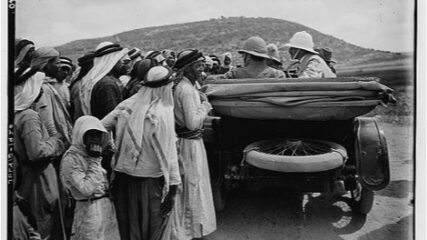
The Sharif of Mecca and Sir Henry McMahon, a British official in Cairo speaking for the Foreign Office, exchange letters about the current war effort against the Turks and the future political status of specific Arab lands in the Ottoman Empire. McMahon says, as he repeats in 1937, that the area of Palestine is excluded from any area to be provided to an Arab leader after World War I. The British instead allow the area of Palestine to develop as a "national home for the Jewish people."

British Government: Policy Statement/Advice Against Partition, 1938CIE+

November 11, 1938
Pressure from Arab leaders in states surrounding Palestine, growing instability in the eastern Mediterranean, and a firm opposition voiced by the British High Commissioner in Egypt, Miles Lampson, caused the British to withdraw the idea of resolving the Arab-Zionist conflict with a two-state solution. Instead, heavy restrictions were imposed in 1939 on the growth of the Jewish National home. Coincidently this policy statement is issued, two days after Nazi Germany attacks Jewish, homes, businesses and synagogues, in what came to be known as Kristallnacht.

Pro-Zionist Remarks by Winston Churchill, 1939CIE+

May 23, 1939
Over four decades, Winston Churchill’s views on Zionism and Jews varied greatly. Without knowing his long held personal beliefs or the policies he adopted while the Jewish state developed, and only reading this speech, one would not know that he was a political opportunist and certainly not a “Gentile Zionist.”

UNGA (Palestine Partition) Resolution 181, 1947

November 29, 1947
The UN recommended establishing Arab and Jewish states in Palestine, with an international regime for Jerusalem. Zionists were jubilant; Arab states and the Palestinians were indignant and rejected two state solution. No Arab state is established, Israel is in 1948

1947 Truman DoctrineCIE+

March 1947
Fearing Communist penetration of the Eastern Mediterranean, Truman at the beginning of the Cold War defines the region as a sphere of US national interest.

Admission of Israel to the United Nations, UNGA Resolution 273, 1949CIE+

May 11, 1949
Upon admission to the U.N., Israeli Foreign Minister Moshe Sharett said, "It was the consummation of a people's transition from political anonymity to clear identity, from inferiority to equal status, from mere passive protest to active responsibility, from exclusion to membership in the family of nations."

1951 U.N. Report, “The Situation of Jews in Moslem Countries”

December 1951
This report submitted to the United Nations at the end of 1951 notes that “some one million Jews have become the victims of accelerated antiSemitism” since 1948 in the Muslim countries of the Arab League and North Africa, “communities which have existed for thousands of years.” The report analyzes the situation for Jews overall and explains restrictions and oppressive measures country by country.

Eisenhower Doctrine, 1957CIE+

January 5, 1957
Further reinforcing the Truman Doctrine, the US President promises military or economic aid to any Middle Eastern country resisting Communist aggression.

Joint U.S.-Soviet Statement on the Middle East, 1977CIE+

October 1, 1977
Naively, the Carter Administration believes that a conference with the USSR would start comprehensive negotiations; instead, the fear of Moscow’s engagement helps drive direct Egyptian-Israeli talks.

London Document: Jordan-Israel Agreement on International Peace Conference, 1987CIE+

April 7, 1987
The Jordanian king and Israeli Labor Party leaders secretly outline a plan to convene an international conference to move Israeli-Palestinian talks forward through a conference format, but Likud opposition leaders squash the idea.

Oslo Accords (Declaration of Principles on Interim Self-Government Agreements), Israel and PLO, 1993

September 13, 1993
Negotiated through the Norwegians, the Oslo Accords call for limited Palestinian rule in some of the territories but do not call for a Palestinian state or an end to settlements.

European Parliament Calls for Recognition of Palestinian Statehood in Context of 2 States Side by Side, 2014CIE+

December 17, 2014
The European Parliament calls for recognition of Palestinian statehood in the context for a negotiated two-state solution for Palestinians and Israelis; it outlines the political and geographic contours for a negotiated outcome.

The Key Curated Essentials for the Far East and Israel

Workshop 2023: Israel Between East and West (34:56)CIE+

July 25, 2023
How has Israel through its 75 years managed its relationships with superpowers, neighbors and other countries while trying to survive and thrive in an often hostile neighborhood? Why is the U.S. relationship essential? What is...

Israel-Far East RelationsCIE+

February 18, 2021
Until the 1990s, when Israel’s increased engagement with Asia notably expanded, her relations with China, India and Japan were limited for three broad reasons.

The Future of the China-Russia AllianceCIE+

April 25, 2019
Odds are that China and Russia will prove to be long-term US rivals. However, it may just as well be that their alliance will prove to be more tactical than strategic, with the China-Russia relationship resembling US-Chinese ties: cooperation in an environment of divergence rather than convergence.

The Key Curated Essentials for Iran and Israel

Iran, the Jewish People and IsraelCIE+

May 18, 2025
May 18, 2025 Contradiction has been a theme in Iran’s relationship with the Jewish people, for nowhere else in the Muslim world have Jews both suffered so grievously and flourished so thoroughly. Nor is the...

Ali Khamenei, Supreme Leader of Iran, Friday Sermon, October 2024CIE+

October 4, 2024
Iranian Supreme Leader Ayatollah Ali Khamenei delivers a synopsis of Iran’s hatred of Israel and the United States, provides deep insight into his unwavering commitment to destroying Israel, and mourns for slain Hezbollah leader Hassan Nasrallah.

Timeline: Iran, Israel and the Jewish PeopleCIE+

722 B.C.E-Present
Iran’s relations with Israel and the Jewish people from ancient times to the present day. June 23-June 24, 2025 — At the request of President Donald Trump, Iran and Israel enter a cease-fire to end...

Ismail Haniyeh in Tehran Asserts Anger at U.S., Hatred of Israel, Importance of Jihad, 2006CIE+

December 6, 2006
Hamas leader Ismail Haniyeh says in Tehran, "We shall never recognize the usurper Zionism government" and will "continue the jihadist movement until the liberation of Jerusalem."

Explainers: Iran and the Hamas-Israel War (5 videos)CIE+

November 5, 2024
Compiled by Aidan New Iran lies behind much of what Israel has battled since Hamas launched its brutal terrorist attack Oct. 7, 2023. By theology and ideology, Iran is committed to Israel’s destruction. By policy...

Israel’s 9/11 — Iran’s Threat and Regional Responses (42:12)CIE+

May 1, 2024
Hamas’ terrorist assault Oct. 7, killing 1,200 and kidnapping more than 240, was the worst slaughter of Jews since the Holocaust, but the night of April 13-14 could have been worse when Iran attacked Israel...

Explainers: Hezbollah and the Hamas-Israel War (4 videos)CIE+

September 2024
Hezbollah has used its stronghold in southern Lebanon to launch continual attacks on northern Israel since October 8, 2023. Hezbollah says it is motivated by its support for Hamas, a fellow member of Iran’s Axis of Resistance surrounding Israel. While Hezbollah is Shia and Hamas is Sunni, both are devoted to Israel’s destruction, and both receive funding from and coordinate with Iran.

“We Will Always Be Friends” — President Trump in Saudi Arabia, May 2025CIE+

May 14, 2025
May 13, 2025 President Donald Trump’s address laying out a vision for Middle East peace and prosperity and ending sanctions on Syria at the 2025 Saudi-U.S. Investment Forum in Riyadh, Saudi Arabia, https://www.youtube.com/live/wj1QOz3iuCE?si=qQRR2GcqZhtt1F5o Well, thank...

President Trump and Prime Minister Netanyahu Meet in Washington, April 2025CIE+

April 7, 2025
Benjamin Netanyahu makes his second White House visit of Donald Trump's second term, but the discussion this time expands beyond Gaza and regional peace to include bilateral trade after a Trump announcement of new tariffs on Israeli goods.

Israeli Prime Minister Netanyahu Addresses Congress on Iranian Nuclear Program, 2015

March 3, 2015
Netanyahu praises the Obama administration for its support of Israel’s security, then roundly criticizes it for negotiating a deal with Iran that will not roll back its nuclear breakout time and for not demanding that before sanctions are lifted that Iran stop its support of terrorism and threats to wipe Israel off the map.

“Jimmy Carter’s Middle East Legacies,” Israel Journal of Foreign Affairs, September 2024CIE+

September 2024
September 2024 By Kenneth Stein Kenneth Stein is Emeritus Professor of Contemporary Middle Eastern History, Political Science and Israel Studies at Emory University and President of the Atlanta-based Center for Israel Education. He is the author...

The Logic of Israel’s Actions to Contain Iran in Syria and LebanonCIE+

September 16, 2018
Israel’s opposition to Iranian entrenchment in Syria and Lebanon is twofold: To prevent Iran from building a beachhead against Israel through its proxies on Israel’s borders, and to impede development of Iran’s nuclear and long-range missile capabilities. Israel is absolutely determined and prepared to act forcefully against Iran, which could lead to a full-scale war. Israel must win this struggle against Iran, one way or another.

Explainers: Hamas and October 7 — Strategy, History, Ideology, Politics (5 videos)CIE+

November 5, 2024
Can a radically hateful ideology ever be neutralized by rationality and logic?

The Key Curated Essentials for Jordan and Israel

Israeli-Jordanian Treaty Excerpts, 1994CIE+

October 26, 1994
Jordan becomes the second Arab country after Egypt (1979) to sign a peace treaty ending the state of war with Israel. The Treaty addresses boundary demarcations, water sharing, police and security cooperation, environmental issues, border crossings, administration of Muslim holy sites and other issues.

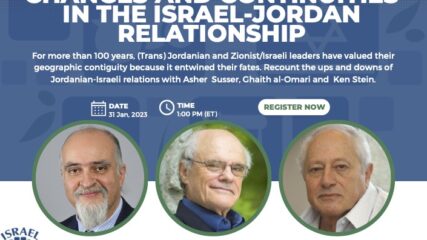
Changes and Continuities in the Israel-Jordan Relationship (47:38)CIE+

January 31, 2023
Jan. 31, 2023 In this 48-minute webinar recorded Jan. 31, 2023, two experts on Jordan, the Washington Institute’s Ghaith al-Omari and Tel Aviv University’s Asher Susser, help CIE President Ken Stein explore more than a...

Jordan’s Abdullah Sees Middle East “Finish Line” From Trump White House, 2025CIE+

February 11, 2025
Abdullah II remains studiously noncommittal in support of Donald Trump's idea for the U.S. to take over the Gaza Strip, rebuild it and relocate its Palestinian residents to other countries. With Jordan's strong economic, strategic and defense ties to Washington, no one expected the king to be effusive for Trump's suggestions for Gaza's future. Jordan lacks the economic and demographic absorptive capacities and the political interest to take another wave of Palestinians into its territory.

King Hussein on Jordan’s Separation From West Bank, 1988CIE+

July 28, 1988
Jordan's King Hussein made a strategic decision to disassociate administratively from the West Bank, leaving it to focus Jordanian national identity on only the east bank of the Jordan River. The PLO subsequently negotiated with Israel to rule over some of these lands, as codified in the 1993 Oslo Accords, but no Palestinian state was promised.

Prime Minister Eshkol Statement to Knesset at Conclusion of June 1967 WarCIE+

June 12, 1967
Two days after the conclusion of the June 1967 War, Eshkol, recounts the series of events that led to war, the war itself and the immediate aftermath. He reaches out to Arab states for peace seeking a path to peace with her belligerent neighbors. A week later, Israel will quietly messages Cairo and Damascus through the US, hat Israel seeks an end to the conflict. No answers are received.

The Allon Plan, 1967CIE+

July 26, 1967
Yigal Allon's plan for handling the areas captured from Jordan during the just-completed Six-Day War reflects Israel’s previous border vulnerability and seeks a West Bank arrangement that is not a strategic or geographic threat.

Israeli Prime Minister Menachem Begin’s Palestinian Autonomy Plan, 1977CIE+

December 28, 1977
Five weeks after Egyptian President Anwar Sadat flew to Jerusalem in November 1977, to accelerate Egyptian – Israeli negotiations, Begin brought to President Jimmy Carter, Israel’s response to Sadat’s peace initiative: political autonomy for the Palestinians in the West Bank and Gaza Strip. No Palestinian state was considered.

Summary of President Jimmy Carter’s Meetings With King Hussein, 1980CIE+

June 16 and 17, 1980
After the September 1978 Camp David Accords ended, the Carter administration diligently tried but failed to persuade Jordan's King Hussein to be part of the follow-on negotiations over Palestinian autonomy. Carter felt Hussein was obstructionist; Hussein did not believe in 1978 that the US could halt Israeli settlement building as promised then. Hussein was correct. He also believed that Palestinian Autonomy might have a negative impact on many Palestinians living in his kingdom. Hussein was skeptical of the US capacity to negotiate for his national interests. At the same time, privately, Egypt's Sadat was not displeased that the Jordanians remained out of favor with the US, and away from any negotiations that would detract from implementation of Israel's promised full withdrawal from Sinai, per their 1979 Treaty. In 1988, Hussein stepped away from the West Bank’s future; in 1994, Jordan signed a peace treaty with Israel.

Bibliography — Foreign Relations: Jordan and IsraelCIE+

March 2025
Books and Documents Alon, Yoav. The Making of Jordan: Tribes, Colonialism and the Modern State. London: I.B. Tauris, 2007. Bar-Joseph, Uri. The Best of Enemies: Israel and Transjordan in the War of 1948. Abingdon: Taylor...

King Hussein, 1935-1999CIE+

October 17, 2022
As Jordan’s king, Hussein tried to annex the West Bank and eastern Jerusalem while ruling them from 1948 to 1967. He lost everything west of the Jordan River after he attacked Israel to support Egypt...

The Key Curated Essentials for Latin America and Israel

Israel’s 9/11 — Connections and Conflict in Latin America (45:52)CIE+

July 3, 2024
Countries from Mexico south have significant Jewish populations and have played important roles in Jewish history, from the high of Guatemala’s Jorge García-Granados casting the first U.N. vote in 1947 for the creation of Israel to the...

“Latin American Jews: Changing Horizons and New Challenges”CIE+

September 9, 2018
There has been a significant revitalization of Jewish life among the Jewish communities of Latin America although they are shrinking, mostly due to emigration processes. Over the course of two generations, Latin American Jewry has transformed from mostly immigrants and immigrant communities to rooted communities of locally-born citizens and, simultaneously, of emigrants and expatriates.

Ken Stein, “Israel y el Medio Oriente Entrevista, Israel and the Middle East,” With Dr. Armando Alducin and Maurico Friedman (75 minutes)CIE+

February 13, 2024
Five points stressed in this Spanish-English interview: 1. Hamas’ purposeful mission as stated dozens of times by Hamas leaders in their own words and in its founding 1988 Charter is to destroy Israel, degrade support...

Jorge García-Granados, 1900-1961CIE+

October 17, 2022
García-Granados, Guatemala’s ambassador to the United Nations and a member of the U.N. Special Committee on Palestine, was moved by Chaim Weizmann’s partition pleas to UNSCOP in July 1947 and cast the first vote for...

Explainers: Antisemitism and the Hamas-Israel War (4 videos)

November 5, 2024
In multiple worldwide realms, the magnitude of hate for Israel and Jews soared after October 7, 2023.

The Key Curated Essentials for Lebanon, Syria and Israel

Explainer: Israel-Lebanon-Syria TriangleCIE+

June 11, 2025
Before Israel’s establishment, Zionists in Palestine had contacts with Lebanese and Syrian officials, seeking information about anti-Zionist attitudes and understanding of these Arab states’ military capabilities against Israel’s establishment and survival. Since 1949 and the...

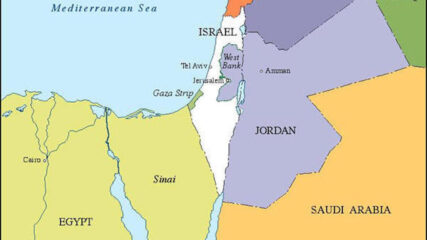
Map of Israel and Surrounding Arab States, 2025

January 1, 2025
A current map showing the political borders of Israel and its nearest neighbors in the Arab world.

Khaddam: Ken Stein Interview With Syrian Vice President Abdel Halim KhaddamCIE+

July 18, 1993
From 1970 to 1984, Khaddam served as Syria’s foreign minister, and later he was Syria’s decision-maker for actions in Lebanon. He recounts Syrian anger toward Egyptian President Sadat’s slow but continual bilateral engagement and recognition of Israel. He recalls how Syrian President Assad, after a four-hour meeting, refused Henry Kissinger’s invitation to attend the 1973 Geneva peace conference, not wanting to sanction the closeness Sadat was establishing with Israel and with Washington. These were the same reasons why Syria refused President Carter’s invitation to attend a similar Middle East peace conference in 1977. Khaddam says, “We were shocked by Sadat’s actions."

Explainers: Hezbollah and the Hamas-Israel War (4 videos)CIE+

September 2024
Hezbollah has used its stronghold in southern Lebanon to launch continual attacks on northern Israel since October 8, 2023. Hezbollah says it is motivated by its support for Hamas, a fellow member of Iran’s Axis of Resistance surrounding Israel. While Hezbollah is Shia and Hamas is Sunni, both are devoted to Israel’s destruction, and both receive funding from and coordinate with Iran.

Bibliography — Foreign Relations: Lebanon, Syria and IsraelCIE+

March 2025
Books and Documents Oren Barak, The Lebanese Army: A National Institution in a Divided Society. Albany: State University of New York, 2009. Benedetta Berti, The Ongoing Battle for Beirut: Old Dynamics and New Trends, Institute...

Abba Eban Speech at U.N. Special Assembly, June 1967CIE+

June 19, 1967
Following the conclusion of the June 1967 War, the Israeli government sent word to Egypt and Syria seeking peace plan that was intended to jumpstart a peace process with Israel’s belligerent neighbors, Egypt and Syria. The messages were sent through the US, but no response was apparently received.

The 1973 October War — A Short HistoryCIE+

October 1973
Egyptian President Sadat colluded with Syrian President Assad to attack Israel on October 6, 1973. Sadat's objective was not to seek Israel's destruction but to gain a limited success by crossing the canal. He also sought to engage American diplomacy to generate talks with Israel that would see Israeli withdrawal from Egyptian land Israel secured in the June 1967 War. Sadat took a large gamble by attacking Israel yet he unfolded a negotiating process with Israel that lasted through 1979. He achieved his overarching long-term priority of having Egyptian Sinai returned to Egyptian sovereignty.

In Damascus in December 1973, Kissinger Rebuffed by Assad: “Mr. Secretary, Is It My Turn to Speak?”CIE+

December 15, 1973
Henry Kissinger and and Hafez al-Assad meet in Damascus in December 1973 (credit: Agence France-Presse stringer, released by Getty in January 1974). By Ken Stein Sandwiched between the end of the 1973 October Middle East...

U.N. Disengagement of Forces Agreement, 1974CIE+

May 31, 1974
On the Golan Heights, Israel agrees to a limited withdrawal, and the United Nations places forces between the Syrian and Israeli armies. With few exceptions this border remains quiet for more than 40 years.

President Ford’s Promises About the Golan Heights, 1975CIE+

September 1, 1975
President Ford promises that the US will give “weight” to any future Israeli peace agreement with Syria that Israel should remain in the Golan Heights.

Memorandum of Conversation Between President Carter and President Assad, 1977CIE+

May 9, 1977
This meeting was the only one between U.S. President Carter and Syrian President Assad during the Carter administration. Carter wanted to learn Assad’s requirements for an agreement with Israel. Assad doubted that the Saudis would join this process. In the end, Assad made it clear that he was not rushing into an agreement with Israel, even if asked by the United States. Carter acknowledged knowing little about the Palestinian refugee issue and said the U.S. was committed to the security of Israel.

Presidents Clinton and Assad Meet in Damascus, 1994CIE+

October 27, 1994
A day after the signing of the Jordan-Israel peace treaty and hours before addressing the Knesset, U.S. President Bill Clinton meets with his Syrian counterpart, Hafez al-Assad, in Damascus and expresses optimism that Syria will be part of a comprehensive Middle East peace. Assad continues to insist on the full return of the Golan Heights.

President Barack Obama’s Speech at Cairo University, 2009CIE+

June 4, 2009
Barack Obama, while seeking to improve America’s image by urging an end to violence and stereotypes, emphasizes the need for a two-state Israeli-Palestinian solution as part of a reset of U.S. relations with the Muslim world. His advocacy of soft power distinguishes his administration from George W. Bush’s use of force. Nine years later, Donald Trump’s secretary of state, also in Cairo, heavily criticizes the Obama soft-power approach.

Asher Susser: Consequences for Middle Eastern States Since the Arab Spring (video, 51:36)CIE+

November 9, 2018
Professor Asher Susser describes the neighborhood of the Middle East, Arab nationalism, and the changing relationships of the region's states with Israel.

Presidential Proclamation Recognizing Golan Heights as Part of Israel, 2019CIE+

March 25, 2019
U.S. President Donald Trump recognizes Israeli sovereignty over the Golan Heights more than 37 years after Israel annexed the mountains.

The Key Curated Essentials for the U.N. and Israel

Explainer: The United Nations and IsraelCIE+

April 29, 2025
The U.N. partition resolution in 1947 cleared the way for Israel to declare independence six months later, but since then the United Nations has largely been antagonistic and condemnatory toward Israel and a tool for the Palestinians and Israel's enemies.

Explainers: U.N. Resolution 181 — The Partition Plan (3 videos, 3:07, 3:48, 4:15)CIE+

December 6, 2018
In recognition of the anniversary of the United Nations' passage of Resolution 181 on November 29, 1947, we present our newest three-part whiteboard videos providing context to this historical moment in Jewish history.

Soviet Foreign Minister Andrei Gromyko’s Remarks to the U.N. Special Committee on Palestine, 1947CIE+

May 14, 1947
Despite an officially anti-Zionist stance, the Soviet Union, hoping to adopt Israel as a Soviet proxy, takes a pragmatic stance and supports the U.N. partition plan of Palestine into separate Arab and Jewish states.

UNGA (Palestine Partition) Resolution 181, 1947

November 29, 1947
The UN recommended establishing Arab and Jewish states in Palestine, with an international regime for Jerusalem. Zionists were jubilant; Arab states and the Palestinians were indignant and rejected two state solution. No Arab state is established, Israel is in 1948

Conclusions of U.N. Mediator for Palestine: Count Folke Bernadotte’s Report, 1948CIE+

September 9, 1948
Subsequent to Israel's territorial successes from May 1948 forward, U.N. mediator Bernadotte is assassinated after suggesting smaller borders for Israel. He does not mention Palestinian Arabs in his interim report.

U.N. General Assembly Resolution 194 on Palestinian Refugees, 1948CIE+

December 11, 1948
The resolution states that refugees “wishing to return to their homes and live at peace (with Israel) should do so or compensation be paid.” Israel opposes the idea because it jeopardizes Israel as a majority-Jewish state.

Maps Comparing 1947 Palestine Partition Plan and 1949 Israeli Armistice Lines

Spring 1949
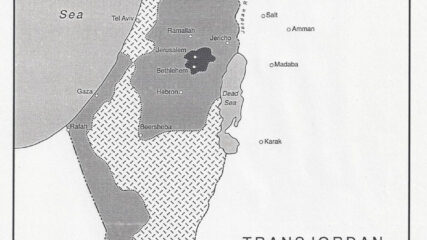
The area of Israel expanded and the potential area for a Palestinian Arab state decreased because of the 1948-49 war, Israel’s War of Independence. The Arab rejection of the 1947 U.N. partition plan thus hurt...

Admission of Israel to the United Nations, UNGA Resolution 273, 1949CIE+

May 11, 1949
Upon admission to the U.N., Israeli Foreign Minister Moshe Sharett said, "It was the consummation of a people's transition from political anonymity to clear identity, from inferiority to equal status, from mere passive protest to active responsibility, from exclusion to membership in the family of nations."

1951 U.N. Report, “The Situation of Jews in Moslem Countries”

December 1951
This report submitted to the United Nations at the end of 1951 notes that “some one million Jews have become the victims of accelerated antiSemitism” since 1948 in the Muslim countries of the Arab League and North Africa, “communities which have existed for thousands of years.” The report analyzes the situation for Jews overall and explains restrictions and oppressive measures country by country.

U.N. Security Council Resolution 242, 1967: Framework for Arab-Israeli Negotiations

November 22, 1967
Resolution 242 calls for Israeli withdrawal from unspecified captured territories in return for the right of all states to live in peace. It does not call for a full withdrawal. It is the basis for treaties with Egypt (1979) and Jordan (1994) and for PLO recognition of Israel (1993).

U.N. Security Council Resolution 338 on a Cease-Fire and Direct Negotiations After October 1973 WarCIE+

October 22, 1973
The October 1973 war broke the logjam over whether diplomacy could unfold to kick off Arab-Israeli negotiations. Sadat used the 1973 war as an engine to harness American horsepower. In that he succeeded because U.S. Secretary of State Kissinger saw Sadat’s leaning to Washington not only as a chance to begin useful negotiations, but also of great significance to weaning the Egyptian president away from Moscow.

Sinai II Accords: Egyptian-Israeli Disengagement Agreement, 1975CIE+

September 4, 1975
Cairo and Jerusalem agree to additional Sinai withdrawals, demilitarized zones, limited force zones and, importantly, placement of US civilians in Sinai to monitor observance of agreement.

UNGA Resolution 3379: Zionism Is Racism, 1975

November 10, 1975
Led by USSR and Arab states, Zionism is labeled as racist; the resolution is revoked in 1991.

U.N. Security Council Resolution 446: Territories Occupied by Israel, 1979CIE+

March 22, 1979
Carefully sandwiched between Jimmy Carter’s high-risk visit to Egypt and Israel and the signing of those countries' peace treaty, the Carter administration allows the U.N. Security Council to deplore Israeli settlement building and demographic changes in Jerusalem.

U.N. Security Council Resolution 452, 1979CIE+

July 20, 1979
This was the second UNSC Resolution within four months supported by the Carter administration condemning Israel's settlement building in the territories. It too greatly angered the Israeli government and American supporters of Israel.

U.N. Security Council Resolution 465 on Jerusalem, Settlements and Territories, 1980CIE+

March 1, 1980
Showing its public opposition to Israeli actions in the lands taken in the June 1967 war, an area that the Carter Administration wanted reserved for Palestinian self-rule, it 'strongly deplores' Israel's settlement policies. Passage of the resolution three weeks prior to the New York and Connecticut presidential primaries, cause many Jewish voters to vote in favor of Ted Kennedy and not for Carter, helping to splinter the Democratic Party.

U.N. Security Council Resolution 478, 1980: Criticizing Israel Over Territories Taken in June 1967CIE+

August 20, 1980
The United States abstains on a Security Council resolution declaring Israel's Basic Law on Jerusalem to be in violation of international law.

U.N. Security Council Resolution 1397 Reaffirms 2-State Solution, 2002CIE+

March 12, 2002
This is the first U.N. resolution to call for “two States, Israel and Palestine, to live side by side within secure and recognized borders.”

Roadmap for a Permanent Two-State Solution to the Israeli-Palestinian Conflict, 2003CIE+

April 20, 2003
As a negotiating plan it seeks an end to the conflict with reciprocal performance objectives. Israel accepts the plan with some reservations; Hamas rejects it out of hand. The plan is not enacted.

U.N. Security Council Resolution 1701: Israel-Lebanon Border, 2006CIE+

August 11, 2006
This U.N. resolution ends the 33-day Israel-Hezbollah war but fails to bring the Israel-Hezbollah conflict to conclusion. Hezbollah fighters are not prevented from reoccupying the Israeli-Lebanese border areas, leading to repeated cross-border attacks and ultimately intensification after the Hamas attack on Israel in October 2023.

U.N. Security Council Resolution 1860 on Gaza Fighting, 2009CIE+

January 8, 2009
Following two weeks of Israeli-Hamas fighting, it calls for a cease-fire, and for a “lasting solution to the Israeli-Palestinian conflict by peaceful means.” The Hamas-Israeli war occurs again in 2013-2014.

Israeli Ambassador Prosor Accuses U.N. of ‘Surrealpolitik,’ 2014CIE+

November 24, 2014
Prosor accuses the UN of duplicity and hypocrisy because it is constantly critical of Israel, but not of radical Muslims for killing of Yazidis, Bahais, Kurds, and Christians.

Egyptian-Drafted U.N. Security Council Resolution 2334 on Israeli Settlements and East Jerusalem, 2016CIE+

December 23, 2016
With less than a month left in the Obama administration, the U.S. abstains on a Security Council resolution that blames Israel for the stalled peace process, lambastes Israeli settlements and repeatedly calls East Jerusalem occupied territory.

Israeli Prime Minister Benjamin Netanyahu’s Speech to the U.N. General Assembly, September 2024CIE+

September 27, 2024
Netanyahu’s speech reflected on the needed elimination of Hezbollah as an enemy of Israel, a powerful militia fighting in Lebanon against Israel for four decades. On the day of Netanyahu's speech, the Israeli Air Force killed Hassan Nasrallah, the Hezbollah leader in his Beirut offices along with other Hezbollah officials.


The Key Curated Essentials for the U.S. and Israel

Jim Zanotti, “Major Issues and U.S.-Israel Relations,” Congressional Research ServiceCIE+

December 5, 2024
This is an excellent historical review of the relationship, including discussion of the Israel-Hamas War (31p.).

US-Israeli RelationshipCIE+

July 1, 2025
The US-Israeli relationship is complicated, dynamic, multidimensional, and enduring. From initial American governmental opposition to the present, Washington has become Israel’s most trusted ally. Rooted in common bonds, entrenched military sharing, and valued strategic interests, the association has also greatly influenced the shaping and sustenance of American Jewish identity.

U.S.-Israel Relations: 75 Years and On (52:03)CIE+

November 29, 2022
Join CIE’s founding president, Ken Stein, in a conversation at 5 p.m. ET on Nov. 29 with two experts in the field of U.S.-Israel relations, Aaron David Miller and Raphael Danziger, as part of CIE’s Israel@75: A Yearlong Exploration program.

Loy Henderson, State Department Director of Near Eastern and African Affairs, Vehemently Opposes Jewish State in Memo to Secretary of State George Marshall, 1947CIE+

September 22, 1947
Loy Henderson, Director of the Office of Near Eastern and African Affairs, U.S. State Department, to U.S. Secretary of State George Marshall Writing two months before the U.S. voted at the United Nations in favor of Palestine's partition into Arab and Jewish states, Henderson voices profound dislike for Zionism and a Jewish state. He advocates for cultivating positive relations with Muslim and Arab states. He is one of many at the State Department at the time who saw Zionism as contrary to American national interests.

Great Powers, the Middle East and the Cold WarsCIE+

August 9, 2020
The clash of great powers to control the Middle East, particularly between the U.S. and the U.S.S.R., neither began after World War II nor ended with the demise of the Soviet Union in 1991. Today, China, the U.S., Russia and Middle Eastern regional powers vie to influence everyday politics and resources.

Lyndon Johnson’s Five Principles of Peace, 1967CIE+

June 19, 1967
President Johnson’s remarks became the philosophical outline for UN Resolution 242 passed in November 1967. Core to his view was that Israel would not need to return to the pre-1967 war borders, and that the territorial integrity and sovereignty of all states in the region should be protected.

Israel’s 9/11 — Changes in the U.S.-Israel Relationship Since the June 1967 War (42:00)CIE+

June 5, 2024
In the days before the June 1967 war, President Lyndon Johnson warned Israel against war, saying, “If you go it alone, you will be alone.” President Joe Biden issued a similar warning in March against...

Hamilton Jordan Memorandum to President Carter, “Foreign Policy and Domestic Politics: The Role of the American Jewish Community in the Middle East,” June 1977

June 1977
Hamilton Jordan, Carter's chief political adviser, warned the president to halt the administration's anti-Israeli actions. Nonetheless, they continued to diminish Carter's support among American Jews through the 1980 re-election campaign.

Egyptian-Israeli Peace Treaty — Context and ImplicationsCIE+

December 27, 2021
March 26, 2025 By Ken Stein The ripe conditions that prefaced the 1979 Egyptian-Israeli treaty and might presage additional Arab-Israeli agreements are almost totally absent in 2025. Why? Today, there is an absence of political...

Reagan and Shamir on U.S.-Israel Cooperation, 1983CIE+

November 29, 1983
Areas of bilateral political and military cooperation are noted to fend off Soviet involvement in the Middle East, to assist Israel in building the Lavi aircraft, to support an independent Lebanon and to promote Arab-Israeli negotiations.

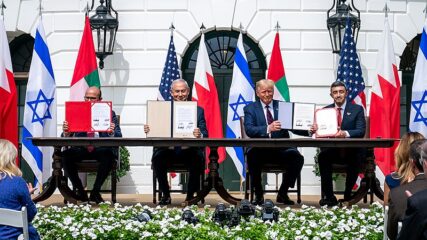
Abraham Accords: US, UAE, Israel, Bahrain Recognition Agreements, 2020

September 15, 2020
Quietly pursued in the past, long-standing strategic ties between Israel and Gulf states have become public. Building on the historic Joint Agreement signed between Israel and the UAE in August 2020, the Abraham Accords serve as a framework for normalizing diplomatic relations between Israel, the UAE and Bahrain.

Arab-Israeli Conflict: Quest for Normalization, 1973-Present

June 27, 2024
Unfold six Arab states’ embrace of Israel since 1973 out of national interests and U.S. mediation, sidelining the Palestinian movement, and explore Hamas’ Oct. 7, 2023, attack and its implications for the Israeli-Palestinian conflict and Israeli diplomacy.