<span class="cie-plus-title">Jimmy Carter’s Unbridled Praise for the Shah of Iran at a State Dinner in Tehran, 1977 </span><span class="cie-plus-badge">CIE+</span>

Jimmy Carter’s Unbridled Praise for the Shah of Iran at a State Dinner in Tehran, 1977 CIE+

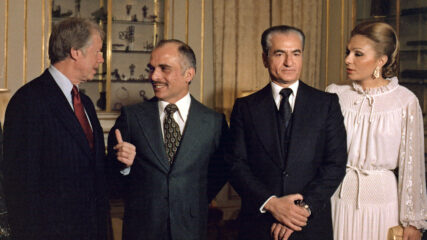
Having made human rights a central pillar of his foreign policy, Carter nonetheless seemingly ignored the abuses the Shah of Iran imposed upon his own people. Carter’s unctuous praise for the Shah at this state dinner angered Iranians in general, the clerical regime that replaced the Shah in 1979, resulting in negative consequences for Carter as he went into the 1980 presidential election.

Documents and Sources|December 31, 1977
<span class="cie-plus-title">Memorandum of Conversation Between U.S. President Carter and Israeli Prime Minister Begin and Their Delegations, March 1978</span><span class="cie-plus-badge">CIE+</span>

Memorandum of Conversation Between U.S. President Carter and Israeli Prime Minister Begin and Their Delegations, March 1978CIE+

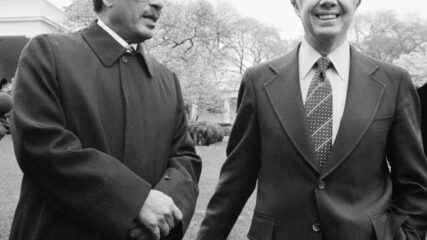
After a year in office, the Carter administration’s initiative to achieve a comprehensive Middle East peace between Israel and her Arab neighbors had stalled. At this White House meeting, Dayan reviewed Israel’s concerns about the West Bank and Brzezinski criticized Begin’s autonomy plan for the Palestinians. Begin and Carter’s mutual dislike over policy decisions continued to rise.

Documents and Sources|March 21, 1978
<span class="cie-plus-title">Memorandum of Conversation of Israeli Foreign Minister Moshe Dayan and Defense Minister Ezer Weizman With U.S. Secretary of State Cyrus Vance and Secretary of Defense Harold Brown at Camp David, September 7, 1978</span><span class="cie-plus-badge">CIE+</span>

Memorandum of Conversation of Israeli Foreign Minister Moshe Dayan and Defense Minister Ezer Weizman With U.S. Secretary of State Cyrus Vance and Secretary of Defense Harold Brown at Camp David, September 7, 1978CIE+

Early during the Camp David summit, Moshe Dayan, Ezer Weizman and other Israeli officials address resettlement and payment of 1967 and 1948 Palestinian refugees and Israeli military redeployment on the eastern and western borders, while Zbigniew Brzezinski, Cyrus Vance and other Americans emphasize Palestinian sovereignty.

Documents and Sources|September 7, 1978
<span class="cie-plus-title">Secretary of State Cyrus Vance Meets With Israeli Delegation at Camp David, September 14, 1978</span><span class="cie-plus-badge">CIE+</span>

Secretary of State Cyrus Vance Meets With Israeli Delegation at Camp David, September 14, 1978CIE+

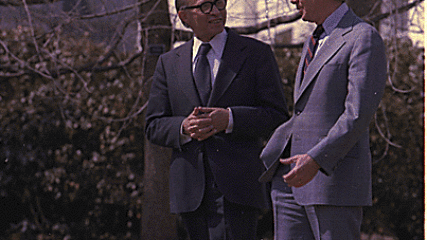
This meeting between Secretary of State Cyrus Vance and the Israeli delegation exemplified the injection of US interests and the application of concerted diplomatic pressure on Israel. The Israeli delegation at Camp David repeatedly refused the Carter administration’s vigorous efforts to introduce new formulations that might ultimately result in a Palestinian state.

Documents and Sources|September 14, 1978
<span class="cie-plus-title">Memorandum of Conversation Among President Carter, Secretary of State Vance, Prime Minister Begin and Foreign Minister Dayan at Camp David, September 16, 1978</span><span class="cie-plus-badge">CIE+</span>

Memorandum of Conversation Among President Carter, Secretary of State Vance, Prime Minister Begin and Foreign Minister Dayan at Camp David, September 16, 1978CIE+

In this meeting, the contents of which have not been released by the Foreign Relations of the United States (FRUS) but are available from the Israel State Archives (ISA), Begin clearly committed that “perhaps one military settlement” in the Jordan Valley would be established during the three months of the treaty negotiations. The extraordinarily contentious public dispute on the settlements would mar the diplomatic success of the Camp David Accords and add tension to the already fraught Carter-Begin relationship.

Documents and Sources|September 16, 1978
<span class="cie-plus-title">U.S., Israeli Negotiators at Camp David Discuss Resolution 242, September 16, 1978</span><span class="cie-plus-badge">CIE+</span>

U.S., Israeli Negotiators at Camp David Discuss Resolution 242, September 16, 1978CIE+

U.S. and Israeli officials at Camp David spend a session focused on the land-for-peace U.N. Security Council Resolution 242 and how it applies to the West Bank, Jordan, Israel and the Palestinians. Appropriate for a discussion over 242, whose application depends on the absence of the word “the,” the officials argue over using boundary, border, line, borderline or something else.

Documents and Sources|September 16, 1978
Camp David Accords, 1978

Camp David Accords, 1978

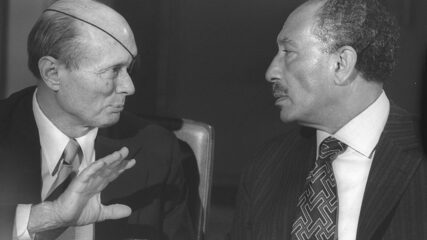
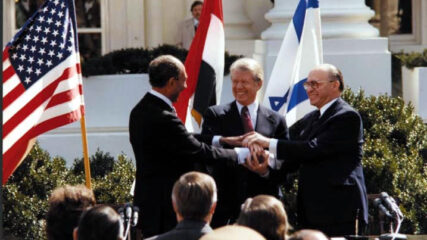
With President Carter mediating, Sadat and Begin agree to two outlines: a framework for a treaty between them and to define Palestinian “autonomy,” not self-determination or a state for them.

Documents and Sources|September 17, 1978
Camp David Conversation Between President Carter and Foreign Minister Dayan on Jerusalem, September 17, 1978

Camp David Conversation Between President Carter and Foreign Minister Dayan on Jerusalem, September 17, 1978

On the last day of negotiations at Camp David, President Carter asked Israel to accept the US position that Jerusalem was occupied territory; Dayan shot back in vigorous opposition, “if we had known that you would declare your position on Jerusalem, we would not have come here. This is the first time that we are confronted with an American position and specifically on the most sensitive issue. All your positions with regards to settlements are insignificant compared to our confrontation on the issue of Jerusalem.”

Documents and Sources|September 17, 1978
<span class="cie-plus-title">Protocol of Conversation Among President Carter, Prime Minister Begin, Secretary of State Vance, Foreign Minister Dayan and Israeli Attorney General Barak, September 1978</span><span class="cie-plus-badge">CIE+</span>

Protocol of Conversation Among President Carter, Prime Minister Begin, Secretary of State Vance, Foreign Minister Dayan and Israeli Attorney General Barak, September 1978CIE+

This document is the only known official written transcript of the Begin-Carter discussion held at the end of the 1978 Camp David negotiations about any moratorium on Israel’s future settlement building. This record shows that Begin made no mention of a moratorium on settlement building for longer than three months. However, President Carter publicly, and Secretary of State Vance, in his memoirs, Hard Choices disagreed, believing the time mentioned was five years. For the remainder of Carter’s presidency, and for the rest of his post-presidency, the ‘building of Israeli settlements’ became a key point of contention in shaping his relationship with Israel.

Documents and Sources|September 20, 1978
<span class="cie-plus-title">Moshe Dayan’s Remarks to the Knesset About the 1978 Camp David Accords</span><span class="cie-plus-badge">CIE+</span>

Moshe Dayan’s Remarks to the Knesset About the 1978 Camp David AccordsCIE+

Dayan made the case to the knesset that it should vote in favor of the Camp David Accords stipulating why doing so would be in Israel’s long term interest. He stated specifically that there was no promise for a Palestinian state, IDF forces would remain in the West Bank, negotiations for a peace treaty would continue, and these agreements were signed by the President of Egypt and the President of the US.

Documents and Sources|September 29, 1978
<span class="cie-plus-title">Conversation Between U.S. National Security Adviser Zbigniew Brzezinski and Saudi Prince Fahd on Camp David Accords and Other Regional Issues, March 1979</span><span class="cie-plus-badge">CIE+</span>

Conversation Between U.S. National Security Adviser Zbigniew Brzezinski and Saudi Prince Fahd on Camp David Accords and Other Regional Issues, March 1979CIE+

Nine days before the signing of the Egyptian-Israeli treaty, U.S. National Security Adviser Zbigniew Brzezinski and Saudi Foreign Minister Prince Saud carry out an extraordinarily frank conversation. It includes bilateral relations, common fears of regional turbulence and Anwar Sadat’s estrangement from other Arab leaders.

Documents and Sources|March 17, 1979