How Prime Minister Yitzhak Rabin Viewed the 1993 Oslo Accords — A Collection in His Own Words

How Prime Minister Yitzhak Rabin Viewed the 1993 Oslo Accords — A Collection in His Own Words CIE+ members only

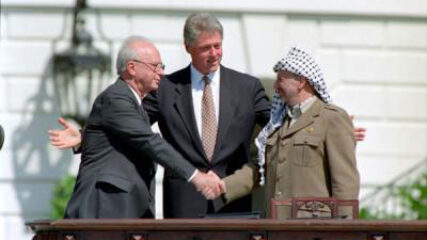
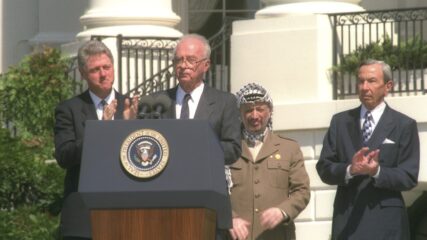
In September 2023, thirty years after the historic signing of the Oslo Accords, there is occasion to review Prime Minister Rabin’s understanding of them. I assembled this collection years ago from Daily Reports- Near East and South Asia, 1993-1995. Two short items about Rabin’s views are also found or linked here. Rabin provided a summary of his views of the Accords in a Knesset speech in October 5, 1995. Some of Rabin’s reasons for signing the Accords are also provided in Yehuda Avner’s The Prime Ministers.
Documents and Sources, Ken's Blog|September 1993-November 1995
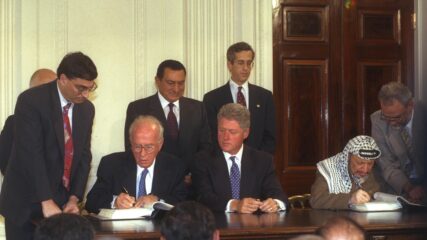
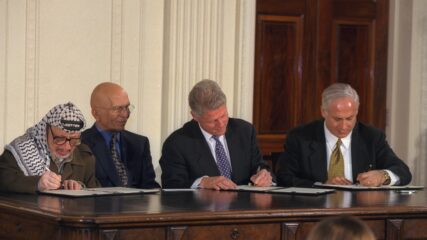
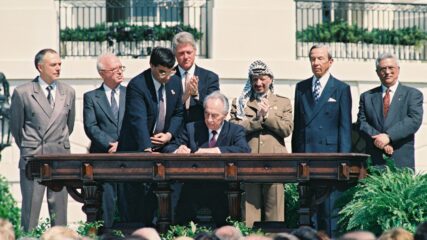
Remarks by Israeli Prime Minister Rabin at Signing of Oslo Accords, 1993

Remarks by Israeli Prime Minister Rabin at Signing of Oslo Accords, 1993 CIE+ members only

As a lifetime soldier-politician, Rabin acknowledges that the signing of the Declaration of Principles was profoundly difficult, and yet there is a yearning to end the cycle of violence and engage in reconciliation with the Palestinians. Drawing inspiration from Jewish tradition, he stresses the timeliness of pursuing peace and prays for a new era in the Middle East. 

Documents and Sources|September 13, 1993
U.S. Jerusalem Embassy Act of 1995

U.S. Jerusalem Embassy Act of 1995 CIE+ members only

In 1995, Senators Robert Dole and Jon Kyl introduced the Jerusalem Embassy Act to move the U.S. Embassy to Jerusalem. The bill was adopted by an overwhelming majority in both houses of Congress; it provided Presidential authorization to effectively delay the embassy move every six months, if deemed necessary for U.S. national security interests.

Documents and Sources|November 8, 1995
Mitchell Report, 2001

Mitchell Report, 2001 CIE+ members only

In the midst of severe Palestinian-Israeli clashes, a committee led by former U.S. Sen. George Mitchell concludes, as had many previous investigations, that the two communities fear and want to live separately from each other. From the report flows the EU-U.N.-U.S. commitment to a two-state solution suggested in the 2003 Roadmap for Peace.

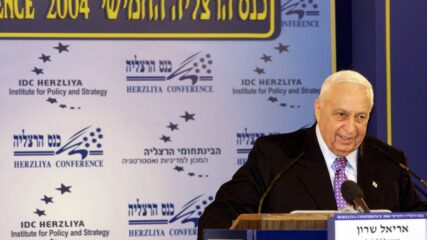
Prime Minister Sharon’s Address on Gaza Withdrawal at Herzliya Conference, 2004

Prime Minister Sharon’s Address on Gaza Withdrawal at Herzliya Conference, 2004 CIE+ members only

Prime Minister Sharon unilaterally withdrew Israeli military and civilian forces from the Gaza Strip in August 2005. Sharon sought to ensure Israel’s Jewish and democratic essence by getting out of the lives of the Palestinians. Instead Hamas used the territory to kill Jews and degrade Israel morally. Two decades later what would Sharon have said about trusting your neighbor unilaterally?

Documents and Sources|December 16, 2004
President Barack Obama’s Speech at Cairo University, 2009

President Barack Obama’s Speech at Cairo University, 2009 CIE+ members only

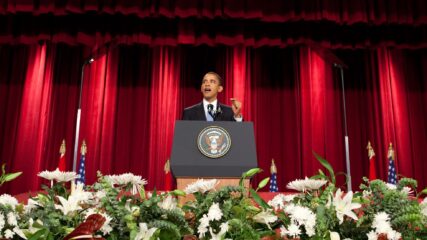
Barack Obama, while seeking to improve America’s image by urging an end to violence and stereotypes, emphasizes the need for a two-state Israeli-Palestinian solution as part of a reset of U.S. relations with the Muslim world. His advocacy of soft power distinguishes his administration from George W. Bush’s use of force. Nine years later, Donald Trump’s secretary of state, also in Cairo, heavily criticizes the Obama soft-power approach.