FILTERED BY:

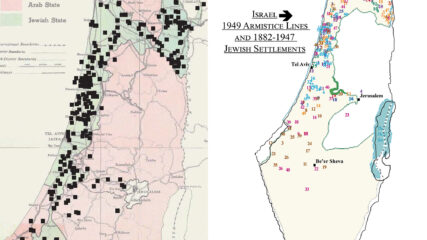
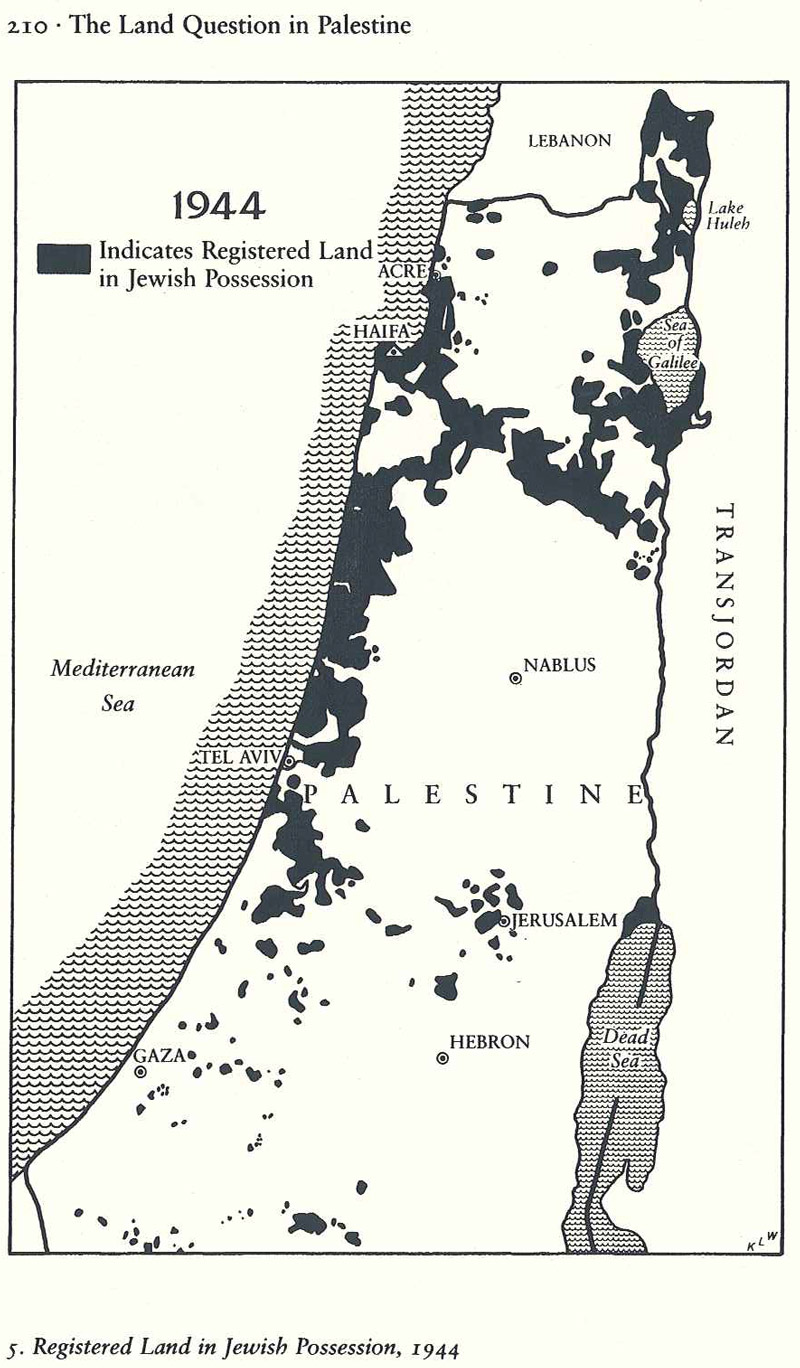
The issue of land control and use was vital to Arabs and Jews in Palestine. For the Arab population, land ownership determined wealth for a few, while rural cultivation determined poverty for the many. For the Jewish population, acquiring land and establishing settlements and urban areas characterized state-building. World War I disrupted a thriving land market, which resumed and continued throughout Britain’s administration until 1948. When Britain imposed severe restrictions on land sales, Jewish buyers and Arab sellers still easily found each other. The Jewish National Fund, Arab newspapers and British sources show that Jewish buyers never had enough money to buy all the land for sale. In the acquisition process, Zionists slowly built the nucleus for a state, often based on strategic need. By the end of the 1930s, Jews and Arabs acknowledged that a Jewish state was in the making. Without Arab land sales to Jews and Jewish immigration, a Jewish state could not have been established.

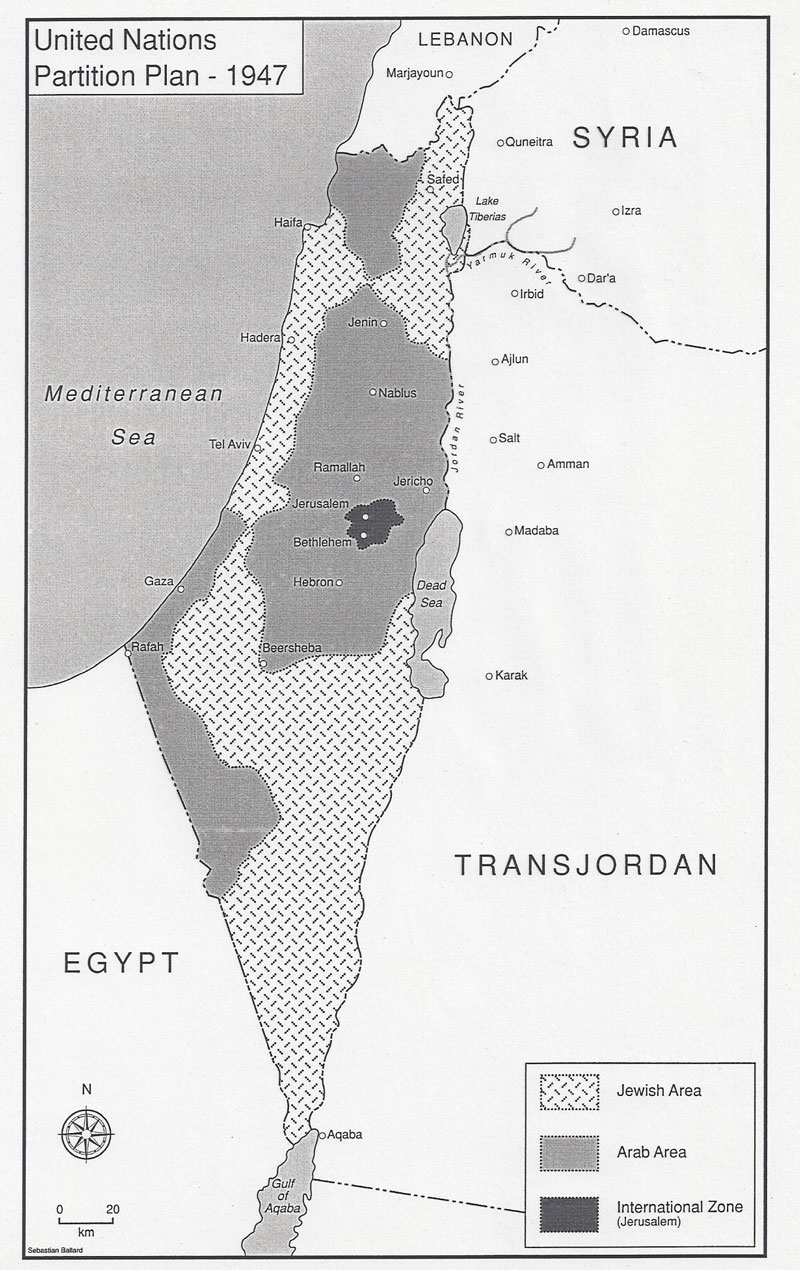
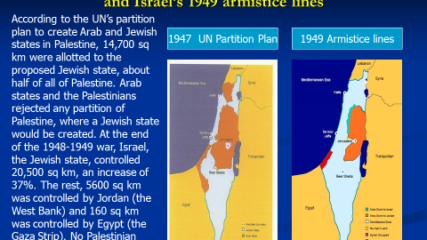
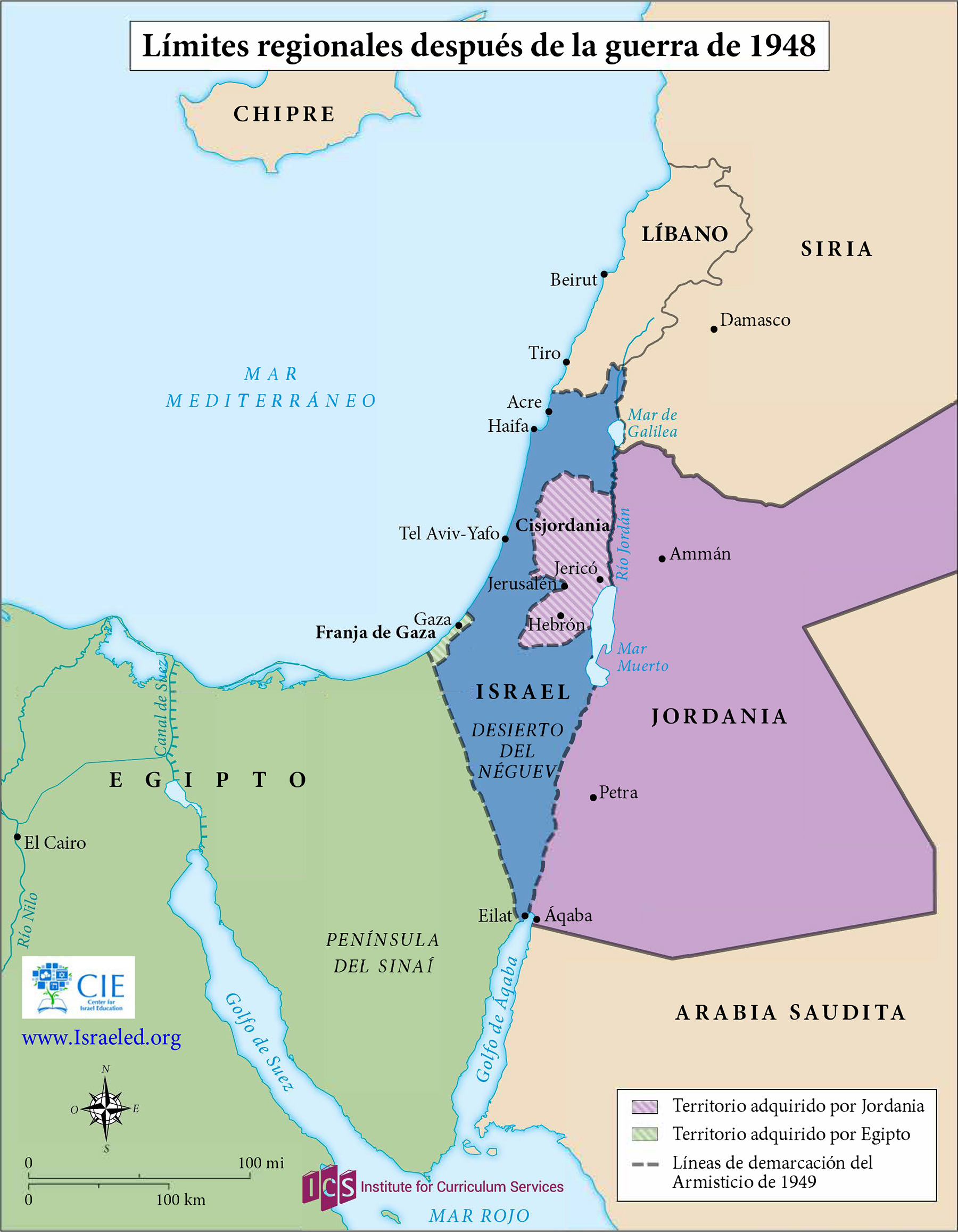
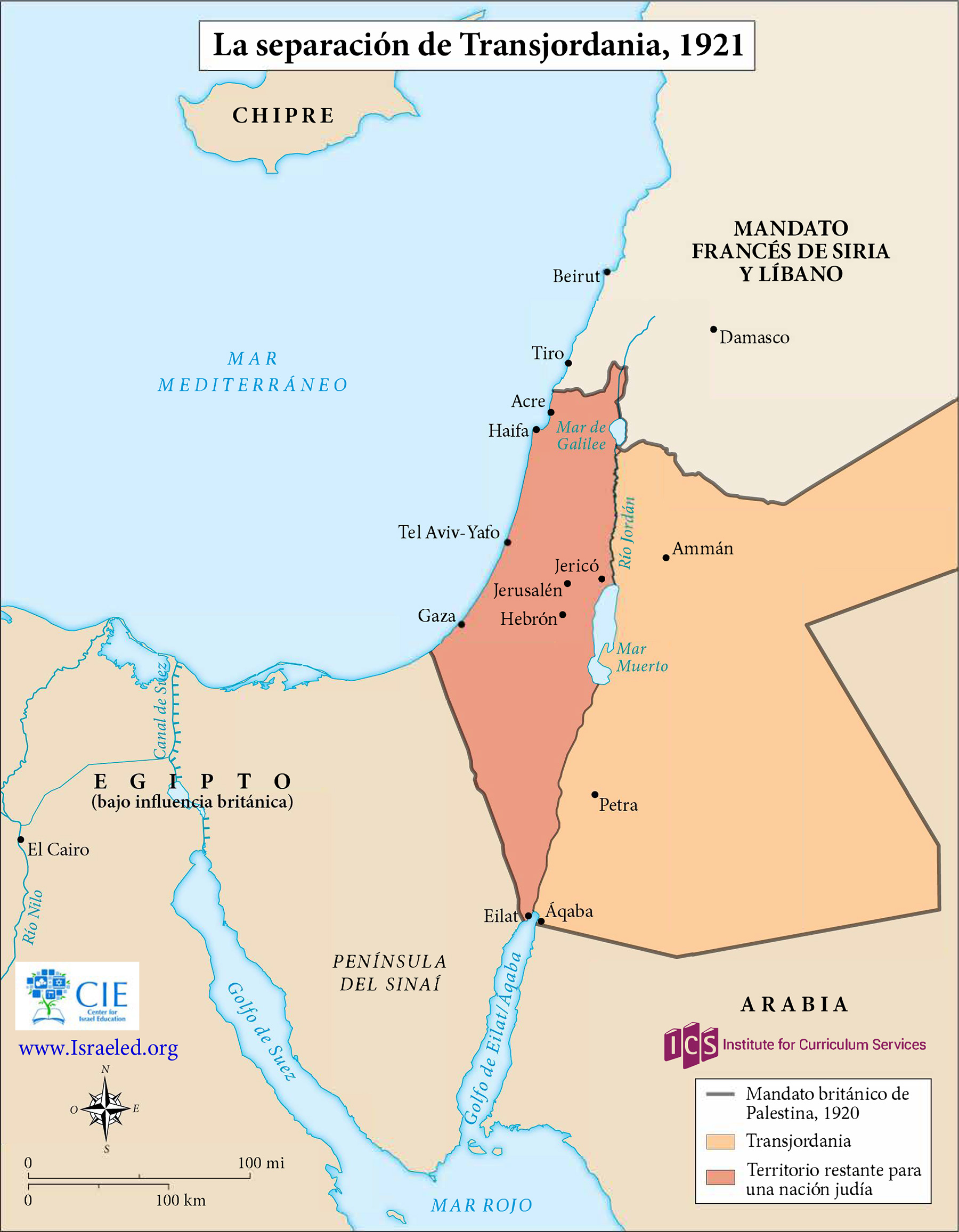
In 1947, the United Nations sought states for Arabs and Jews. The Arabs refused the idea; the Zionists accepted it. In 1949, after the first Israeli-Arab war, Israel existed as a Jewish state, but no Arab state was established for the Palestinians. Instead, Jordan annexed the West Bank and portions of Jerusalem, and the Gaza area came under Egyptian control.

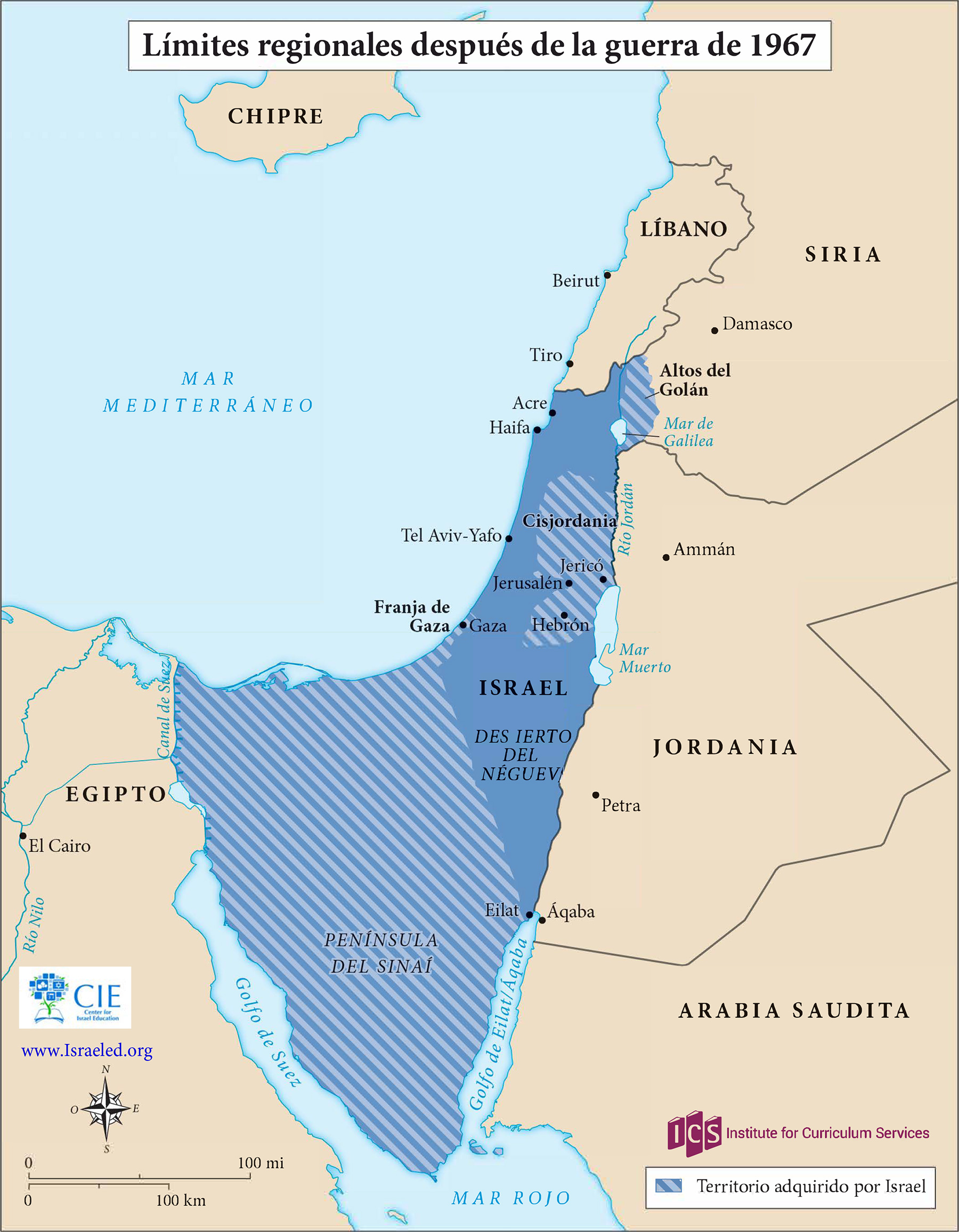
After the June 1967 war, all the land west of the Jordan River that was once Mandatory Palestine was controlled by Israel, including all of Jerusalem. In 1979, Egypt recognized Israeli sovereignty. Beginning in 1993, one Palestinian element, the Palestine Liberation Organization through the Palestinian Authority, took administrative control over some of that land, while another, Hamas, sought to seize all the lands and eradicate Israel.

The Key Curated Essentials for Land

Israel and the Jewish Nation: Part 1

Israel and the Jewish Nation: Part 1

E-book

Covering the foundations of Judaism and the history of the Jewish people, the unit starts with the ‘covenants’ and ends in 1897. It traces the Jewish connection to the land of Israel, in the land and in exile. It explains how and why Jews retained their traditions in the face of enormous challenges. It concludes with the birth of Zionism as one answer to Jewish insecurity.

  • Suitable for learners 9th grade and up
  • The first of four planned units covering Israel and the Jewish Nation
  • 37-page teacher guide
  • 78-page student workbook
  • Covers the foundations of Judaism and Jewish people starting with the ‘covenants’
  • Learn how and why the Jews retained their traditions in the face of enormous challenges
  • Explore the connection to the land of Israel and the birth of Zionism

More Curated Essentials for Land

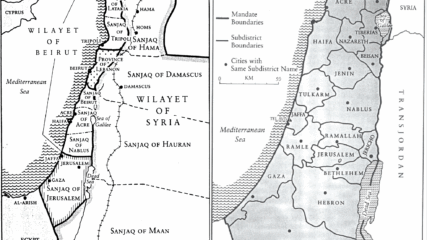
Land — Palestine and Israel in Maps

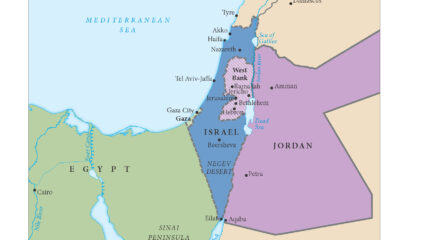
Map of Israel's Armistice Lines, 1949-1967

Map of Israel’s Armistice Lines, 1949-1967 CIE+ members only

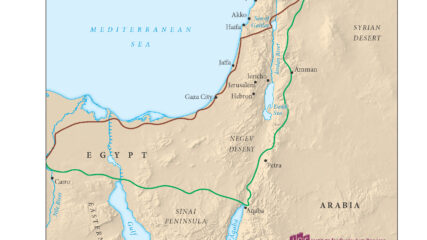
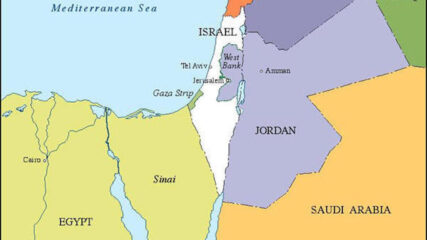
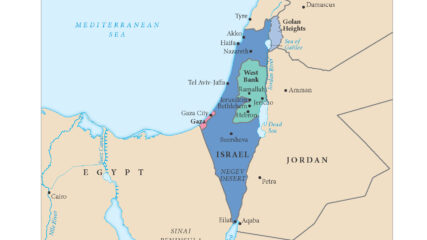
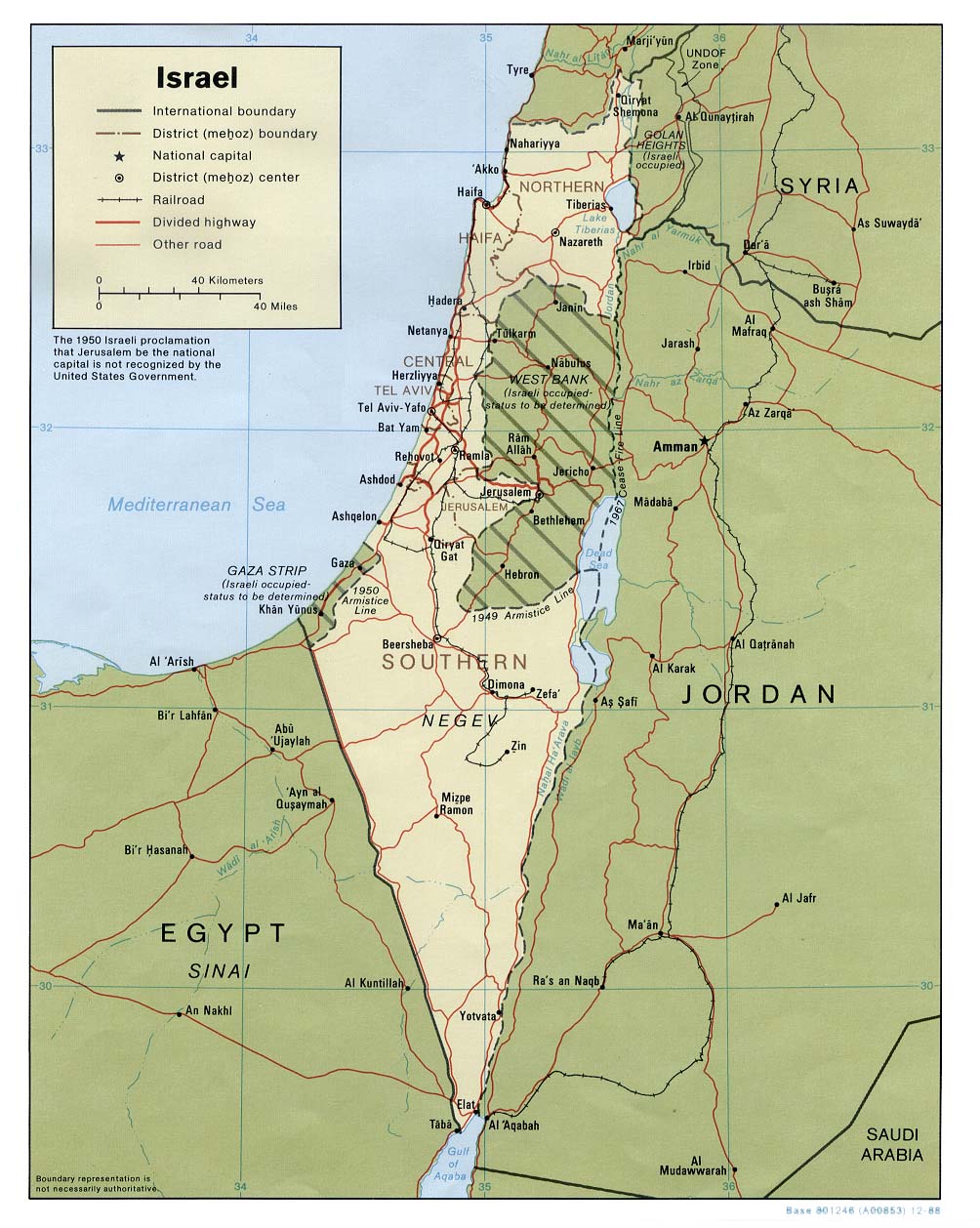
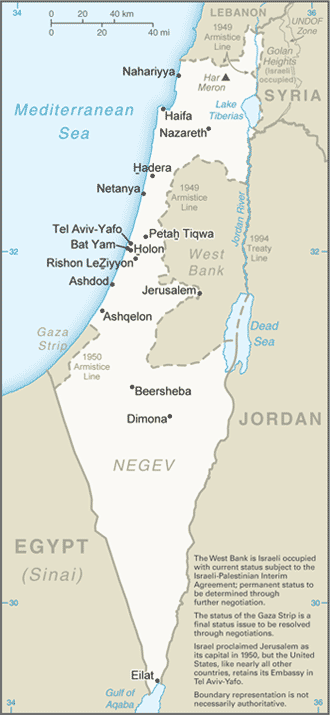
In the aftermath of the 1948 War of Independence, Israel signed armistice agreements with Egypt, Jordan, Syria, and Lebanon. These armistice lines lasted until the immediate aftermath of the June 1967 War. Israel has 1068 kilometers in land borders. Egypt 208 km, Gaza Strip 59 km, Jordan 307 km, Lebanon 81 km, Syria 83 km, and the West Bank 330 km; its Mediterranean coastline 273 km. CIA The World Factbook – Israel

Maps of Israel|1949-1967
Allon Plan Map, 1967

Allon Plan Map, 1967 CIE+ members only

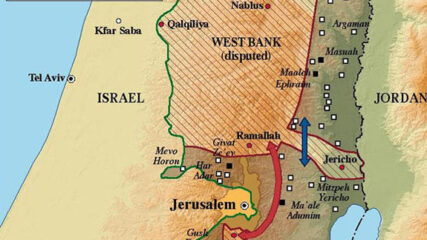
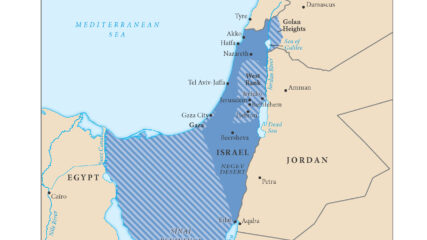
Drafted by Minister of Labor Yigal Allon after the June 1967 war, the plan envisages Israeli retention of a series of settlements and military installations along the Jordan Valley as buffers to a potential Arab land attack from the east.

Maps of Israel|July 26, 1967
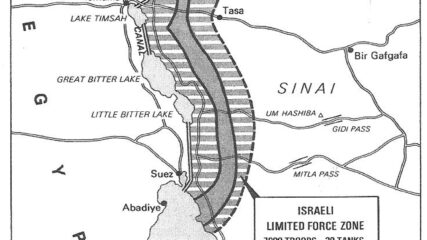
Map of Israeli-Egyptian Separation of Forces Agreement, January 1974

Map of Israeli-Egyptian Separation of Forces Agreement, January 1974 CIE+ members only

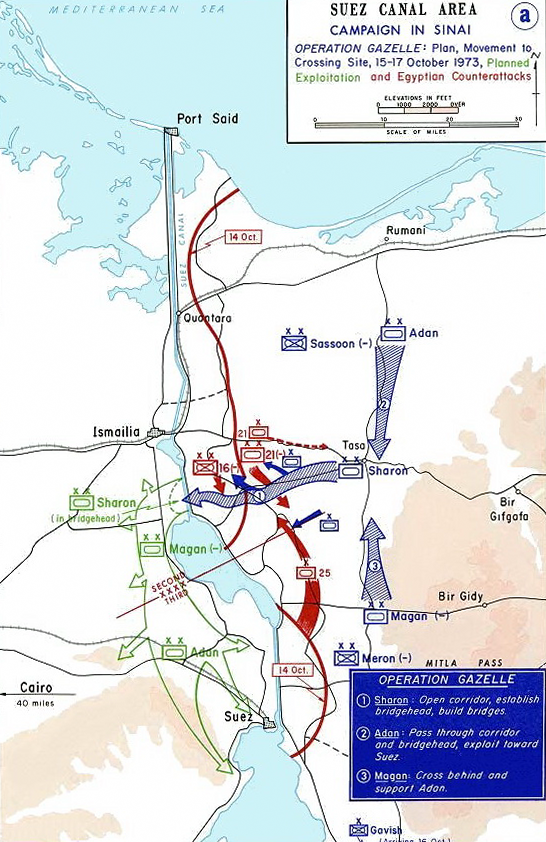
For Sadat, who had gone to war against Israel three months earlier, securing a military disengagement agreement was important. In addition, diplomatically engaging the US to secure the agreement meant entrenching Washington as a friend of Egypt. The US embraced the opportunity to quell tensions between Israel and Egypt, while squiring Cairo away from decades of Moscow’s embrace. Israel had its POWs returned and slowly tested Sadat’s broader intentions toward Jerusalem.

Maps of Israel|January 1974
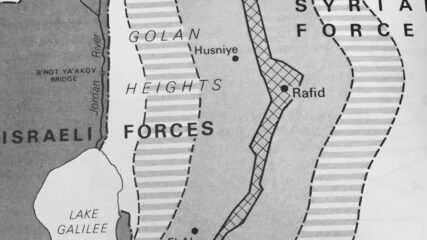
Map of Golan Heights After Israeli-Syrian Separation of Forces Agreement, May 1974

Map of Golan Heights After Israeli-Syrian Separation of Forces Agreement, May 1974 CIE+ members only

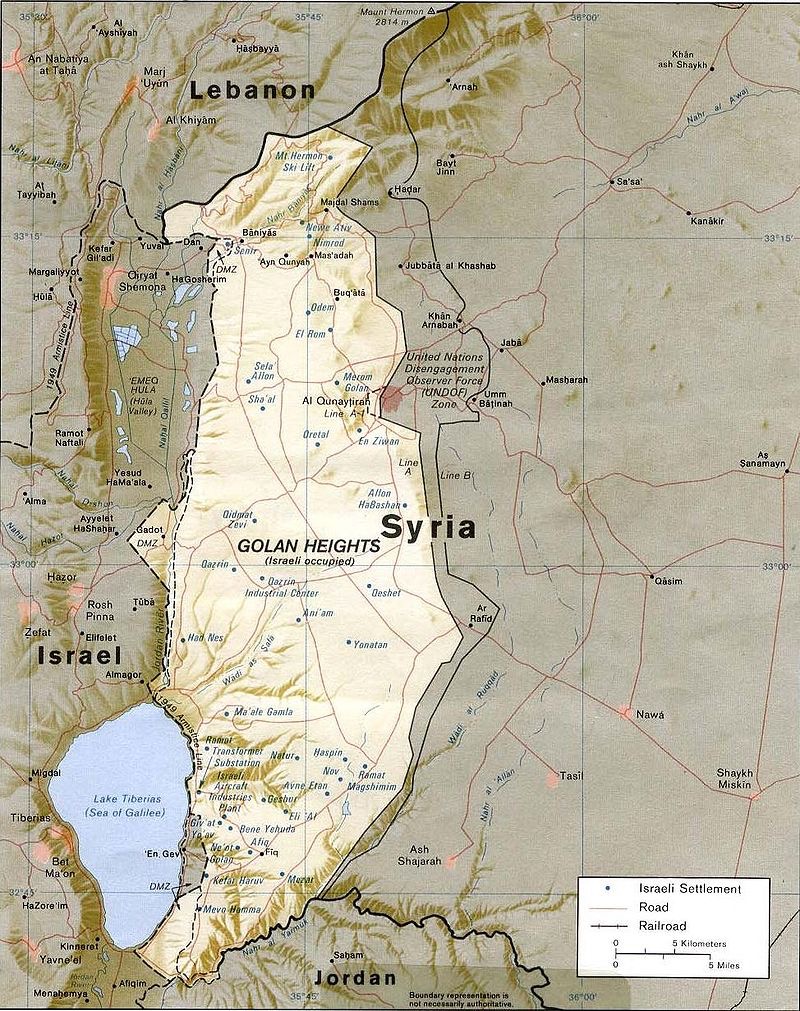
In the last days of the June 1967 War Israel secured a portion of the Syrian Golan Heights, estimated at 1300 sq km or 500 sq mi; Israel forces sit some 40 miles, 60km from Damascus. Before the June War, Israeli villages and populations in the valley were fired upon by Syrian forces from the Heights. In addition to being an important catchment for Jordan River waters which helps supply Israel’s water needs, the heights contain not fully explored hydrocarbon sources. In the northern Heights is Mt. Hermon which has strategic value for observing military movements into southern Lebanon and to Damascus.

Map of Jerusalem's Old City, 1988

Map of Jerusalem’s Old City, 1988 CIE+ members only

The Old City of Jerusalem is divided into four religious quarters: Armenian, Christian, Jewish and Muslim areas. The overall population of the Old City is 34,000, 11 percent of whom are Jews. Jews account for 59 percent of the population of the Old City’s Jewish Quarter and 49 percent of the Armenian Quarter.

Land to 1897

Diaspora to 1949 (2 videos, 56:36 and 31:15) CIE+ members only

January 1949
Emory Professor of Contemporary and Middle Eastern History, Political Science, and Israeli Studies and Center for Israel Education President Ken Stein outlines the history of Zionism and the British Mandate at the CIE 2018 Educator Enrichment Workshop.

Era I: Jewish Peoplehood to 1897

July 5, 2023
From the biblical covenants, Jews bound themselves to the belief in one G-d, an unbreakable tie to the Land of Israel. From its inception, Jewish identity was wrapped around the mutual commitments between G-d and the people. Judaism became the foundation for Christianity and Islam.

Bibliography — Land CIE+ members only

April 24, 2025
April 2025 Without equal, the most comprehensive portrayals and explanations of the land regime in the area of Palestine and Greater Syria during Ottoman times can be found in a dozen or so scholarly works...

1898 to 1948

Explainer: The Economy of the Yishuv and the State of Israel

March 24, 2025
By Ken Stein and Scott Abramson, March 23, 2025 Zionist/Jewish Economic Development in Palestine Before 1948 Jewish physical growth in Mandatory Palestine in the period known as the New Yishuv was sufficient through land acquired...

Explainer: Zionists and Arabs — Historical Sources on the Path to the Modern State of Israel

June 13, 2021
Update June 9, 2026; originally posted June 2021. Compiled by Dr. Ken Stein, CIE President, June 9, 2026 These sources and references unfold the history of the Jewish state through 1949, from state-seeking to state-making...

Era II: Zionism to Israel, 1898 to 1948

July 5, 2023
From 1898 to 1948, Zionism evolved from an idea to a concrete reality: the actual establishment of the Jewish state, Israel. Slowly, a few immigrating Jews created facts by linking people to the land. For half a century, fortuity and fortitude made the Zionist undertaking a reality. They exhibited pragmatism and gradually constructed a nucleus for a state. Through perseverance Zionists empowered themselves.

Systematic Agricultural Colonization in Palestine, 1933 CIE+ members only

August 21, 1933
A report presented at the 18th Zionist Congress looks at the present and future of Jewish agricultural settlement and expansion in Mandatory Palestine, including the export market.

Balfour Declaration

November 2, 1917
The British Foreign Ministry promises to work toward a Jewish national home in Palestine with no harm to non-Jewish populations or to Jews living elsewhere who might want to support a Jewish home.

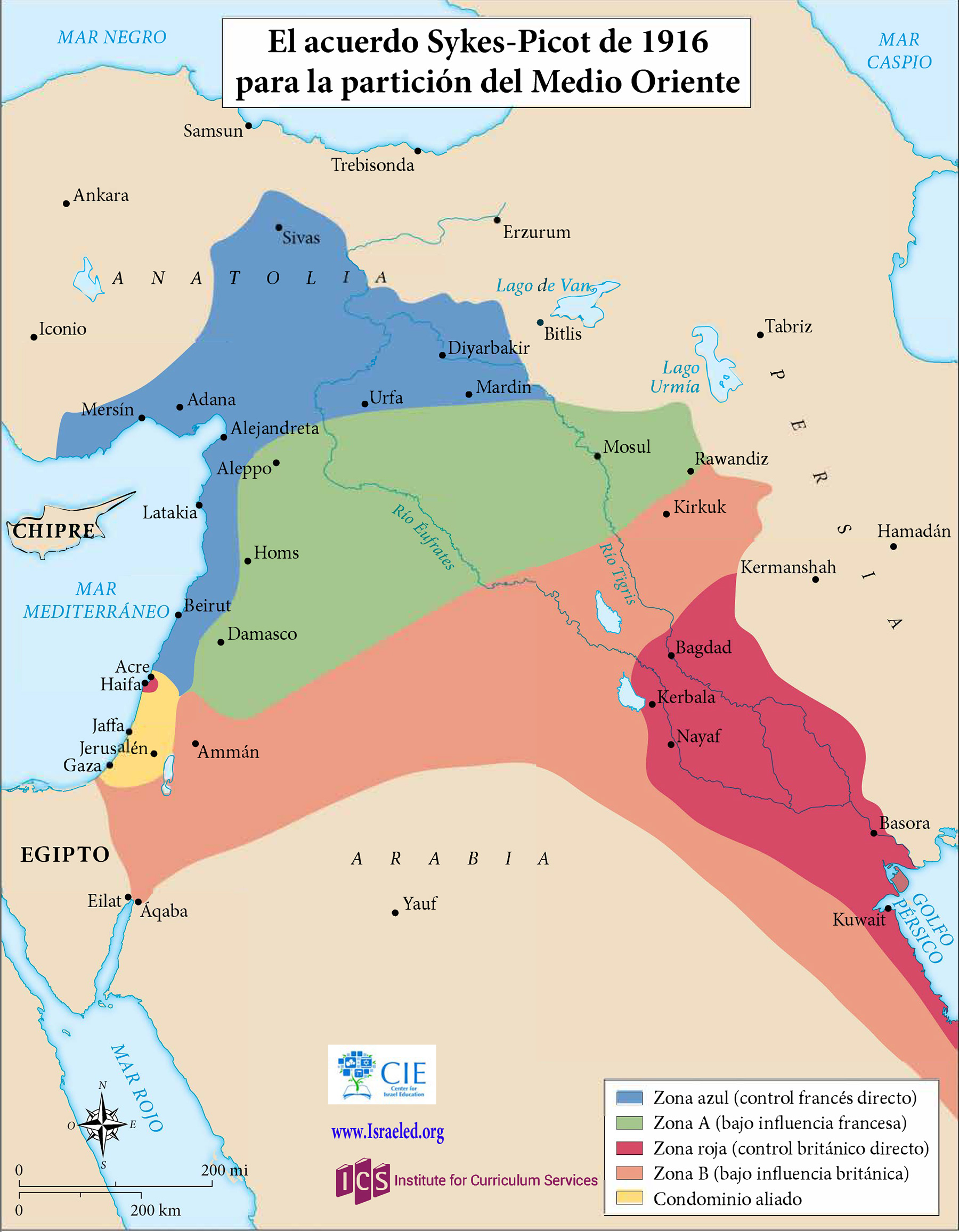
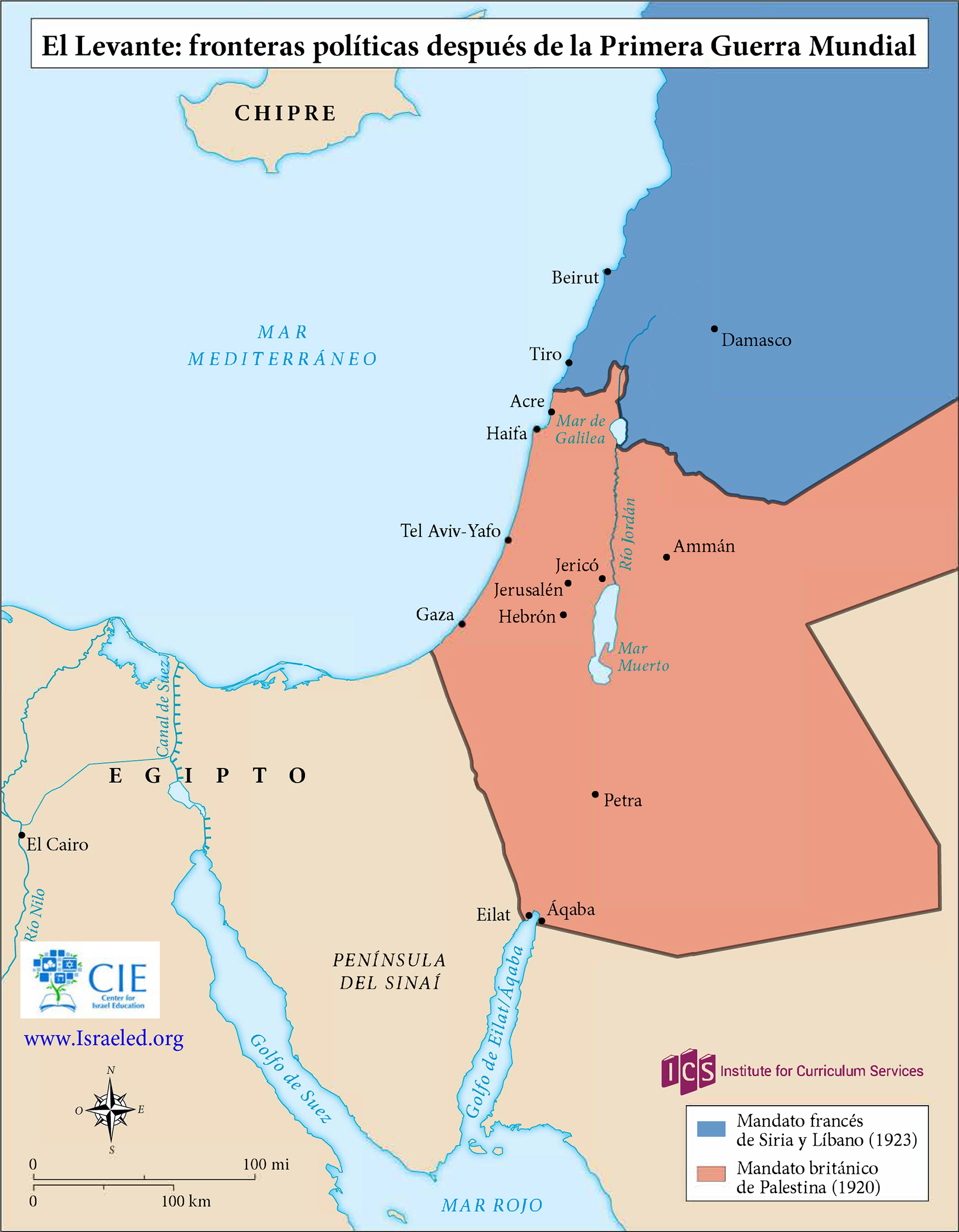
San Remo Conference Agreement, 1920: Borders Set for Postwar Middle Eastern Mandates CIE+ members only

April 25, 1920
The post-WWI San Remo Conference allocates former Ottoman territories to Britain and France and recognizes Jewish self-determination in Palestine by adopting the language of the Balfour Declaration, decisions the League of Nations confirms two years later.

Zirin Village Land Sales, 1930 CIE+ members only

August 16-October 1, 1930
The sale of Zirin Village to the Jewish National Fund was collusively undertaken by a local Arab family through the British Courts in Palestine. The process intentionally avoided financial compensation to the resident Arab occupants.

Jewish Agency’s Margalith Identifies Arab Peasant Displacement From Arab Landlord Sales to Jewish Buyers, 1930 CIE+ members only

February 5, 1930
Two letters detail how Arab peasants are sometimes swindled out of their lands by Arab land brokers and effendis, noting economic harm to them, and how they learn to avoid landlords and sell directly to Jewish buyers. Intra-Arab communal tension rises.

Rural Change and Peasant Destitution: Contributing Causes to the Arab Revolt in Palestine, 1936-1939 CIE+ members only

1989
Kenneth Stein, “Rural Change and Peasant Destitution: Contributing Causes to the Arab Revolt in Palestine, 1936-1939,” John Waterbury and Farhad Kazemi (eds.), Peasants and Politics in the Modern Middle East, Florida International University Press (1989), pp. 143-170....

Political Significance of JNF Land Purchase, 1937 CIE+ members only

December 31, 1937
With more Arab sale offers than funds for purchases, Zionist leaders decide on strategic priorities and designate areas around Haifa, Jerusalem-Jaffa road, and the Galilee near headwaters of the Jordan River.

1931-1949: Arab Land Sales to Jews — Palestine Arab Press, British Reports and Zionist Accounts CIE+ members only

1931-1949
Palestinian Arabs' own words, backed by the observations of British and Zionist officials, show that their awareness that their own people were helping the Zionist causes through land sales, often displacing Arab peasants.

HMG White Paper: Statement of Policy, 1939

May 23, 1939
Zionist leaders—David Ben-Gurion, Chaim Weizmann and Eliezer Kaplan—learning of the British intent to limit severely the Jewish national home’s growth. Increasingly, they are also aware of the German government’s hostilities towards European Jewry.

Palestine’s Rural Economy, 1917-1939 CIE+ members only

January 29, 2025
Kenneth Stein, “Palestine’s Rural Economy, 1917-1939,” Studies in Zionism, Vol. 8, No. 1 (1987), pp. 25-49. During the early decades of the 20th century in Palestine, the majority Arab population sustained itself primarily through agricultural and pastoral...

Ken Stein: “Zionist Land Acquisition: A Core Element in Establishing Israel” CIE+ members only

June 2020
Kenneth W. Stein, “Zionist Land Acquisition: a core element in establishing Israel,” in Michael J. Cohen, (ed.) The British Mandate in Palestine: A Centenary Volume, 1920-2020, Routledge, 2020, pp. 189-204.

Jewish National Fund — Minutes of a Meeting of Those Involved in Purchasing Lands, November 1946 CIE+ members only

November 10, 1946
The JNF estimated that up to 250,000 dunams (a dunam was a quarter of an acre) could be purchased if funds were available despite Arab opposition to sales and a steep rise in prices. By then, Jews owned 1.6 million dunams of land, with more than half of Palestine not owned by anyone.

Composite Statements in KKL/JNF Discussions About Lands to Purchase, 1926-1948 CIE+ members only

1926-1948
JNF meeting minutes and other statements show the strategic approach to Jewish land purchases throughout the British Mandate period.

Zionist Leaders Debate Land Purchase Strategies CIE+ members only

February 19, 1936
Zionist leaders debate how to confront proposed British restrictions on Jewish land purchase in Palestine.

Israel in Context: How did the Zionists Make the State: 1882-1949? Professor Ken Stein (48:32) CIE+ members only

June 28, 2020
Using archival and published sources, including materials from the CIE website, CIE President Ken Stein identifies six factors as reasons for the Zionists’ success: Zionist political action, the impaired socio-economic condition of the Arab population,...

Ken Stein: Socio-Economic Differences Preface Palestine’s Political Partition, 1920-1948 CIE+ members only

1920-1948
Primary sources, reputable scholarship and archival materials collectively show major communal (Arab-Jewish) socio-economic separation, factors that foreshadowed geo-spatial partition.

Britain in 1939 Reaffirms Palestine Was Not Promised to Sharif of Mecca During World War I CIE+ members only

March 16, 1939
A British investigation in 1939, before the release of that year's anti-Jewish White Paper, finds that the area of Palestine was not promised to the Sharif of Mecca during World War I as part of a caliphate.

British White Paper Restricts Jewish Immigration and Land Purchase CIE+ members only

May 17, 1939
The 1939 White Paper signaled Britain’s readiness to relegate the Jews in Palestine to minority status in a future majority-Arab state.

Ken Stein: “A Zionist State in 1939” CIE+ members only

Winter 2002
“A Zionist State in 1939,” Dr. Kenneth W. Stein, CHAI (Atlanta), Winter 2002 “Had not the Nazi crimes been committed against Jews during World War II, the Jewish State would have never come true.” So...

Land Transfer Inquiry Committee Report, 1945 CIE+ members only

November 28, 1945
Circumventing the existing law on prohibition of land sales to Jews, Palestinian Arabs are found selling lands regularly and furtively to Zionists.

UNGA Resolution 181 CIE+ members only

November 29, 1947
The 1937 plan to partition Palestine was never implemented. It did, however, remain a workable political option for resolving the conflict between Arabs and Zionists. Britain needed to placate Arab state opposition to Zionism, so it refrained from actively revisiting the partition plan.

Ken Stein, “One Hundred Years of Social Change: The Creation of the Palestinian Refugee Problem” CIE+ members only

1991
Kenneth W. Stein, “One Hundred Years of Social Change: The Creation of the Palestinian Refugee Problem,” in Laurence Silberstein (ed.), New Perspectives on Israeli History: The Early Years of the State, New York University Press,...

Ken Stein, “Legal Protection and Circumvention of Rights for Cultivators in Mandatory Palestine” CIE+ members only

April 7, 2025
Stein, Kenneth, “Legal Protection and Circumvention of Rights for Cultivators in Mandatory Palestine,” in Joel S. Migdal, (Ed.) Palestinian Society and Politics, Princeton, (1980): 233-260. In the immediate wake of communal violence that plagued Palestine...

1948 to 1982

Israeli Government-Designed Peace Plan After June 1967 War CIE+ members only

June 19, 1967
After the June 1967 war, the Israeli government sent word through the United States to Egypt and Syria seeking to jump-start a peace process. Apparently no response was received.

U.N. Security Council Resolution 242, 1967: Framework for Arab-Israeli Negotiations CIE+ members only

November 22, 1967
Resolution 242 calls for Israeli withdrawal from unspecified captured territories in return for the right of all states to live in peace. It does not call for a full withdrawal. It is the basis for treaties with Egypt (1979) and Jordan (1994) and for PLO recognition of Israel (1993).

Galili Plan for Settlements, August 1973 CIE+ members only

August 1973
With less than three dozen Israeli settlements in the territories taken in the June War, the proposal is not for a vast settlement increase, but for economic, infrastructure, and industrial development of the areas.

Israeli Prime Minister Menachem Begin’s Palestinian Autonomy Plan, 1977 CIE+ members only

December 28, 1977
Five weeks after Egyptian President Anwar Sadat flew to Jerusalem in November 1977, to accelerate Egyptian – Israeli negotiations, Begin brought to President Jimmy Carter, Israel’s response to Sadat’s peace initiative: political autonomy for the Palestinians in the West Bank and Gaza Strip. No Palestinian state was considered.

President Carter’s Meeting With Israeli Foreign Minister Dayan, September 1977 CIE+ members only

September 19, 1977
The vast gulf in US and Israeli positions about Palestinian self-determination, the degree of withdrawal from the West Bank, and future borders is precisely stated. A year later at the end of the Camp David negotiations, Israeli and US views had not changed at all.

Egyptian President Sadat’s Knesset Address, November 1977 CIE+ members only

November 20, 1977
Sadat tells the Israeli people and world that he seeks a just and durable peace, which is not a separate peace, between Israel and Egypt. He equates statehood for the Palestinians as their right to return.

U.N. Security Council Resolution 446: Territories Occupied by Israel, 1979 CIE+ members only

March 22, 1979
Carefully sandwiched between Jimmy Carter’s high-risk visit to Egypt and Israel and the signing of those countries' peace treaty, the Carter administration allows the U.N. Security Council to deplore Israeli settlement building and demographic changes in Jerusalem.

U.N. Security Council Resolution 452, 1979 CIE+ members only

July 20, 1979
This was the second UNSC Resolution within four months supported by the Carter administration condemning Israel's settlement building in the territories. It too greatly angered the Israeli government and American supporters of Israel.

U.N. Security Council Resolution 465 on Jerusalem, Settlements and Territories, 1980 CIE+ members only

March 1, 1980
Showing its public opposition to Israeli actions in the lands taken in the June 1967 war, an area that the Carter Administration wanted reserved for Palestinian self-rule, it 'strongly deplores' Israel's settlement policies. Passage of the resolution three weeks prior to the New York and Connecticut presidential primaries, cause many Jewish voters to vote in favor of Ted Kennedy and not for Carter, helping to splinter the Democratic Party.

U.N. Security Council Resolution 478, 1980: Criticizing Israel Over Territories Taken in June 1967 CIE+ members only

August 20, 1980
The United States abstains on a Security Council resolution declaring Israel's Basic Law on Jerusalem to be in violation of international law.

1983 to Present

King Hussein on Jordan’s Separation From West Bank, 1988 CIE+ members only

July 28, 1988
Jordan's King Hussein made a strategic decision to disassociate administratively from the West Bank, leaving it to focus Jordanian national identity on only the east bank of the Jordan River. The PLO subsequently negotiated with Israel to rule over some of these lands, as codified in the 1993 Oslo Accords, but no Palestinian state was promised.

Prime Minister Ariel Sharon’s Address at the Fourth Herzliya Conference, 2003 CIE+ members only

December 18, 2003
In his speech at the annual Herziliya Conference, PM Sharon articulates his view that the Quartet’s 2003 Road Map for Peace “is the only political plan accepted by Israel, the Palestinians, the Americans and a majority of the international community. We are willing to proceed toward its implementation: two states Israel and a Palestinian State living side by side in tranquility, security and peace.”

Prime Minister Sharon’s Address on Gaza Withdrawal at Herzliya Conference, 2004 CIE+ members only

December 16, 2004
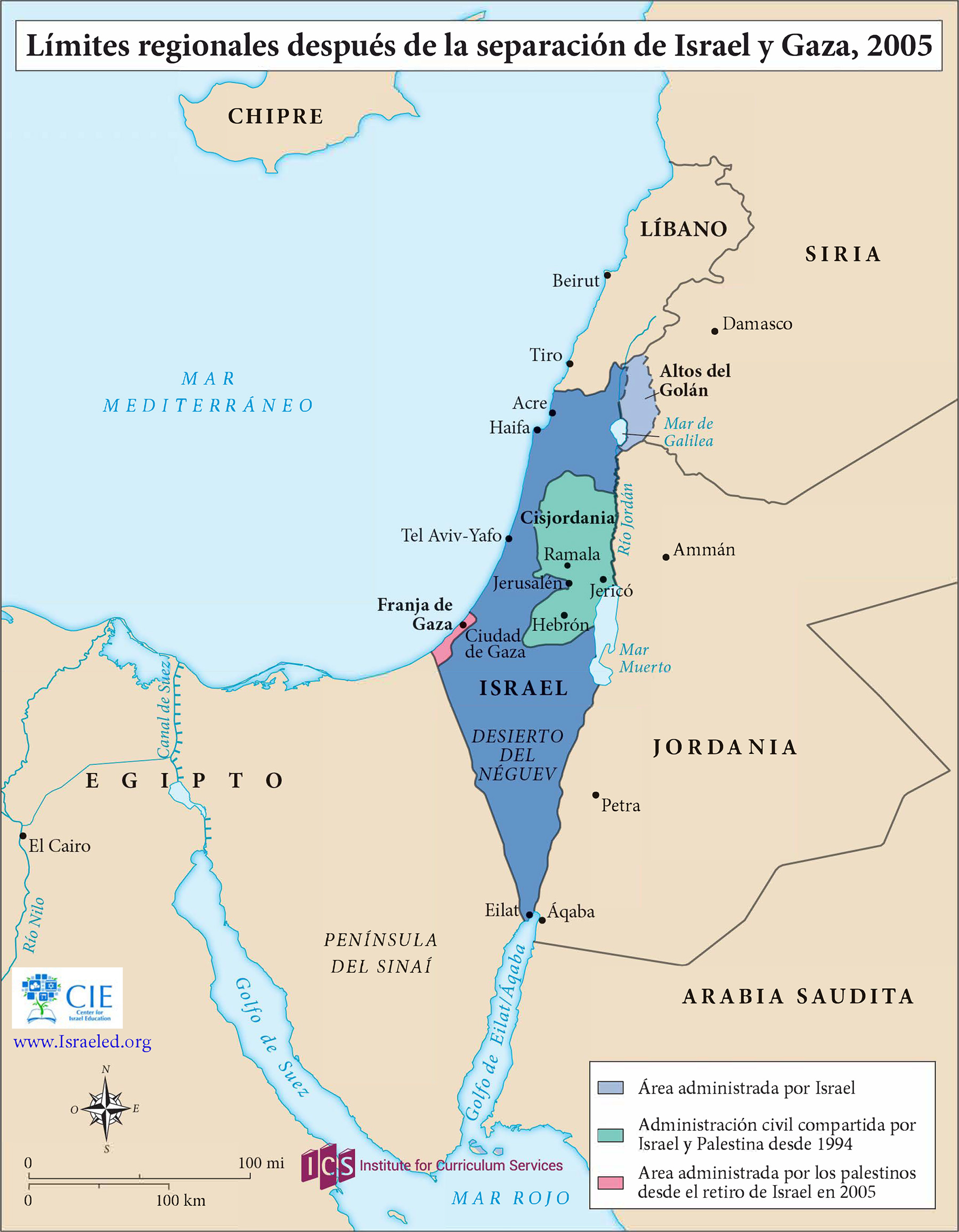
Prime Minister Sharon unilaterally withdrew Israeli military and civilian forces from the Gaza Strip in August 2005. Sharon sought to ensure Israel’s Jewish and democratic essence by getting out of the lives of the Palestinians. Instead Hamas used the territory to kill Jews and degrade Israel morally. Two decades later what would Sharon have said about trusting your neighbor unilaterally?

U.N. Security Council Resolution 1701: Israel-Lebanon Border, 2006

August 11, 2006
This U.N. resolution ends the 33-day Israel-Hezbollah war but fails to bring the Israel-Hezbollah conflict to conclusion. Hezbollah fighters are not prevented from reoccupying the Israeli-Lebanese border areas, leading to repeated cross-border attacks and ultimately intensification after the Hamas attack on Israel in October 2023.

European Parliament Calls for Recognition of Palestinian Statehood in Context of 2 States Side by Side, 2014 CIE+ members only

December 17, 2014
The European Parliament calls for recognition of Palestinian statehood in the context for a negotiated two-state solution for Palestinians and Israelis; it outlines the political and geographic contours for a negotiated outcome.

Sovereign Israeli Rights CIE+ members only

March 3, 2017
Placing Jewish destiny into Jewish hands was why Zionism emerged at the end of the 19th century. Acquiring political power to promote Jewish security is how a Jewish state was created.

President Trump’s Speech Recognizing Jerusalem as the Capital of Israel, 2017 CIE+ members only

December 6, 2017
President Trump’s proclamation to “officially recognize Jerusalem as the capital of Israel” breaks precedent. In doing so, he incurs bipartisan support in the US congress, but a flurry of criticism from analysts, diplomats and foreign leaders. In his remarks, Trump rebukes claims that he disqualified the US as a “reliable mediator” in future Palestinian-Israeli negotiations.

Are They Legal or Not? Pompeo’s Announcement on the Israeli Settlements CIE+ members only

November 24, 2019
The announcement by US Secretary of State Mike Pompeo that "the establishment of Israeli civilian settlements in the West Bank is not, per se, inconsistent with international law" is in line with Israel's official position, and its inherent message - that preoccupation with the question of the legality of the settlements narrows Palestinian flexibility and discourages the achievement of a negotiated resolution to the conflict - is correct. However, the announcement’s practical value is minor, and there are even potential risks and costs for Israel.

What Do Israelis Think About the Golan Heights? CIE+ members only

March 31, 2019
On March 25th 2019, President Trump signed an order for the United States’ official recognition of Israeli sovereignty over the Golan Heights. This article surveys Israeli public opinion regarding this issue, and its reactions to this announcement. Surveys have shown a consistently high level of support among Jewish Israelis for keeping the Golan Heights, and while there is some disagreement - Jews across the political spectrum support President Trump’s decision.

Presidential Proclamation Recognizing Golan Heights as Part of Israel, 2019 CIE+ members only

March 25, 2019
U.S. President Donald Trump recognizes Israeli sovereignty over the Golan Heights more than 37 years after Israel annexed the mountains.

Trump Peace Plan Map Showing Settlements and Solutions, 2020 CIE+ members only

January 28, 2020
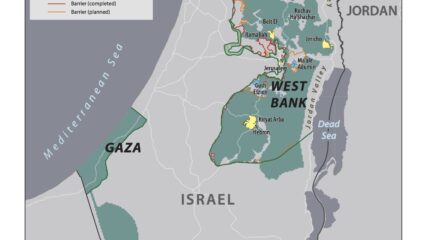
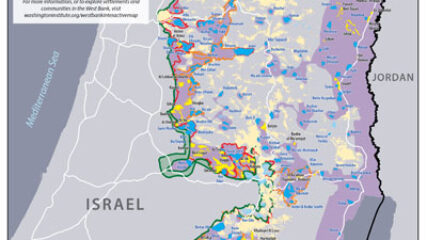
This map shows the State of Palestine as proposed by the Trump plan with features and selected locations from the Washington Institute Settlements and Solutions website.