Mufti Rejects Majority-Arab Palestinian State, 1939CIE+
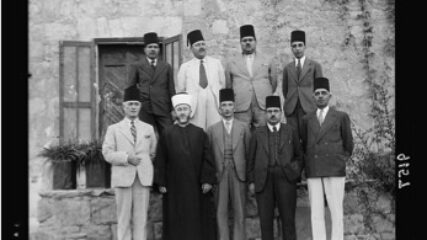
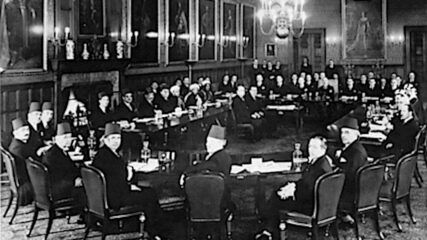
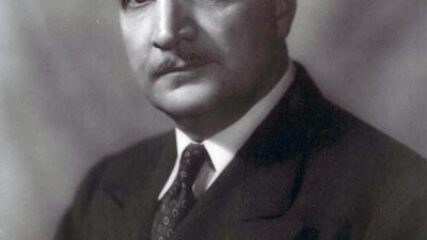
Mufti opposes Arab majority state in ten years contrary to wishes of a dozen key other Palestinian leaders. Mufti wants no Jewish political presence in Palestine whatsoever.
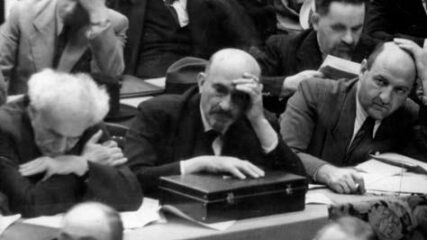
Zionist leaders—David Ben-Gurion, Chaim Weizmann and Eliezer Kaplan—learning of the British intent to limit severely the Jewish national home’s growth. Increasingly, they are also aware of the German government’s hostilities towards European Jewry.
Over four decades, Winston Churchill’s views on Zionism and Jews varied greatly. Without knowing his long held personal beliefs or the policies he adopted while the Jewish state developed, and only reading this speech, one would not know that he was a political opportunist and certainly not a “Gentile Zionist.”
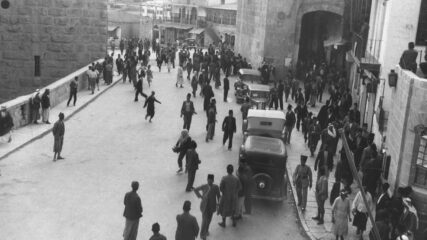
This analysis was undertaken and written at the Jewish Agency in Jerusalem by Jewish observers of the Arab riots and rebellion that took place between April 1936 and early 1939.
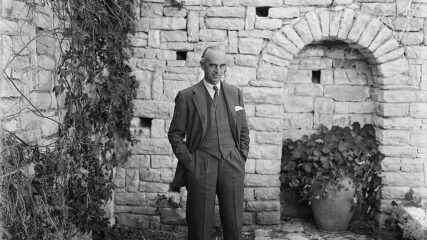
Before ending his term in 1944 as Palestine’s High Commissioner, Sir Harold MacMichael suggested the partition of Palestine, “Jews and Arabs alike would enjoy the possession of their own respective territories, the former protected by international guarantees for their security, and the latter relieved from fear of further encroachments.”
Steady disintegration of Palestinian Arab society from 1945-1949 is detailed by five Arab and non-Arab historians citing local social cleavages, economic impoverishment, fear, indebtedness, and political dysfunction.
From the beginning of the Palestine Mandate in 1920, Arabs in Palestine opposed Zionism; Arab states and leaders joined the opposition to Zionism in the 1930s. After WWII, Arab states were vehement in their opposition to Zionism, though the merits of their arguments were genuine, Arab leaders were more interested in controlling the land of Palestine than in the Palestinians themselves.
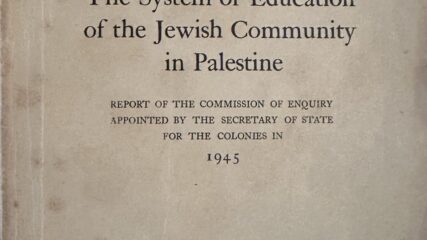
With the British spending local revenue on strategic needs — ports, roads and communication systems — scant funds were devoted to education in the Mandate. Already baked into diasporic habits, the Jewish community raced forward in educating its own in Palestine to inculcate penetrating attachments to Palestine as the Jewish national home. Arab youth literacy ran in place, with separatist education contributing mightily to communal divisions, as occurred simultaneously in the economic and geospatial spheres.
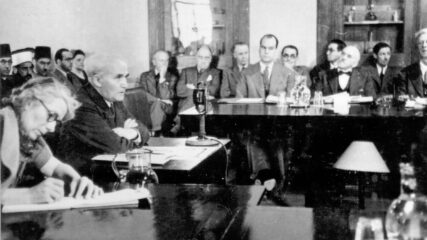
The report of a joint U.S.-British committee on the situation in Palestine and the fate of European Jewish refugees fails to offer solutions the British government will accept but does deliver vital data and insights on the situation between Arabs and Jews in the Land of Israel.
The JNF estimated that up to 250,000 dunams (a dunam was a quarter of an acre) could be purchased if funds were available despite Arab opposition to sales and a steep rise in prices. By then, Jews owned 1.6 million dunams of land, with more than half of Palestine not owned by anyone.
These Foreign Relations of the United States collections provide an ongoing, in-depth view at issues and conflict in the Middle East and the U.S.-Israel relationship from 1947 to 1978.
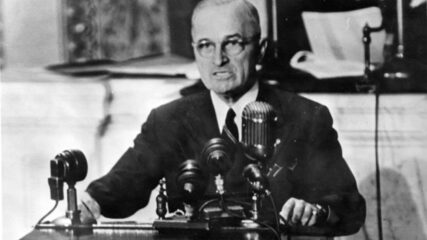
Fearing Communist penetration of the Eastern Mediterranean, Truman at the beginning of the Cold War defines the region as a sphere of US national interest.
Despite an officially anti-Zionist stance, the Soviet Union, hoping to adopt Israel as a Soviet proxy, takes a pragmatic stance and supports the U.N. partition plan of Palestine into separate Arab and Jewish states.
Published by the British Administration of Palestine, this summary emphasizes attempts at impartiality in governing the Mandate. It notes that in 1922, the Jewish community already possessed ‘national’ characteristics, while the Arab community’s composition was sociologically and economically divided and to a large degree impoverished by the war.
Earlier in 1947, Great Britain turned the future of the Palestine Mandate over to the newly established United Nations. Then in August 1947, the UN suggested that establishing an Arab and Jewish state with a federal union would be the best solution for the communal unrest there.
The head of Arab League says Palestine may be lost in a confrontation with the Zionists, but emphatically states that war is the Arab’s only option.
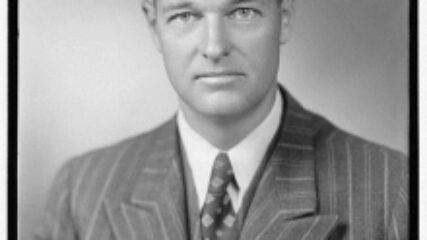
Loy Henderson, Director of the Office of Near Eastern and African Affairs, U.S. State Department, to U.S. Secretary of State George Marshall
Writing two months before the U.S. voted at the United Nations in favor of Palestine’s partition into Arab and Jewish states, Henderson voices profound dislike for Zionism and a Jewish state. He advocates for cultivating positive relations with Muslim and Arab states. He is one of many at the State Department at the time who saw Zionism as contrary to American national interests.
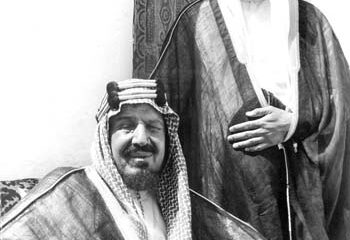
No document better reveals the hostility which most Arab leaders and Arab states had in 1947 for Zionism and for a possible Jewish state. The Saudi King notes “that US support for Zionists in Palestine is an unfriendly act directed against the Arabs.” The King’s views were totally supported by US State Department officials including Loy Henderson and George Kennan who advocated strongly against Truman’s support of a Jewish state.
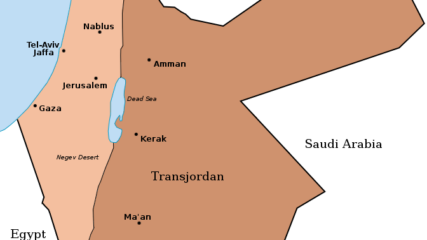
The UN recommended establishing Arab and Jewish states in Palestine, with an international regime for Jerusalem. Zionists were jubilant; Arab states and the Palestinians were indignant and rejected two state solution. No Arab state is established, Israel is in 1948
Irrefutable evidence shows Palestinian Arab collaboration with Zionists during the British Mandate greatly assisted Jewish state building. Cohen further asserts a general absence among Palestinians of a sense of national feeling, with loyalties instead tied to families, villages and other localities. Quite certainly without Palestinian Arab collaboration, Zionists would not have succeeded in building a nucleus for the Jewish state. Arabic newspapers in Palestine and British scrutiny show the constancy of the Arab population’s engagement with the Zionists, and this included Arabs resident inside Palestine.
In March 1948, two months before Israel’s establishment, the US State Department sought to reverse the US vote in favor of partition for the creation of Arab and Jewish states in Palestine.
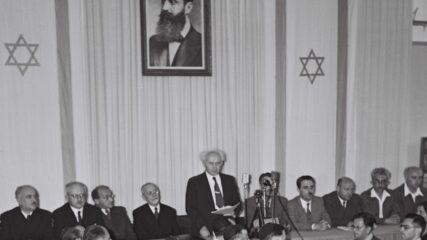
The Declaration recounts the Jewish connection to the Land of Israel, the birth of Zionism and U.N. recognition of a Jewish state’s legitimacy. It also promises that the state will be a democracy for all its citizens.
This 10-page report, written by the British Colonial and Foreign Office, along with the 1937 Peel (Royal) Commission Report, is one of the two best summaries of the British presence in Palestine. Both are substantial in terms of content, detail and analyses; both were written from Britain’s perspective. Read these along with 1931 Census for Palestine to have a fuller grasp of the politics and the populations that shaped Britain’s Palestine’s administration from 1918-1948
.
Subsequent to Israel’s territorial successes from May 1948 forward, U.N. mediator Bernadotte is assassinated after suggesting smaller borders for Israel. He does not mention Palestinian Arabs in his interim report.