Israel State Archives, Six-Day War Files, 1967CIE+
The Israel State Archives’ “The Six Day War Files” includes Cabinet and Security Cabinet meeting transcripts that were classified for 50 years.
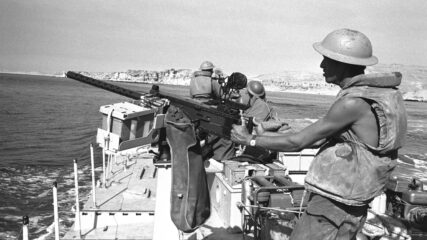
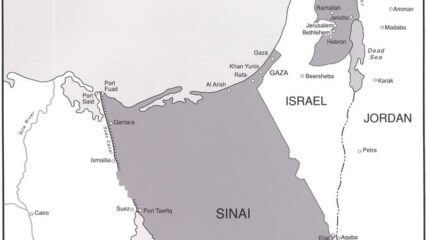
After the Israeli army swept through Sinai in four days, the Egyptian president acknowledges the success of Israel’s pre-emptive strike but blames the U.S. and Britain. Still, he takes responsibility for the Arab defeat and resigns.
Two days after the conclusion of the June 1967 War, Eshkol, recounts the series of events that led to war, the war itself and the immediate aftermath. He reaches out to Arab states for peace seeking a path to peace with her belligerent neighbors. A week later, Israel will quietly messages Cairo and Damascus through the US, hat Israel seeks an end to the conflict. No answers are received.
Following the conclusion of the June 1967 War, the Israeli government sent word to Egypt and Syria seeking peace plan that was intended to jumpstart a peace process with Israel’s belligerent neighbors, Egypt and Syria. The messages were sent through the US, but no response was apparently received.
After the June 1967 war, the Israeli government sent word through the United States to Egypt and Syria seeking to jump-start a peace process. Apparently no response was received.
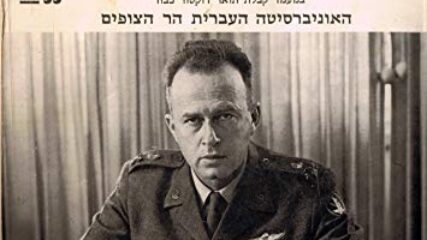
Receiving an honorary doctorate from the Hebrew University after the conclusion of the June 1967 War, Rabin delivers a speech on behalf of Israel’s entire military. He highlights the harsh realities of war yet concentrates on commending the extraordinary efforts of Israel’s armed forces.
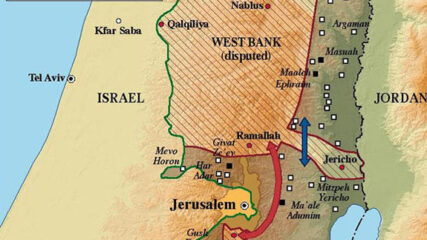
Yigal Allon’s plan for handling the areas captured from Jordan during the just-completed Six-Day War reflects Israel’s previous border vulnerability and seeks a West Bank arrangement that is not a strategic or geographic threat.
Arab states declare “no peace, no negotiation, no recognition” with Israel after their collective defeat in the June 1967 War.
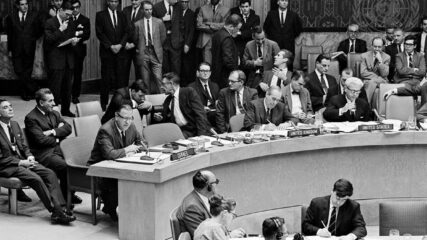
Resolution 242 calls for Israeli withdrawal from unspecified captured territories in return for the right of all states to live in peace. It does not call for a full withdrawal. It is the basis for treaties with Egypt (1979) and Jordan (1994) and for PLO recognition of Israel (1993).
The law authorizes appointed Israeli panels to investigate matters of public concern and state interest. These independent bodies are among Israeli democracy’s most trusted institutions, but there is not mechanism in the law to require their creation.
This volume of the U.S. government’s “Foreign Relations of the United States” series provides foreign policy documents on the Arab-Israeli conflict before, during and after the October 1973 war.
October 6, 2023, was the 50th anniversary of the outbreak of the October 1973 war. Six months prior, Egyptian President Sadat sent his national security adviser to meet with Secretary of State Kissinger to determine whether the U.S. would engage Egypt and Israel in serious mediation for a Sinai agreement, or a series of them, all focused on Israeli withdrawal and gradual acceptance of Israel. Kissinger did not take Sadat’s overtures seriously. Would American action then have avoided the October 1973 war? All informed analyses say no.
In carrying out research in the 1990s for Heroic Diplomacy: Sadat, Kissinger, Carter, Begin and the Quest for Arab-Israeli Peace, Routledge, 1999, I undertook 84 interviews with individuals who participated in the diplomacy.
The October 1973 war broke the logjam over whether diplomacy could unfold to kick off Arab-Israeli negotiations. Sadat used the 1973 war as an engine to harness American horsepower. In that he succeeded because U.S. Secretary of State Kissinger saw Sadat’s leaning to Washington not only as a chance to begin useful negotiations, but also of great significance to weaning the Egyptian president away from Moscow.
The U.S. mediates an agreement separating forces in Sinai after the October 1973 war. Egyptian and Israeli generals will negotiate additional details.
An Israeli commission of inquiry assigns responsibility to military leaders for failures before and during the Yom Kippur War. Prime Minister Meir and Defense Minister Dayan avoid direct blame but soon resign.
On the Golan Heights, Israel agrees to a limited withdrawal, and the United Nations places forces between the Syrian and Israeli armies. With few exceptions this border remains quiet for more than 40 years.
President Ford promises that the US will give “weight” to any future Israeli peace agreement with Syria that Israel should remain in the Golan Heights.
Cairo and Jerusalem agree to additional Sinai withdrawals, demilitarized zones, limited force zones and, importantly, placement of US civilians in Sinai to monitor observance of agreement.
Outlining an Arab-Israeli settlement, the Brookings report calls for Israel to withdraw to “almost the pre-June War borders” and for “extensive Palestinian autonomy.” The Carter administration embraces the report for its foreign policy.
The Romanian president told Menachem Begin that Egyptian President Sadat was interested in negotiations with the Israelis. This secret visit took place three weeks before Israeli Foreign Minister Moshe Dayan met secretly with Egyptian Vice President Hasan Tuhami in Morocco.
Sadat tells the Israeli people and world that he seeks a just and durable peace, which is not a separate peace, between Israel and Egypt. He equates statehood for the Palestinians as their right to return.
Having made human rights a central pillar of his foreign policy, Carter nonetheless seemingly ignored the abuses the Shah of Iran imposed upon his own people. Carter’s unctuous praise for the Shah at this state dinner angered Iranians in general, the clerical regime that replaced the Shah in 1979, resulting in negative consequences for Carter as he went into the 1980 presidential election.
As part of a joint statement, President Carter makes promises regarding US’ role in coming Political-Military Committee Talks in Cairo and Jerusalem. Likewise presenting a four-point formula for resolving the conflict, these statements contribute to US-Israeli tensions.