President Ford’s Promises About the Golan Heights, 1975 CIE+ members only
President Ford promises that the US will give “weight” to any future Israeli peace agreement with Syria that Israel should remain in the Golan Heights.

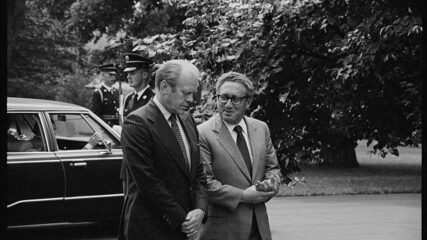
President Ford promises that the US will give “weight” to any future Israeli peace agreement with Syria that Israel should remain in the Golan Heights.

Cairo and Jerusalem agree to additional Sinai withdrawals, demilitarized zones, limited force zones and, importantly, placement of US civilians in Sinai to monitor observance of agreement.

Outlining an Arab-Israeli settlement, the Brookings report calls for Israel to withdraw to “almost the pre-June War borders” and for “extensive Palestinian autonomy.” The Carter administration embraces the report for its foreign policy.
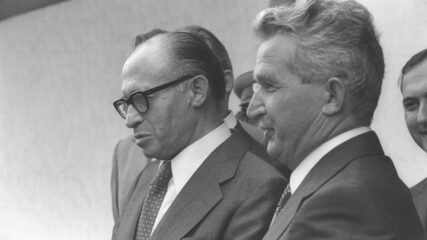
The Romanian president told Menachem Begin that Egyptian President Sadat was interested in negotiations with the Israelis. This secret visit took place three weeks before Israeli Foreign Minister Moshe Dayan met secretly with Egyptian Vice President Hasan Tuhami in Morocco.
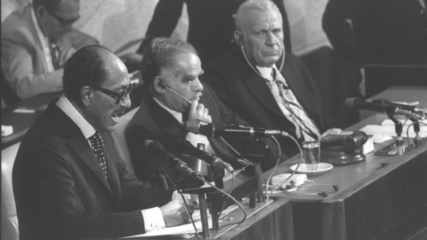
Sadat tells the Israeli people and world that he seeks a just and durable peace, which is not a separate peace, between Israel and Egypt. He equates statehood for the Palestinians as their right to return.
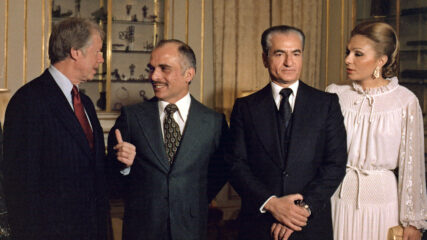
Having made human rights a central pillar of his foreign policy, Carter nonetheless seemingly ignored the abuses the Shah of Iran imposed upon his own people. Carter’s unctuous praise for the Shah at this state dinner angered Iranians in general, the clerical regime that replaced the Shah in 1979, resulting in negative consequences for Carter as he went into the 1980 presidential election.
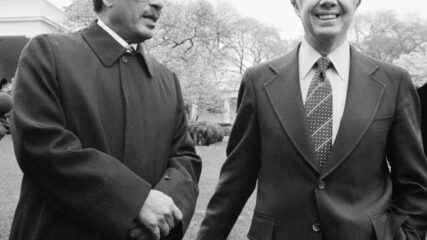
As part of a joint statement, President Carter makes promises regarding US’ role in coming Political-Military Committee Talks in Cairo and Jerusalem. Likewise presenting a four-point formula for resolving the conflict, these statements contribute to US-Israeli tensions.
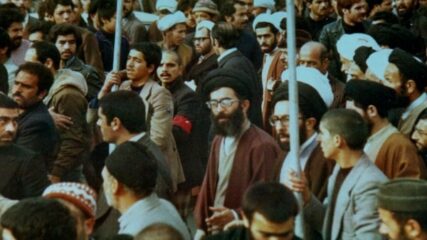
A U.S. House Intelligence subcommittee issued a scathing report on the failures of the intelligence community and policymakers as the Shah’s regime was collapsing in Iran.
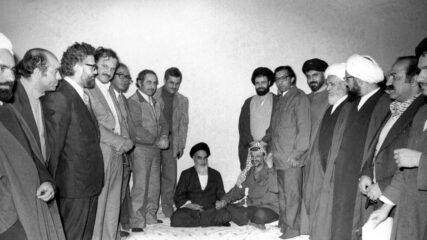
The CIA report details Iran’s aggressive foreign policy of promoting Islam as a radical platform for governance, noting also the new regime’s vigorous anti-U.S. outlook. Viewing Iran exclusively as an asset in the Cold War and not comprehending the potential power of political Islam developing with Iran proved to be one of the greatest oversights in U.S. Middle East foreign policy in the last 100 years.
The United States abstains on a Security Council resolution declaring Israel’s Basic Law on Jerusalem to be in violation of international law.
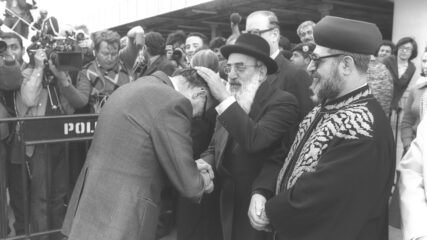
Prime Minister Menachem Begin argues for the return of Rafah to Egypt; the greater purpose is implementation of the Egyptian-Israeli Treaty, which also meant Israel”s withdrawal from settlements in Sinai near Rafah. Egypt in treaty negotiations with Israel, did not want to have the Gaza Strip again under their administration as they had between 1949 until after the June 1967 War

It calls for building a mutual security relationship and for enhancing strategic cooperation to
deter Soviet threats to the region. Establishment of a consultation framework is a key to the agreement.

The United States endorses the application of U.N. Security Council Resolution 242 to the West Bank and Gaza, seeks Palestinian control over land and resources, and wants the territories to be affiliated with Jordan.
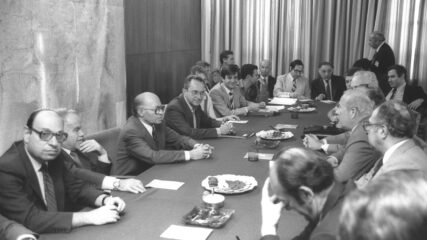
Israel and Lebanon agreed to a treaty in 1983 through U.S. mediation, only for Syria’s dominance and Lebanon’s dysfunction to block ratification.
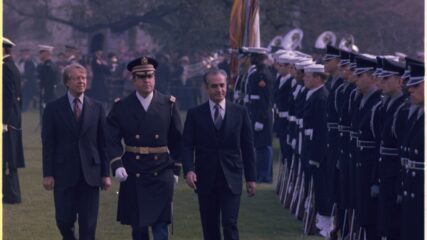
Jimmy Carter, “The U.S.-Iran Relationship, the Shah’s Downfall, Khomeyni’s Rise to Power, and the Hostage Crisis,” an Emory class presentation, Atlanta, March 24, 1985, recorded and transcribed with permission.

Since its inception in 1988, Hamas has been crystal clear about its total opposition to Zionism and Israel. It opposes any kind of negotiations or agreements that recognize Israel as a reality, and its more extreme spokesmen regularly incite or celebrate the killing of Jews.

As a militant Islamic Palestinian national organization, Hamas believes that Israel is illegitimate and should be destroyed through Jihad. Hamas opposes all recognition and negotiation with Israel and opposes PLO/PA leaders who have negotiated and collaborated with Israel from time to time. The Hamas-PA competition severely fragments the Palestinian political community.
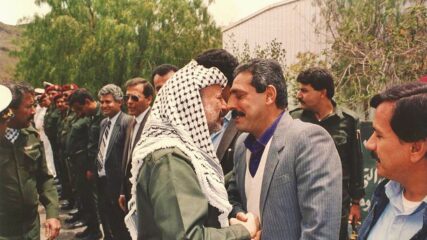
PLO Chairman Yasser Arafat issues a declaration with five American Jewish leaders in an effort to meet U.S. conditions for dialogue and thus strengthen his position as the leader of the Palestinian national movement.
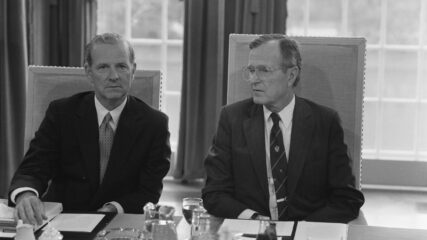
Secretary of State James A. Baker III brings a realistic and prescient vision of Arab-Israeli peace negotiations and U.S. mediation to AIPAC early in the George H.W. Bush presidency.
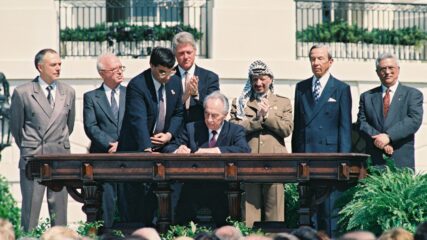
In September 2023, thirty years after the historic signing of the Oslo Accords, there is occasion to review Prime Minister Rabin’s understanding of them. I assembled this collection years ago from Daily Reports- Near East and South Asia, 1993-1995. Two short items about Rabin’s views are also found or linked here. Rabin provided a summary of his views of the Accords in a Knesset speech in October 5, 1995. Some of Rabin’s reasons for signing the Accords are also provided in Yehuda Avner’s The Prime Ministers.
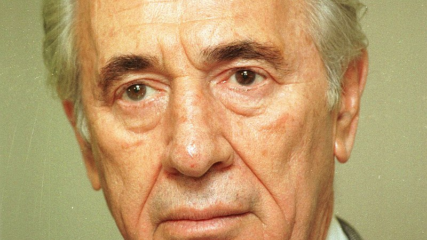
Foreign Minister Shimon Peres supports the Oslo Accords, opposes a Palestinian state and rejects Israel’s role in the Gaza Strip as the enforcer of security — all views that have continuing relevance for Gaza.
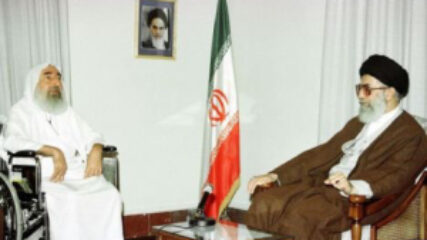
Days before his assassination, Yitzhak Rabin explains that he accepted the Oslo Accords and shook Yasser Arafat’s hand because the PLO represented the last hope for a secular Palestinian nationalism amid the rise of Hamas.
The Israeli investigation concludes that Yigal Amir is Rabin’s assassin. The Commission does not assess the impact on the assassin of the vicious language directed at Rabin for signing the Oslo Accords.
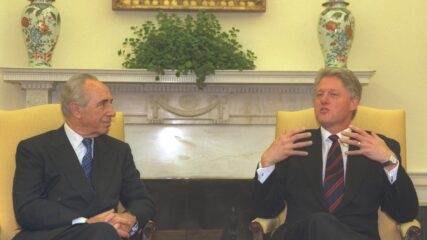
President Clinton and Prime Minister Peres agree to deepen cooperation between their countries through regular consultation in all economic, political, military spheres.
