Jerusalem U.S.-Israel Strategic Partnership Joint Declaration, 2022CIE+
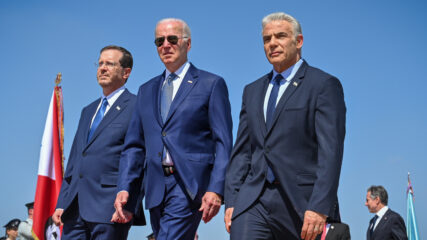
On President Joe Biden’s trip to Israel, he and Prime Minister Yair Lapid affirmed the long-term U.S.-Israel strategic relationship.
Citing deep disaffection among elements of Israeli military reserve units and expressing those concerns to Prime Minister Netanyahu privately, Defense Minister Gallant makes his opinion public, causing Netanyahu to fire him, resulting in hundreds of thousand of Israelis in the streets. Two days after Gallant’s speech, Netanyahu calls for a pause in pushing forward the judicial overhaul legislation.
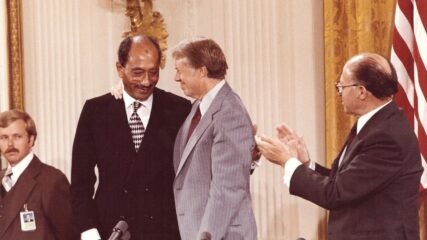
The Camp David accords culminated after thirteen days of intense negotiations between Israeli, Egyptian, and American delegations. Egyptian and Israeli leaders met with President Carter where after difficult negotiations they signed two accords, one an outline for an Egyptian-Israeli Treaty and one for Palestinian self-rule. The negotiations continued for another six months until the Egyptian-Treaty was signed in March 1979, after considerable bad feeling was tossed back and forth between Israeli and American negotiators.
The Israel State Archives has created a 16-chapter, document-based narrative of the October 1973 war, the events leading to it, and its aftermath. The landing page includes links to other documentary sources for the war….
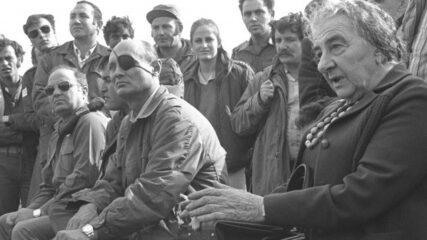
Prime Minister Golda Meir in her address to the Knesset since the beginning of the October War, recounts the war’s status on the Golan Heights and in the Suez Canal area. She reveals that an Israeli task force had crossed the Suez Canal and was fighting on the west bank of that waterway.
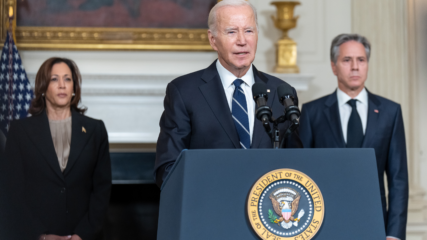
After the horrific Hamas attack on Israel, President Joe Biden unequivocally categorizes Hamas’ brutality as “pure, unadulterated evil” and reiterates that the U.S. will “stand with Israel.”
Former US President Jimmy Carter embraced Hamas as a legitimate voice of the Palestinian people. His motivations possibly stretched from intentional to misguided to malevolent. Hamas leaders who were engaged in inter-Palestinian struggles remained pleased with the recognition he gave them. American officials and Israelis were keenly perturbed by the courtship he gave them.
These remarks by public figures, writers, scholars, authors and former diplomats are a partial list covering 2003 to 2018. No Arab or Israeli sources are cited.
President Biden reaffirmed the iron-clad US commitment to Israel’s security and to eradicate the murderous nihilism of Hamas. He advocated for two states for two peoples; he committed his administration to facilitate that outcome.
Israeli Prime minister provides minimal detail for the Gaza Strip’s post war civilian restructuring, focusing entirely on immediate and long term Israeli security needs with no imposed Palestinian state nor international negotiating intervention acceptable.
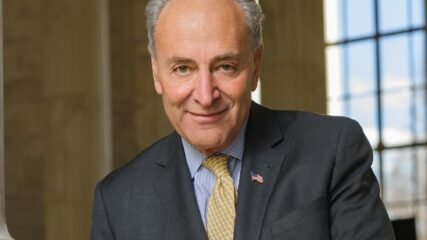
In presenting four obstacles in the way of ending the Hamas-Israel war, Sen. Chuck Schumer omits six basic obstacles that remain in the negotiating pathway to end the Palestinian-Israeli conflict.
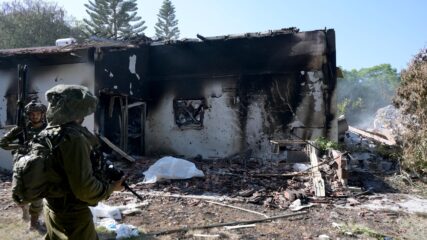
The inquiry team determined that the IDF failed in its mission to protect the residents of Kibbutz Be’eri; the bravery of the Be’eri residents and the members of the kibbutz’s civilian rapid response team are commended for preventing the attack from spreading. In the October 7, 2024 Hamas attack on the kibbutz, 101 civilians were killed, and 30 hostages from Kibbutz Be’eri and two additional hostages were abducted and taken into Gaza.
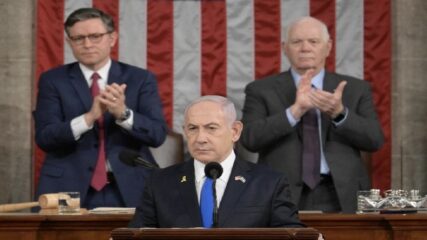
In a 52 minute speech, Netanyahu explained Israel’s absolute need for total victory in the Gaza war because Hamas and Iran were both enemies of the United States and Israel. With bi-partisan emphasis, he thanked Presidents Biden and Trump for their unwavering current and past support. Dozens of congressional members did not attend his speech, noting disagreements with the Prime Minister’s policies.
Netanyahu’s speech reflected on the needed elimination of Hezbollah as an enemy of Israel, a powerful militia fighting in Lebanon against Israel for four decades. On the day of Netanyahu’s speech, the Israeli Air Force killed Hassan Nasrallah, the Hezbollah leader in his Beirut offices along with other Hezbollah officials.
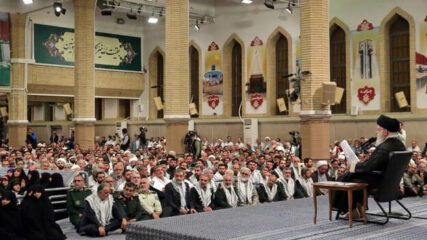
Iranian Supreme Leader Ayatollah Ali Khamenei delivers a synopsis of Iran’s hatred of Israel and the United States, provides deep insight into his unwavering commitment to destroying Israel, and mourns for slain Hezbollah leader Hassan Nasrallah.
The details of the three-stage Hamas-Israel cease-fire that went into effect January 19, 2025, along with unanswered questions, insightful analyses and the relevant U.N. resolution from June 2024.
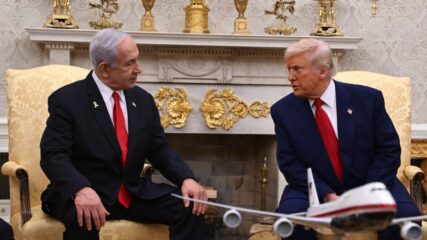
Amid a ceasefire in Gaza, Israeli Prime Minister Benjamin Netanyahu becomes the first foreign leader to visit the White House during the second Trump administration, and President Donald Trump uses the occasion to declare his intention to take over and redevelop Gaza.
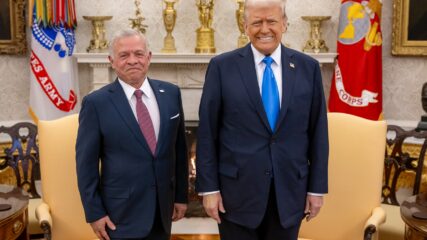
Abdullah II remains studiously noncommittal in support of Donald Trump’s idea for the U.S. to take over the Gaza Strip, rebuild it and relocate its Palestinian residents to other countries. With Jordan’s strong economic, strategic and defense ties to Washington, no one expected the king to be effusive for Trump’s suggestions for Gaza’s future. Jordan lacks the economic and demographic absorptive capacities and the political interest to take another wave of Palestinians into its territory.
Meeting in Cairo in early March 2025, the Arab League of States endorsed an Egyptian plan for the reconstruction of Gaza that was, above all else, a cleverly worded statement. The contents did not break new diplomatic ground and made no mention of Hamas or its political future. As a consensus document, it aimed at satisfying as many Arab interests and foreign ears as possible.
Benjamin Netanyahu makes his second White House visit of Donald Trump’s second term, but the discussion this time expands beyond Gaza and regional peace to include bilateral trade after a Trump announcement of new tariffs on Israeli goods.
May 13, 2025 President Donald Trump’s address laying out a vision for Middle East peace and prosperity and ending sanctions on Syria at the 2025 Saudi-U.S. Investment Forum in Riyadh, Saudi Arabia, https://www.youtube.com/live/wj1QOz3iuCE?si=qQRR2GcqZhtt1F5o Well, thank…
Visiting Qatar after Saudi Arabia and before the United Arab Emirates in a Middle East trip that excluded Israel, President Donald Trump praises and pledges to defend Qatar and indicates a deal on Iran’s nuclear program is close.
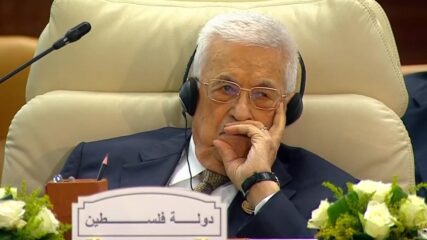
PA President Abbas makes requests and gives promises to the French president for the establishment of a Palestinian
state. His commitments were not negotiated with Israel. They are meant to seek support for the end of the Gaza war,
the affirmation of Abbas and the PA as the sole Palestinian political address, and international support for a Palestinian state.
As in the past, the PA and Abbas seek international support to pressure Israel into undesirable political actions.
Speaking in English, Prime Minister Benjamin Netanyahu announces Israel’s airstrikes on Iran, targeting nuclear enrichment, nuclear weaponization, nuclear scientists, the Natanz nuclear facility and ballistic missile infrastructure. Netanyahu says the attack is for the world, not just for Israel.