Transcript of Secret Talks Between Egyptian National Security Adviser Hafez Ismail and U.S. National Security Adviser Henry Kissinger, 1973

Transcript of Secret Talks Between Egyptian National Security Adviser Hafez Ismail and U.S. National Security Adviser Henry Kissinger, 1973CIE+

October 6, 2023, was the 50th anniversary of the outbreak of the October 1973 war. Six months prior, Egyptian President Sadat sent his national security adviser to meet with Secretary of State Kissinger to determine whether the U.S. would engage Egypt and Israel in serious mediation for a Sinai agreement, or a series of them, all focused on Israeli withdrawal and gradual acceptance of Israel. Kissinger did not take Sadat’s overtures seriously. Would American action then have avoided the October 1973 war? All informed analyses say no.

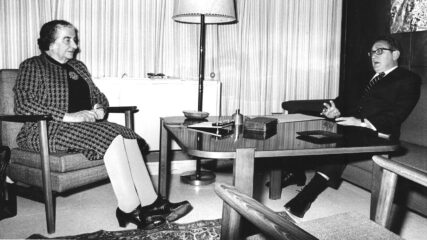
Documents and Sources|February 25-26, 1973
U.N. Security Council Resolution 338 on a Ceasefire and Direct Negotiations After October 1973 War

U.N. Security Council Resolution 338 on a Ceasefire and Direct Negotiations After October 1973 WarCIE+

The October 1973 war broke the logjam over whether diplomacy could unfold to kick off Arab-Israeli negotiations. Sadat used the 1973 war as an engine to harness American horsepower. In that he succeeded because U.S. Secretary of State Kissinger saw Sadat’s leaning to Washington not only as a chance to begin useful negotiations, but also of great significance to weaning the Egyptian president away from Moscow.

Documents and Sources|October 22, 1973
Memorandum of Conversation Between Syrian President Hafez al-Assad and U.S. Secretary of State Henry Kissinger,  December 1973

Memorandum of Conversation Between Syrian President Hafez al-Assad and U.S. Secretary of State Henry Kissinger, December 1973CIE+

U.S. Secretary of State Kissinger failed to persuade Syrian President Assad to attend the December 1973 Geneva Middle East Peace Conference. Assad saw the proposed conference, which it was, a ruse to cover up a “pre-cooked” Israeli-Egyptian arrangement. Assad wanted no part of implicitly supporting any agreement where Israel’s legitimacy might be enhanced.

Documents and Sources|December 15, 1973
Memorandum of Conversation: U.S. Secretary of State Vance in Israel With Israeli Foreign Minister Yigal Allon, 1977

Memorandum of Conversation: U.S. Secretary of State Vance in Israel With Israeli Foreign Minister Yigal Allon, 1977CIE+

With candor, Israeli Foreign Minister Allon tells Secretary of State Vance that the Israeli Labor government would under no circumstances negotiate with the PLO until it gave up terrorism, recognized UNSC 242, and unequivocally accepted Israel’s right to exist. Only in 1993, did the PLO accept these premises, Sixteen years had then passed while Israel built settlements virtually without restraint in the territories.

Documents and Sources|February 16, 1977
Memorandum of Conversation Between President Carter and Prime Minister Rabin, March 1977

Memorandum of Conversation Between President Carter and Prime Minister Rabin, March 1977CIE+

This first Carter-Rabin meeting was unpleasant at best. Rabin would not turn over Israel’s negotiating prerogatives to the US; Carter publicly told Israel that it might have to return to the June 1967 borders. Carter said Rabin was like a “dead fish.” and Rabin said that he felt ‘cornered by Carter.” His administration was interested in carving out the West Bank for Palestinian political expression even before the PLO was prepared to accept Israeli legitimacy. And Israel was not prepared to withdraw from the West Bank, a position also held by Menachem Begin.

Documents and Sources|March 8, 1977
Minutes of a Policy Review Committee Meeting About the Middle East, 1977

Minutes of a Policy Review Committee Meeting About the Middle East, 1977CIE+

When the Carter Administration entered office in 1977, an early foreign policy priority was to kick-start Middle East negotiations. In this Policy Review Committee Meeting, Carter’s staff proposed a negotiating outcome that would pass through a conference, including the withdrawal of Israel’s forces to almost the 1967 borders, bringing the PLO into talks as Palestinian representatives, all the while seeking to uphold Israel’s security requirements.

Documents and Sources|April 19, 1977
Memorandum of Conversation Between President Carter and President Assad, 1977

Memorandum of Conversation Between President Carter and President Assad, 1977CIE+

This meeting was the only one between U.S. President Carter and Syrian President Assad during the Carter administration. Carter wanted to learn Assad’s requirements for an agreement with Israel. Assad doubted that the Saudis would join this process. In the end, Assad made it clear that he was not rushing into an agreement with Israel, even if asked by the United States. Carter acknowledged knowing little about the Palestinian refugee issue and said the U.S. was committed to the security of Israel.

Israeli Prime Minister-Elect Menachem Begin on ABC News’ “Issues and Answers,” May 1977: Rebukes Carter, Insists Israel Will Not Withdraw From West Bank

Israeli Prime Minister-Elect Menachem Begin on ABC News’ “Issues and Answers,” May 1977: Rebukes Carter, Insists Israel Will Not Withdraw From West BankCIE+

Prime Minister-elect Begin rebukes President Carter’s assertion that Israel will need to withdraw from almost all the lands Israel secured in the June 1967 war, especially Jerusalem and the West Bank. Begin is adamant opposed to dealing with the PLO. Begin refuses to relinquish Israeli decision-making to US preferences or dictates. These fundamental policy disagreements will remain unresolved between Begin and Carter for the duration of Carter’s presidency, and years after.