HMG White Paper: Statement of Policy, 1939

HMG White Paper: Statement of Policy, 1939

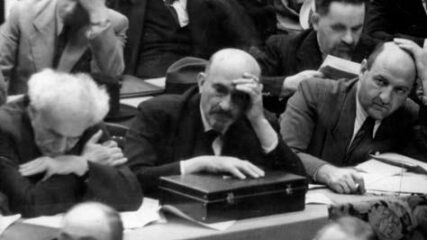
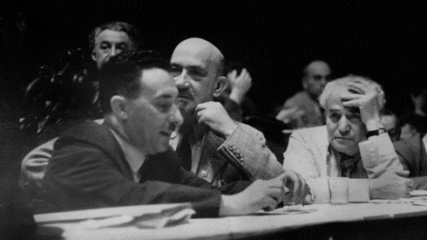
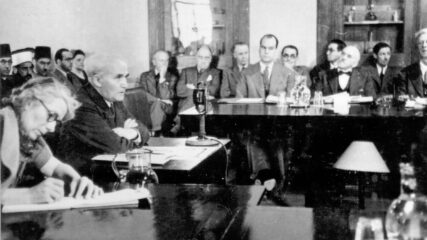
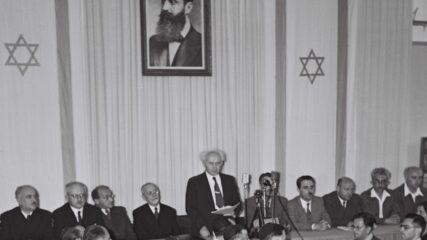
Zionist leaders—David Ben-Gurion, Chaim Weizmann and Eliezer Kaplan—learning of the British intent to limit severely the Jewish national home’s growth. Increasingly, they are also aware of the German government’s hostilities towards European Jewry.

Sir Harold MacMichael, High Commissioner of Palestine, to Oliver Stanley, Colonial Secretary, 1944

Sir Harold MacMichael, High Commissioner of Palestine, to Oliver Stanley, Colonial Secretary, 1944 CIE+ members only

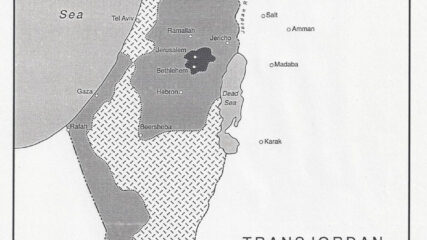
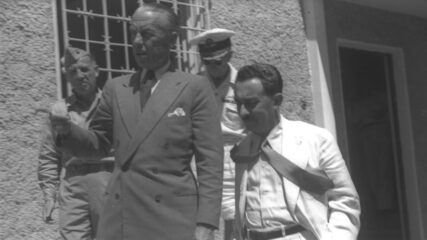
Before ending his term in 1944 as Palestine’s High Commissioner, Sir Harold MacMichael suggested the partition of Palestine, “Jews and Arabs alike would enjoy the possession of their own respective territories, the former protected by international guarantees for their security, and the latter relieved from fear of further encroachments.”

Documents and Sources|July 17, 1944
The Arab Case for Palestine, 1946

The Arab Case for Palestine, 1946 CIE+ members only

From the beginning of the Palestine Mandate in 1920, Arabs in Palestine opposed Zionism; Arab states and leaders joined the opposition to Zionism in the 1930s. After WWII, Arab states were vehement in their opposition to Zionism, though the merits of their arguments were genuine, Arab leaders were more interested in controlling the land of Palestine than in the Palestinians themselves.

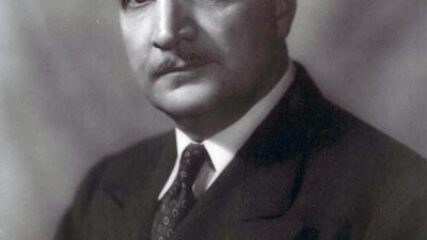
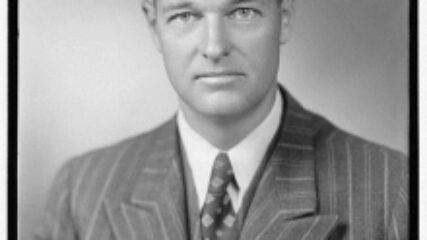
Loy Henderson, State Department Director of Near Eastern and African Affairs, Vehemently Opposes Jewish State in Memo to Secretary of State George Marshall, 1947

Loy Henderson, State Department Director of Near Eastern and African Affairs, Vehemently Opposes Jewish State in Memo to Secretary of State George Marshall, 1947 CIE+ members only

Loy Henderson, Director of the Office of Near Eastern and African Affairs, U.S. State Department, to U.S. Secretary of State George Marshall
Writing two months before the U.S. voted at the United Nations in favor of Palestine’s partition into Arab and Jewish states, Henderson voices profound dislike for Zionism and a Jewish state. He advocates for cultivating positive relations with Muslim and Arab states. He is one of many at the State Department at the time who saw Zionism as contrary to American national interests.

Documents and Sources|September 22, 1947
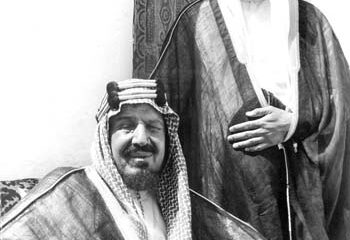
Saudi King Abdul Aziz Ibn Saud to President Truman, 1947

Saudi King Abdul Aziz Ibn Saud to President Truman, 1947

No document better reveals the hostility which most Arab leaders and Arab states had in 1947 for Zionism and for a possible Jewish state. The Saudi King notes “that US support for Zionists in Palestine is an unfriendly act directed against the Arabs.” The King’s views were totally supported by US State Department officials including Loy Henderson and George Kennan who advocated strongly against Truman’s support of a Jewish state.

Hillel Cohen, “Army of Shadows,” Showing Regular Palestinian Arab Collaboration With Zionists Through 1947

Hillel Cohen, “Army of Shadows,” Showing Regular Palestinian Arab Collaboration With Zionists Through 1947 CIE+ members only

Irrefutable evidence shows Palestinian Arab collaboration with Zionists during the British Mandate greatly assisted Jewish state building. Cohen further asserts a general absence among Palestinians of a sense of national feeling, with loyalties instead tied to families, villages and other localities. Quite certainly without Palestinian Arab collaboration, Zionists would not have succeeded in building a nucleus for the Jewish state. Arabic newspapers in Palestine and British scrutiny show the constancy of the Arab population’s engagement with the Zionists, and this included Arabs resident inside Palestine.