Explainer: What Is Zionism?
From biblical times to the present, Jews and Judaism have had an unbroken connection to Zion, a reference to Eretz Yisrael, the Land of Israel, derived from the hill at the heart of Jerusalem. Zionism…


From biblical times to the present, Jews and Judaism have had an unbroken connection to Zion, a reference to Eretz Yisrael, the Land of Israel, derived from the hill at the heart of Jerusalem. Zionism…

Sung or recited on Passover, the original Dayenu is reflective appreciation of 14 significant events specifically wrapped around the exodus from Egypt. The Dayenu presented here chronicles Jewish history from Exodus to the present day. This history can be read individually or responsively. Different moments and personalities in Jewish history could have been included. Hebrew and Spanish versions of Dayenu are available.
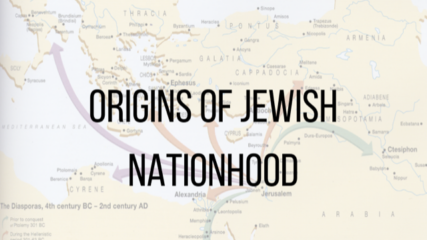
Dr. Rabbi Michael Berger analyzes the history of Judaism and the origins of Jewish nationhood — from the initial settling of Eretz Yisrael to the aftermath of the Bar-Kochba Revolt — at the 2018 CIE Educator Enrichment Workshop.

The text of the 1906 Jewish Encyclopedia entry on Zionism from its biblical origins to the death of Theodor Herzl in 1904.
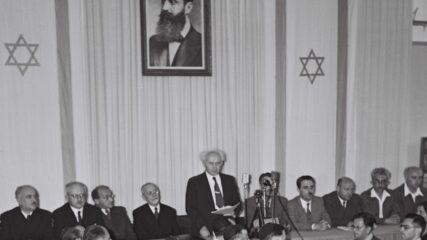
The Declaration recounts the Jewish connection to the Land of Israel, the birth of Zionism and U.N. recognition of a Jewish state’s legitimacy. It also promises that the state will be a democracy for all its citizens.

G-d promises Jews a great nation in return for observance of belief and practice of laws.

From the biblical covenants, Jews bound themselves to the belief in one G-d, an unbreakable tie to the Land of Israel. From its inception, Jewish identity was wrapped around the mutual commitments between G-d and the people. Judaism became the foundation for Christianity and Islam.

From 1898 to 1948, Zionism evolved from an idea to a concrete reality: the actual establishment of the Jewish state, Israel. Slowly, a few immigrating Jews created facts by linking people to the land. For half a century, fortuity and fortitude made the Zionist undertaking a reality. They exhibited pragmatism and gradually constructed a nucleus for a state. Through perseverance Zionists empowered themselves.
By Scott Abramson and Ken Stein, April 4, 2025 The Exile and the Homeland It may be said that the Jewish people’s entire cosmology (the origin and nature of the universe) from their birth as…

In just under an hour, Herzog emphasized the special US-Israeli relationship, citing common values between the two democracies, noting, “when the US is strong, Israel is stronger. And when Israel is strong, the US is more secure.” He cited Israel’s domestic and foreign policy challenges in its 75th year.

In a 40-minute video recorded June 14, 2021, Dr. Yaron Ayalon of the College of Charleston and Rich Walter of the Jewish Federation of Greater Atlanta delve into the history and the political and cultural…

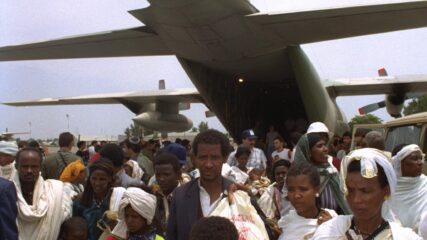
The Israel State Archives has collected government documents on the history of Israel’s interactions with the Beta Israel through the first operations to facilitate their emigration from Ethiopia in the 1980s.
This report submitted to the United Nations at the end of 1951 notes that “some one million Jews have become the victims of accelerated antiSemitism” since 1948 in the Muslim countries of the Arab League and North Africa, “communities which have existed for thousands of years.” The report analyzes the situation for Jews overall and explains restrictions and oppressive measures country by country.
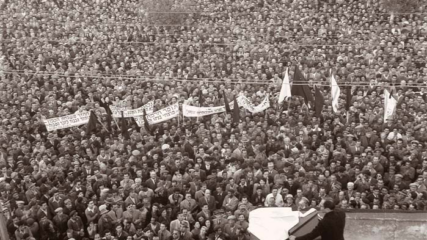
In an impassioned Knesset speech, Menachem Begin staunchly opposes accepting $1.5 billion in German reparations for Jewish deaths during WWII. No price, he believes, can be put on the lives lost.

The most recent of Israel’s Basic Laws, the statutes enacted in place of a formal constitution, controversially asserts the Jewish nature of the state, even though almost a quarter of its citizens are not Jewish.
Covering the foundations of Judaism and the history of the Jewish people, the unit starts with the ‘covenants’ and ends in 1897. It traces the Jewish connection to the land of Israel, in the land and in exile. It explains how and why Jews retained their traditions in the face of enormous challenges. It concludes with the birth of Zionism as one answer to Jewish insecurity.
Travel back in time to August 29, 1897, when the First Zionist Congress was held in Basel, Switzerland. Experience the meeting from the inside, participating as the delegates from seventeen different nations! This guide includes an activity guide, a full list of all 200+ participants, biographies of 25 of the delegates and extensive background readings, including full translations of some of the speeches given at the congress.
Explaining Hebrew language beyond religious practice and making it a spoken language of the street gave rise to a rich literary renaissance. In this curriculum, Hebrew literature excerpts demonstrate how the Hebrew language became a core element in Jewish state identity.
Join special guest curriculum contributor Dr. Yaron Ayalon and the CIE Curriculum team as they take you and your students on a riveting adventure through the lives of the Sephardi and Mizrahi Jews of Southern Europe and the Middle East. Explore the differences between Sephardi and Ashkenazi cultures, and discover the great wealth of knowledge and spirituality of the Sephardi Jews. Utilizing maps, photographs, primary documents, an extensive timeline and even a recipe for a traditional Sephardi dish, this book is the perfect introduction to Sephardi Jewry for the individual learner or in a classroom setting.
The June 1967 Middle East War transformed Israeli, Jewish, and Middle Eastern History. In the span of six weeks, in May and June 1967, Israel, its neighbors and the international community were engulfed with varying emotions including admonition, arrogance, audacity, astonishment, bravado, boasting, daring, euphoria, fears of annihilation, hesitation, humiliation, indecision, miscalculation, pride, procrastination, relief, resignation, self-doubt, self-importance, and tension.
Capturing these moments as well as the prelude and aftermath of the War dominate the contents of The June 1967 War: How It Changed Jewish, Israeli and Middle Eastern History in both the Leader’s Guide and Participant Booklet.
