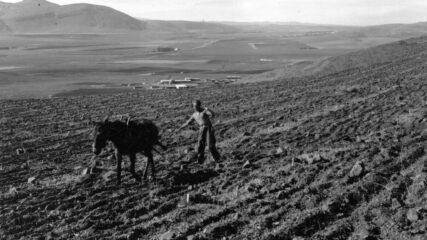
Palestinian Arab Grievances Against the British for Supporting the Jewish National Home, 1936 

Palestinian Arab Grievances Against the British for Supporting the Jewish National Home, 1936 CIE+ members only

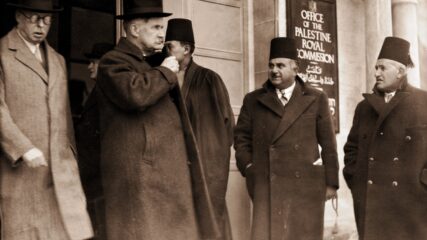
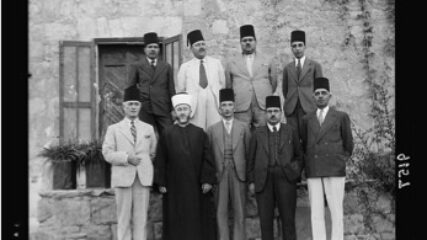
Five Arab political parties sent a memorandum of protest to the British asking for a halt to Jewish immigration, a stoppage in Arab land sales to Jews,and a measure of self-determination. The British did not change their policies in these three areas. In 1939, they did severely limit Jewish land purchases and severely curtailed Jewish immigration.

Documents and Sources|January 10, 1936
David Horowitz, Study on Economic and Social Transformation of Palestine, Jewish Agency for Palestine, 1937

David Horowitz, Study on Economic and Social Transformation of Palestine, Jewish Agency for Palestine, 1937CIE+ members only

This four-page assessment notes multiple Jewish contributions to Palestine’s development: expansion of health care, advancement of agricultural methods, government revenue, industrial growth and Jewish building expansion. It notes that the Jewish economy has attracted Arab immigration to Palestine for jobs and the mushrooming of the Jewish education system from Jewish sources. Without saying so directly, its contents tout Jewish state building.

Secret Intelligence on Arab Leaders Meeting in Damascus, 1938

Secret Intelligence on Arab Leaders Meeting in Damascus, 1938

This document was secured at the Central Zionist Archives in Jerusalem. Less than a year before Hitler invaded Poland, Arab leaders with an interest in Palestine are starkly disappointed that the the German government did not go to war against the Zionists in Palestine. The same leaders give the Zionist national builders high marks for their perseverance against terrorist bands in the Palestinian countryside. They worry that unless Arab states come to the Palestinians’ assistance, Palestine will be lost to the Zionists. A remarkable assessment for Palestinian Arab leaders and their supporters.

Documents and Sources|September 30, 1938
British Government: Policy Statement/Advice Against Partition, 1938

British Government: Policy Statement/Advice Against Partition, 1938CIE+ members only

Pressure from Arab leaders in states surrounding Palestine, growing instability in the eastern Mediterranean, and a firm opposition voiced by the British High Commissioner in Egypt, Miles Lampson, caused the British to withdraw the idea of resolving the Arab-Zionist conflict with a two-state solution. Instead, heavy restrictions were imposed in 1939 on the growth of the Jewish National home. Coincidently this policy statement is issued, two days after Nazi Germany attacks Jewish, homes, businesses and synagogues, in what came to be known as Kristallnacht.

HMG White Paper: Statement of Policy, 1939

HMG White Paper: Statement of Policy, 1939

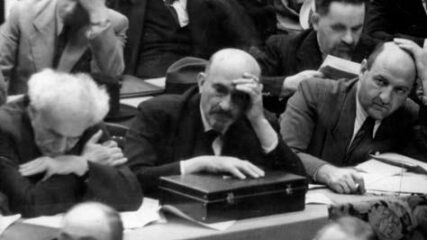
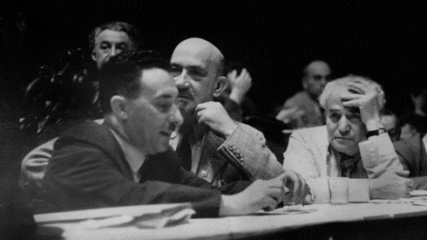
Zionist leaders—David Ben-Gurion, Chaim Weizmann and Eliezer Kaplan—learning of the British intent to limit severely the Jewish national home’s growth. Increasingly, they are also aware of the German government’s hostilities towards European Jewry.

Sir Harold MacMichael, High Commissioner of Palestine, to Oliver Stanley, Colonial Secretary, 1944

Sir Harold MacMichael, High Commissioner of Palestine, to Oliver Stanley, Colonial Secretary, 1944CIE+ members only

Before ending his term in 1944 as Palestine’s High Commissioner, Sir Harold MacMichael suggested the partition of Palestine, “Jews and Arabs alike would enjoy the possession of their own respective territories, the former protected by international guarantees for their security, and the latter relieved from fear of further encroachments.”

Documents and Sources|July 17, 1944