Biblical CovenantsCIE+ members only
G-d promises Jews a great nation in return for observance of belief and practice of laws.


G-d promises Jews a great nation in return for observance of belief and practice of laws.

The Hebrew Bible, Prophetic Books, the Talmud, the daily prayer book, and ancient Jewish texts reinforce Judaism’s relationship to G-d and Eretz Yisrael.
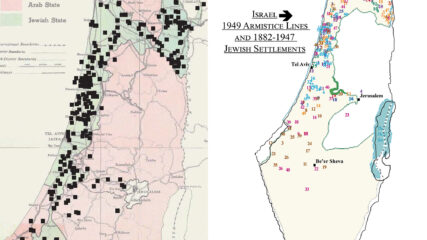
With 20 maps and prose, trace the progression of Jewish physical and demographic growth toward state building from 1882 to 1948 (25,000 to 600,000), with two-thirds in place by 1940.

Major motivations for some Jews to choose Zionism included their failure to gain civic equality with their non-Jewish neighbors, and increasing outbreaks of rampant anti-Semitism. This account of the miserable economic situation of Jews in eastern Europe was another impetus for Jews to change their economic, political, and social condition through immigration.

Eventual founding leader of the World Zionist Organization Theodor Herzl says a Jewish state is need in response to antisemitism.
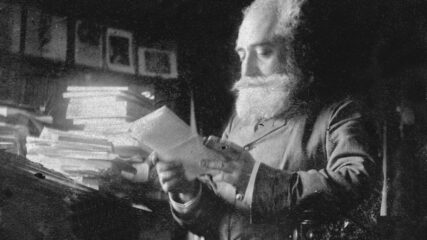
Max Nordau’s impassioned speech summarizes the unique Jewish identity of belief, Torah, ritual and community. With those central elements as a people, their state of impoverishment and wretched physical insecurity, he argues, are vital for rebuilding the Jewish national territory.

Three European journalists provide firsthand accounts of the First Zionist Congress and its delegates.
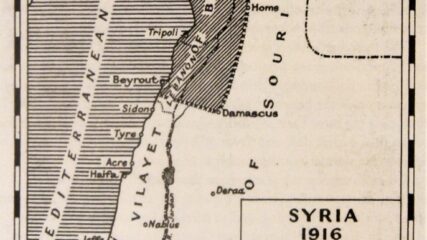
The Sharif of Mecca and Sir Henry McMahon, a British official in Cairo speaking for the Foreign Office, exchange letters about the current war effort against the Turks and the future political status of specific Arab lands in the Ottoman Empire. McMahon says, as he repeats in 1937, that the area of Palestine is excluded from any area to be provided to an Arab leader after World War I. The British instead allow the area of Palestine to develop as a “national home for the Jewish people.”
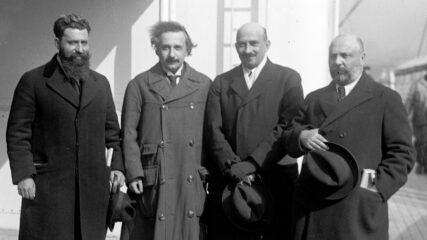
Chaim Weizmann advocates for Great Britain to be Palestine’s post-WWI administrator, seeking inclusion of specific territories for its boundaries, six months before Britain issues the Balfour Declaration.
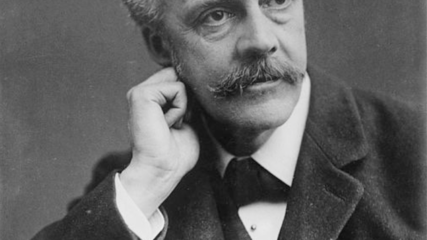
The British Foreign Ministry promises to work toward a Jewish national home in Palestine with no harm to non-Jewish populations or to Jews living elsewhere who might want to support a Jewish home.
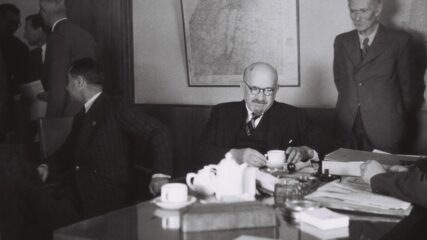
A Zionist delegation to the Paris Peace Conference makes an effective, largely successful case for the League of Nations to incorporate a future Jewish national home into the British Mandate for Palestine.
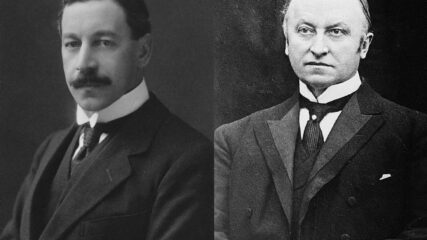
Herbert Samuel, soon to serve as Britain’s first high commissioner for Palestine and the only Jew to hold the role, notes reasons for Arab political infighting, the origins of Arab dislike of Zionism, how land sales to Jews generate Arab jealousies, Jewish educational focus and the potential of the region of Palestine to support 4 million people.
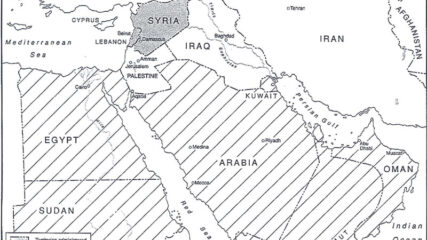
The post-WWI San Remo Conference allocates former Ottoman territories to Britain and France and recognizes Jewish self-determination in Palestine by adopting the language of the Balfour Declaration, decisions the League of Nations confirms two years later.

For more than a century, Arab and Muslim leaders have expressed hatred for Jews, Zionism and Israel, although some have pointed internally for the failures of the Palestinian Arab national movement.

In early May 1921, communal riots unfolded in the city of Jaffa and at Jewish settlements along the coast, with considerable loss of life and property for both communities. The British decide that both Arabs and Jews had real as well as exaggerated fears of the other.

Primary sources, reputable scholarship and archival materials collectively show major communal (Arab-Jewish) socio-economic separation, factors that foreshadowed geo-spatial partition.
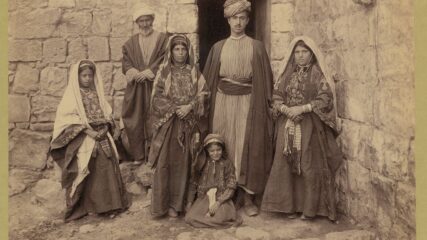
Writing early in the British administration of Palestine, sociologist Arjeh Tartakower assesses the inflationary effects of immigrant land purchases and the failure of absentee Arab landlords to provide any benefits or protection to tenant farmers.

With intentioned ambiguity, Britain asserts that its goal in Palestine is not to make it wholly Jewish or subordinate the Arab population. Self-determination is not promised. Britain wants to remain an umpire between the communities. Naively, it thinks it can control communal expectations and keep the peace.
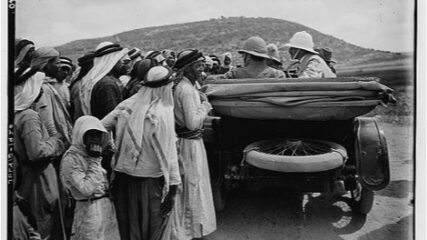
International legitimacy is granted to establish a Jewish National Home in Palestine. Rules for its establishment clearly give Jews in Palestine distinct advantages over the local Arab population.
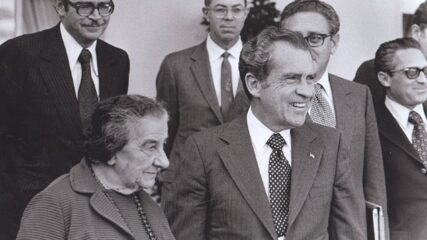
Using published archives, press conferences, speeches and numerous interviews, this compilation of quotations traces how official American views on Zionism and Israel have evolved over a century.
Annual reports to the League of Nations address the status and progress of the British Mandate for Palestine,

Ze’ev Jabotinsky argues that peaceful coexistence between Arabs and Jews in Palestine is impossible until Zionists demonstrate through strength that they are an irreversible presence in the Land of Israel.
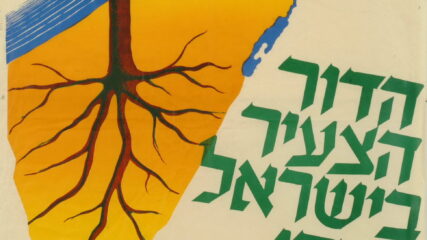
JNF meeting minutes and other statements show the strategic approach to Jewish land purchases throughout the British Mandate period.

Palestine’s High Commissioner Chancellor seeks to halt the Jewish National Home in favor of the Arabs. He fails to overcome the Zionist drive and Arab unwillingness to cooperate with his intentions.
