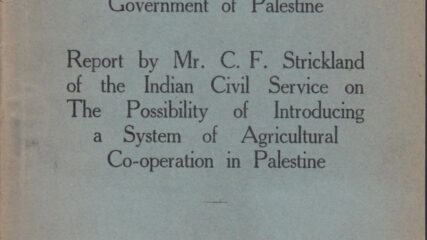
Government of Palestine, C.F. Strickland, “A Report on the Possibility of Introducing a System of Agricultural Cooperation in Palestine”

Government of Palestine, C.F. Strickland, “A Report on the Possibility of Introducing a System of Agricultural Cooperation in Palestine”CIE+

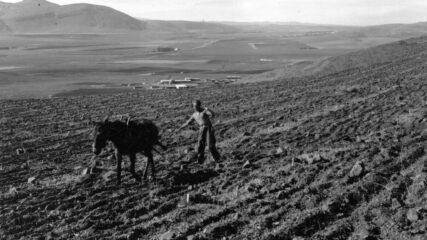
Correctly observing that the vast majority of Palestinian Arab peasants were trapped in debt with interest rates between 30% and 70%, this British civil servant suggested establishing agricultural cooperatives. But neither Arab leaders nor British bureaucrats wanted to provide the funding. For the duration of the Mandate, the Palestinian peasant remained hard-working, sullen and impoverished.

David Horowitz, Study on Economic and Social Transformation of Palestine, Jewish Agency for Palestine, 1937

David Horowitz, Study on Economic and Social Transformation of Palestine, Jewish Agency for Palestine, 1937CIE+

This four-page assessment notes multiple Jewish contributions to Palestine’s development: expansion of health care, advancement of agricultural methods, government revenue, industrial growth and Jewish building expansion. It notes that the Jewish economy has attracted Arab immigration to Palestine for jobs and the mushrooming of the Jewish education system from Jewish sources. Without saying so directly, its contents tout Jewish state building.

Secret Intelligence on Arab Leaders Meeting in Damascus, 1938

Secret Intelligence on Arab Leaders Meeting in Damascus, 1938CIE+

This document was secured at the Central Zionist Archives in Jerusalem. Less than a year before Hitler invaded Poland, Arab leaders with an interest in Palestine are starkly disappointed that the the German government did not go to war against the Zionists in Palestine. The same leaders give the Zionist national builders high marks for their perseverance against terrorist bands in the Palestinian countryside. They worry that unless Arab states come to the Palestinians’ assistance, Palestine will be lost to the Zionists. A remarkable assessment for Palestinian Arab leaders and their supporters.

Documents and Sources|September 30, 1938
British Government: Policy Statement/Advice Against Partition, 1938

British Government: Policy Statement/Advice Against Partition, 1938CIE+

Pressure from Arab leaders in states surrounding Palestine, growing instability in the eastern Mediterranean, and a firm opposition voiced by the British High Commissioner in Egypt, Miles Lampson, caused the British to withdraw the idea of resolving the Arab-Zionist conflict with a two-state solution. Instead, heavy restrictions were imposed in 1939 on the growth of the Jewish National home. Coincidently this policy statement is issued, two days after Nazi Germany attacks Jewish, homes, businesses and synagogues, in what came to be known as Kristallnacht.

Documents and Sources|November 11, 1938|Spanish
HMG White Paper: Statement of Policy, 1939

HMG White Paper: Statement of Policy, 1939

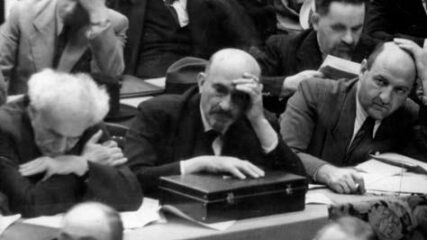
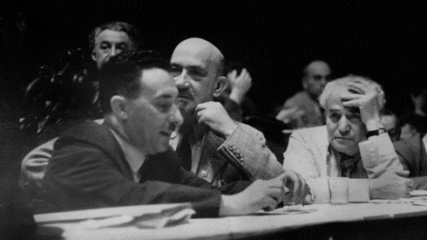
Zionist leaders—David Ben-Gurion, Chaim Weizmann and Eliezer Kaplan—learning of the British intent to limit severely the Jewish national home’s growth. Increasingly, they are also aware of the German government’s hostilities towards European Jewry.

Pro-Zionist Remarks by Winston Churchill, 1939

Pro-Zionist Remarks by Winston Churchill, 1939CIE+

Over four decades, Winston Churchill’s views on Zionism and Jews varied greatly. Without knowing his long held personal beliefs or the policies he adopted while the Jewish state developed, and only reading this speech, one would not know that he was a political opportunist and certainly not a “Gentile Zionist.”

“Zionism an Affirmation for Judaism,” 1942

“Zionism an Affirmation for Judaism,” 1942CIE+

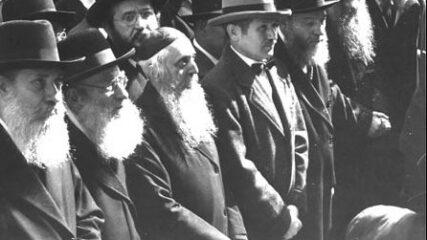
From the end of World War I until the June 1967 war, American Jewish attitudes toward Zionism moved from lukewarm embrace to full-throated support. The debate of American rabbis in the 1940s exemplified by this letter reflects attitudinal differences. The Holocaust, Israeli statehood and Israel’s stunning military success in June 1967 established Israel as a valued element in American Jewish identities.

Documents and Sources|November 20, 1942